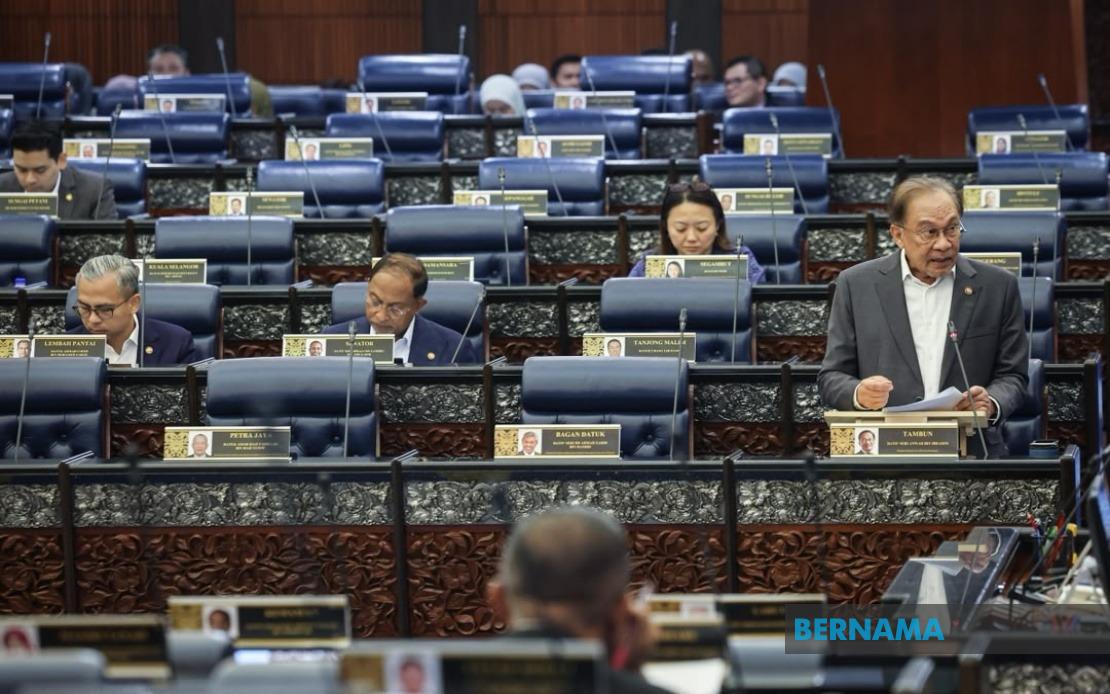
Prime Minister Datuk Seri Anwar Ibrahim has pushed back against criticism of Malaysia's fuel pricing, asserting during parliamentary debate that domestic petrol costs remain substantially lower than those in neighbouring oil-producing powerhouses, a claim he presented as evidence of the government's sustained commitment to keeping energy costs accessible to ordinary Malaysians. The assertion emerged during question time in Dewan Rakyat when he fielded queries about fuel price differentials under previous administrations and his own earlier campaign pledges made while in opposition.
The centrepiece of Anwar's defence rested on a direct price comparison. Malaysia's subsidised RON95 petrol, maintained at RM1.99 per litre through the government's BUDI MADANI initiative, stands considerably below Saudi Arabia's current benchmark of above RM2.40 per litre. This gap, Anwar emphasised, constitutes hard evidence that Malaysia has successfully insulated consumers from steeper global energy costs even as geopolitical tensions and supply dynamics drive prices upward elsewhere in the region.
The prime minister further broadened his argument to encompass the entire Gulf Cooperation Council sphere. Both Qatar and the United Arab Emirates currently charge substantially more for petrol than Malaysia does, he noted, with the UAE having implemented a fuel price increase merely two months prior despite its status as a major crude oil exporter. This regional positioning allows Anwar to reframe the domestic policy debate: rather than viewing Malaysia's RM1.99 price as expensive, it should be understood as relatively restrained when contextualised against peer economies with vastly superior hydrocarbon endowments.
For Malaysian policymakers and consumers alike, this comparison carries significant political weight. The BUDI MADANI subsidy scheme represents a deliberate choice to absorb upstream cost pressures rather than pass them entirely to households. With inflation concerns across Southeast Asia and household purchasing power under strain, maintaining fuel affordability becomes both an economic stabiliser and a political asset. Malaysia's reliance on energy-intensive manufacturing and agriculture means that petrol price containment produces cascading benefits throughout the supply chain, from transport costs to input prices for businesses.
Anwar's remarks were triggered specifically by a supplementary question from Datuk Rosol Wahid, the PN-aligned member for Hulu Terengganu, who sought to explore historical fuel price differences during Datuk Seri Najib Razak's tenure and to juxtapose those against Anwar's earlier opposition-era pledge to slash fuel costs to RM1.50 per litre. This line of questioning invites scrutiny of whether the current government has delivered on campaign promises or whether intervening circumstances—global commodity cycles, currency fluctuations, geopolitical disruptions—have rendered those earlier pledges unrealistic.
The RM1.50 figure Anwar referenced took on symbolic importance in his parliamentary response. He recalled that when he had initially championed that target while in opposition, petrol in Saudi Arabia had stood at approximately 50 sen per litre. The dramatic subsequent rise in international crude benchmarks and global energy costs has fundamentally altered the feasibility calculus. By highlighting how even the wealthiest Arab oil exporters now charge far more than Malaysia's current rate, Anwar implicitly argues that his government has achieved a reasonable accommodation between fiscal sustainability and consumer welfare, even if it fell short of the most optimistic pre-election projections.
The broader policy context makes this comparison instructive for regional observers. Malaysia maintains considerable oil and natural gas reserves and derives substantial tax revenue from petroleum production, yet it remains more exposed to global price fluctuations than Saudi Arabia or Qatar, which possess vastly larger proven reserves and can subsidise domestic prices from extraordinary fiscal surpluses. The trade-off between maintaining social stability through fuel subsidies and preserving fiscal space for infrastructure and development spending represents a perpetual dilemma for Malaysian policymakers. By emphasising regional price competitiveness, Anwar positions Malaysia's approach as pragmatic rather than generous, implying that further reductions risk unsustainable budget strain.
The UAE's recent decision to raise fuel prices despite abundant hydrocarbon supplies carries particular resonance. That decision signals that even petro-states increasingly view blanket fuel subsidies as economically distortionary and fiscally unwise, suggesting a gradual regional shift toward pricing mechanisms that better reflect underlying costs. Malaysia's RM1.99 price point, therefore, may represent a middle path: higher than the most aggressively subsidised regimes but lower than market rates in comparable economies. This positioning allows the government to claim both fiscal responsibility and consumer protection simultaneously.
For businesses and consumers monitoring energy costs, the parliamentary exchange underscores the Malaysian government's determination to defend its subsidy architecture against both pressure to expand benefits and criticism that prices have drifted upward. International energy market volatility, particularly given ongoing geopolitical tensions affecting supply routes and refinery capacity, will continue testing the durability of the RM1.99 price point. However, Anwar's resort to regional benchmarking suggests the government intends to frame any future adjustments not as failures of policy but as adjustments necessitated by global forces affecting even the world's largest oil producers.
The implicit message to Malaysian households is that while RM1.99 may feel higher than consumers prefer, the government has successfully sheltered them from price spikes experienced by counterparts in wealthier Arab economies. This rhetorical stance allows policymakers to buy time, deferring more difficult conversations about structural energy subsidy reform while maintaining the politically essential appearance of defending consumer purchasing power against external shocks.

