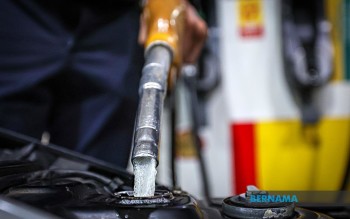
The Malaysian government faces a mounting subsidy burden that could reach RM3.5 billion every month should crude oil prices stabilise around US$90 per barrel, according to projections outlined by Deputy Finance Minister Liew Chin Tong in parliament this week. The breakdown reveals considerable pressure on the nation's budget, with RON95 petrol subsidies alone estimated at roughly RM2 billion monthly, while diesel support would consume approximately RM1.5 billion in the same period. This substantial commitment underscores the fiscal challenge confronting Southeast Asia's third-largest economy as global energy markets remain volatile amid geopolitical tensions and supply concerns.
Despite the alarming headline figures, Liew sought to reassure lawmakers and the public that Malaysia's overall fiscal position has not deteriorated, emphasising that government projections for the broader budget remain on track. His comments reflect an attempt to balance transparency about subsidy costs with confidence in the nation's financial management. The government's position rests partly on a crucial but often overlooked dynamic: Malaysia itself generates significant revenue from petroleum exports and domestic production, which provides a partial offset to subsidy expenditures. This revenue stream creates a more nuanced fiscal picture than subsidy figures alone might suggest.
The offsetting revenue mechanism hinges on international oil price movements. For every single dollar increase in crude oil prices per barrel, the government expects to collect an additional RM300 million in petroleum-related revenues. This relationship means that while higher oil prices inflate subsidy bills—because the government maintains price caps on fuel sold to consumers—they simultaneously boost state income through higher export values and production royalties. The mathematics of this interplay will prove critical in determining whether Malaysia's fiscal deficit targets remain achievable or face revision in coming months.
Liew's statement came during parliamentary questioning about whether the government retains confidence in maintaining its fiscal deficit goals should oil prices surge beyond current projections. The senator raising the concern highlighted legitimate anxiety about tail risks in the global commodity market. Energy prices can shift dramatically on short notice due to supply disruptions, demand shocks, or sudden geopolitical developments, leaving budget projections outdated almost immediately. Malaysia's recent history includes periods of extreme oil volatility, making such contingency planning not merely prudent but essential.
The government has indicated its intention to revisit and update all fiscal projections when Prime Minister Datuk Seri Anwar Ibrahim presents the 2027 Budget in October. This planned revision provides the administration with an opportunity to reassess subsidy costs, petroleum revenues, and overall economic conditions based on whatever price environment prevails at that moment. The timing suggests policymakers recognise the current projections carry significant uncertainty and warrant fresh analysis before parliament votes on the next fiscal year's spending blueprint.
Beyond headline subsidy figures, the government faces questions about the equity and efficiency of its fuel support regime. Parliamentary discussion turned to the BUDI Diesel programme, a targeted subsidy mechanism serving specific users in Sabah and Sarawak. A senator raised the possibility of expanding fuel quotas for these programmes, prompting Liew to acknowledge government willingness to consider applications from particular groups experiencing genuine hardship or operational challenges. The administration cited pickup truck owners as an example, noting it had recently granted an additional 100-litre quota through a streamlined application process.
This targeted approach reflects a gradual shift in how Malaysia manages fuel subsidies. Rather than universal price controls that benefit wealthy car owners as much as lower-income drivers, policymakers increasingly explore narrower programmes addressing specific sectors or communities where fuel costs constitute a more significant economic burden. Pickup truck owners, many engaged in agriculture, construction, or logistics, arguably derive greater proportional benefit from fuel support than drivers of luxury vehicles. The simplification of application processes suggests the government seeks to reduce bureaucratic friction that might prevent eligible applicants from accessing support they qualify for.
The broader subsidy challenge must be contextualised within Malaysia's development aspirations and social contract. Fuel remains a politically sensitive commodity in the nation, where price increases trigger public anxiety and historical instances of civil unrest. Any government attempting major subsidy reform risks electoral backlash unless carefully managed through communication, targeted support for vulnerable groups, and demonstrated commitment to broader economic benefits from fiscal restraint. The current administration appears cognisant of this political reality while simultaneously recognising the unsustainability of unlimited subsidies at any fixed fuel price.
Regional peers face similar pressures, though responses vary considerably. Indonesia, the region's largest economy, has pursued more aggressive subsidy rationalisation in recent years, directing support toward targeted programmes rather than universal price controls. Thailand and the Philippines maintain their own subsidy frameworks calibrated to domestic political circumstances. Malaysia's middle-ground approach—maintaining price caps while exploring targeted expansion and looking for offsets through petroleum revenues—reflects the particular balance its leadership has struck between fiscal discipline and social stability.
The RM3.5 billion monthly figure, substantial as it appears, represents roughly three to four percent of typical government monthly revenues, placing it within manageable bounds if petroleum revenues cooperate and broader economic growth materialises as projected. However, should oil prices collapse or global recession reduce demand, both the subsidy burden and offsetting revenues would shift dramatically, potentially creating a scenario where budget deficits widen despite lower fuel support costs. This asymmetric risk profile means Malaysia remains exposed to energy market volatility regardless of current equilibrium assumptions.
Government officials evidently believe that transparent communication about subsidy costs, combined with confidence in fiscal fundamentals and petroleum revenue offsets, provides sufficient assurance to markets and parliament. The decision to revisit projections in October offers a checkpoint where assumptions can be stress-tested and contingency planning more thoroughly addressed. For Malaysian citizens and businesses, understanding both the scale of subsidy support and its relationship to petroleum revenues proves essential to evaluating government fiscal claims and anticipating potential policy adjustments ahead.

