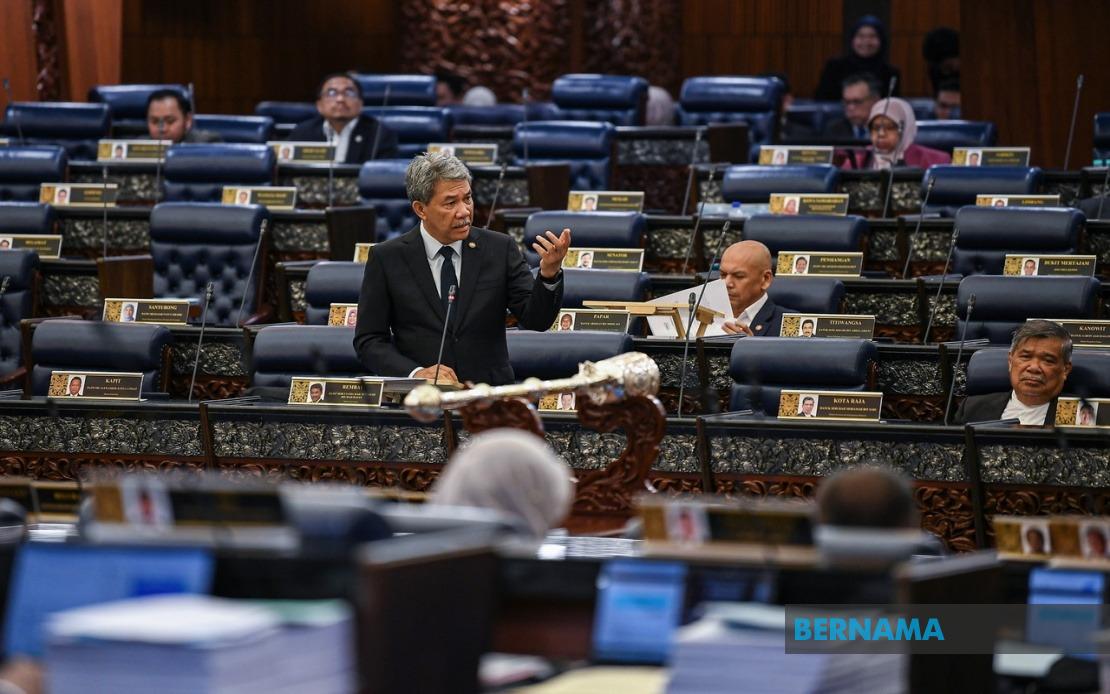
Malaysia has moved to counter claims of improper administration surrounding its Humanitarian Trust Fund for the People of Palestine, with Foreign Minister Datuk Seri Mohamad Hasan providing parliamentary assurance that the mechanism operates with full transparency and comprehensive government oversight. Speaking during Question Time in the Dewan Rakyat, Mohamad rejected suggestions that the fund—known locally as AAKRP—is managed outside official channels or subject to inadequate monitoring, emphasising instead that it functions as a centralised government account subject to rigorous scrutiny.
The minister's statement addresses growing concern on social media platforms regarding fund administration and the effectiveness of Malaysia's humanitarian response to the Gaza crisis. Clarifying the governance structure, Mohamad explained that the AAKRP operates under direct government control rather than being delegated to any independent organisation, a distinction critical to understanding accountability mechanisms. This stands in contrast to some assumptions circulating online that suggested the fund operated with less formal oversight than typical government accounts, a misconception Mohamad sought to dispel through detailed explanation of audit and reporting procedures.
Central to the government's accountability framework is the involvement of the Auditor-General, whose regular examinations of the fund provide independent verification that expenditures align with their stated humanitarian purpose. Beyond audits, Mohamad disclosed that the trust account is subject to systematic Cabinet reporting, ensuring that Malaysia's highest decision-making body maintains ongoing awareness of fund allocation and utilisation. This dual-layer oversight—combining external audit with internal government reporting—represents standard practice for high-profile government accounts handling sensitive international assistance, particularly those involving Palestinian affairs, a subject of considerable domestic political significance.
To ensure that donated resources actually reach vulnerable populations in Gaza, Malaysia has established partnerships with established international humanitarian organisations rather than managing distribution independently. UNRWA, the primary UN agency providing services to Palestinian refugees across the region, serves as a primary conduit for Malaysian assistance. The government has also collaborated with the Jordan Hashemite Charity Organisation and the Palestine Red Crescent Society, both recognised humanitarian entities with established operational capacity in Palestinian territories. King Hussein Hospital in Amman further extends the delivery network, allowing Malaysia to support medical infrastructure serving Palestinians in Jordan and the wider region.
Beyond financial transfers, Malaysia has complemented the trust fund with direct material assistance, dispatching food supplies, medical equipment, and health resources to address immediate humanitarian shortages. Mohamad highlighted that some earlier shipments faced delivery complications but have recently reached Gaza following the reopening of overland humanitarian corridors negotiated with the Egyptian government. These logistics challenges underscore the complexity of delivering aid into conflict zones and demonstrate Malaysia's persistence in attempting to reach affected civilians despite operational constraints imposed by the ongoing Israeli-Palestinian conflict.
The minister painted a sobering picture of Gaza's humanitarian condition, describing widespread infrastructure destruction affecting hospitals, educational facilities, and religious institutions. This assessment aligns with international humanitarian agency reports documenting severe damage to civilian infrastructure from sustained military operations. The continued deterioration of basic services in Gaza underscores the urgency of Malaysia's assistance efforts and justifies the government's decision to establish and maintain the trust fund despite the political sensitivities surrounding Palestinian aid in the international environment.
Mohamad's parliamentary clarification was prompted by supplementary questioning from Ahmad Tarmizi Sulaiman, a Perikatan Nasional legislator representing Sik, indicating that accountability concerns regarding Palestinian assistance have penetrated parliamentary discourse. This suggests that domestic political actors across Malaysia's opposition benches maintain active interest in how the government manages resources dedicated to Palestinian causes, reflecting broader Malaysian public concern for Palestinian welfare. The opposition's willingness to pose supplementary questions demonstrates that Palestinian support remains a cross-party issue in Malaysian politics, though questions persist about implementation effectiveness.
The minister directly addressed misinformation circulating on social media platforms, urging the public to disregard unsubstantiated claims about fund mismanagement. Social media allegations about government fund administration have become increasingly common in Malaysia's digital ecosystem, sometimes reflecting genuine accountability gaps but often exaggerating or distorting factual circumstances. Mohamad's explicit warning against accepting unverified online claims represents a growing government strategy of countering digital misinformation through parliamentary statements that establish an official record of administrative procedures.
The transparency assurance carries significance for Malaysia's international standing within the Muslim world and among developing nations, particularly given the high profile of Palestinian issues across Southeast Asian societies. Malaysia's substantial Palestinian aid commitments distinguish it among regional nations and contribute to its positioning as a voice for developing-world interests within international forums. Proper administration of these funds therefore affects not merely local political credibility but also Malaysia's diplomatic relationships across the Middle East and Organisation of Islamic Cooperation member states.
The government's detailed disclosure of oversight mechanisms suggests an attempt to preempt further allegations by establishing a clear factual record of governance structures. By naming specific international partner organisations and describing audit procedures with specificity, Mohamad aimed to move discussion from abstract accusations toward verifiable institutional arrangements. Whether this parliamentary statement successfully resolves public doubts about fund administration will likely depend on sustained transparency in financial reporting and continued willingness to disclose details about assistance distribution outcomes rather than simply budget allocations.

