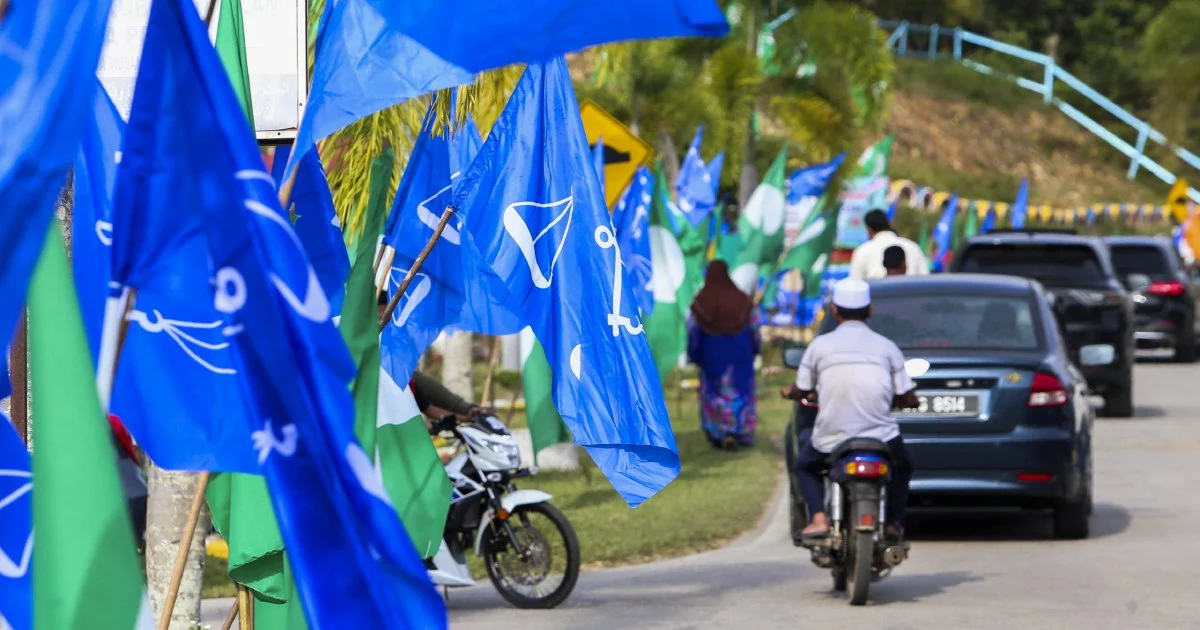
Malaysia's political calendar appears to be moving toward a decisive moment in the final months of 2024. Datuk Mohd Amar Nik Abdullah, vice-president of Pas, has indicated that the 16th general election is likely to occur sometime between late October and November, underscoring expectations within the opposition coalition about the timing of the nation's next parliamentary poll.
The timeline offered by the senior Pas figure carries weight as the party commands significant influence within the broader opposition movement. While governments in Malaysia are not obligated to hold elections until the end of a parliamentary term—in this case, mid-2025—prime ministers frequently exercise their constitutional prerogative to call an election when political conditions appear favourable. The suggestion that GE16 might come in the October-November window reflects calculation within opposition ranks about when the government might seek a fresh mandate.
Election speculation has become a recurring feature of Malaysian politics in recent years, particularly since the political realignments that followed the 2022 general election. The previous poll, held in November 2022, returned a hung parliament that fundamentally reshaped the nation's political landscape. The subsequent formation of a unity coalition government, anchored by Prime Minister Datuk Seri Anwar Ibrahim's Pakatan Harapan and various other partners, brought a degree of stability but also created new pressure points as different political forces jostled for positioning ahead of the next electoral contest.
The prospect of an election in the final quarter of this year would provide the government with approximately two years of parliamentary tenure—a period substantial enough to demonstrate governance and policy delivery while still leaving time within the political cycle to consolidate any gains before 2025 ends. From the government's strategic perspective, such timing could allow it to capitalize on any achievements in economic management, infrastructure development, or social programmes that have gained traction during its tenure.
For the opposition, the positioning implied by Pas's expectations suggests assessment that the government's electoral window may be narrowing. The PAS-led opposition coalition, which includes several major parties and commands significant parliamentary representation, would need to use whatever time remains before any election call to strengthen its narrative, build campaign infrastructure, and consolidate support among voters fatigued by Malaysia's recent political volatility. The October-November timeframe would represent less than half a year of preparation time for opposition parties if the government moves forward with an election call.
Malaysian electoral contests have historically been scheduled to avoid major religious and cultural observances, which constrains the available windows. The October-November period traditionally offers advantages in terms of weather and avoiding major celebrations, though Malaysian elections can and have been held across various seasons. The choice of timing also reflects broader considerations about voter sentiment and whether economic conditions, inflation pressures, and public service delivery are trending in directions favourable to the incumbent or opposition.
Geographically, GE16 holds particular significance for Southeast Asia, as Malaysia's electoral outcomes influence regional political stability and the balance of power within ASEAN. The nation's role as an anchor for regional diplomacy and economic cooperation means that any significant shift in government composition could ripple across the broader region, affecting bilateral relationships and regional frameworks.
The current political configuration in Malaysia has brought both stability and tension. While the unity government has provided parliamentary certainty compared to the fractious 2022-2023 period, it encompasses coalition partners with differing ideological orientations and policy preferences. Managing these differences while also attending to governance has required constant calibration, suggesting that both the government and opposition may view an electoral test as a way to achieve clearer political direction.
For voters, the prospect of a late-2024 election would mean the 2022 parliament lasts roughly two years—a tenure long enough to evaluate incumbent performance but compressed enough to limit their ability to fully implement longer-term strategic initiatives. This compressed cycle reinforces the importance of what Malaysia's political leaders can deliver in the remaining months, with any perceived successes or failures likely to feature prominently in campaign messaging.
The speculation around election timing also reflects the reality that Malaysian politics remains fluid and subject to rapid shifts. Coalition formations can dissolve, key personalities face unexpected developments, or economic and social conditions can change rapidly. While Datuk Mohd Amar Nik Abdullah's October-November prediction carries credibility given his position, Malaysian political history demonstrates that such timelines remain subject to change based on evolving circumstances.
For Malaysian businesses and foreign investors, clarity on election timing carries economic implications. Markets prefer certainty, and while elections create short-term volatility, knowing when major political events will occur allows for better planning and risk management. An October-November election would also provide the winning government several months before year-end to present a budget and provide direction for 2025 policy and spending.
Ultimately, whether GE16 materializes in the October-November window remains dependent on decisions not yet made. Datuk Mohd Amar Nik Abdullah's statement reflects opposition expectations rather than confirmed government plans, but it underscores that Malaysia's political establishment is increasingly focused on the latter part of 2024 as a potential inflection point where the nation's electoral destiny will be decided.