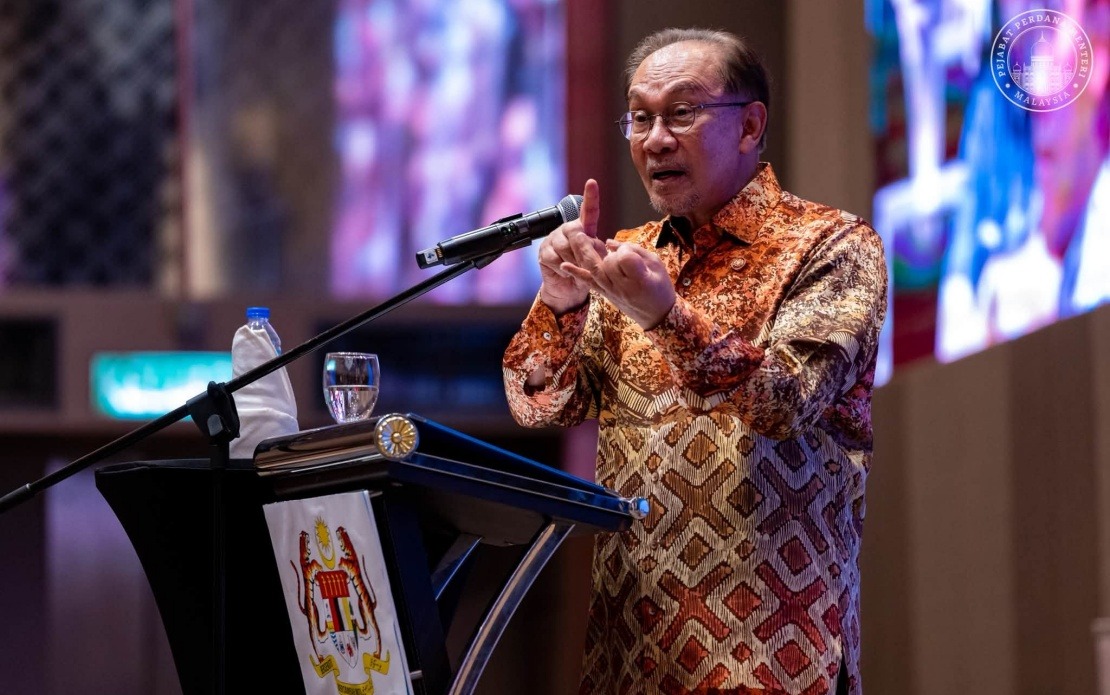
Prime Minister Datuk Seri Anwar Ibrahim has reaffirmed his government's dedication to addressing the multifaceted challenges confronting Malaysia's younger generation, pledging that authorities will deploy available resources to help youth navigate an increasingly intricate social and political landscape. The commitment emerged following direct engagement with student leaders and young activists at the "Temu Anwar" interactive session and the Opening Ceremony of the 2026 International Youth Assembly (HAMKA) in Klang, Selangor, where he fielded questions and listened to concerns spanning education, employment, civic participation, and social cohesion.
The Prime Minister's undertaking reflects growing recognition within government circles that young Malaysians are grappling with pressures distinctly different from previous generations. Contemporary youth navigate rapid technological change, global competition, climate anxiety, and evolving social structures while forming their political identities and career trajectories. These intersecting pressures have created an environment where youth engagement with government and institutional trust require deliberate, sustained effort—particularly given the contentious nature of recent elections and polarisation visible across social media platforms.
Anwar's remarks emphasised a philosophical framework that privileges rational discourse over emotional reaction. He highlighted that while contemporary society inevitably generates disagreements and competing perspectives, these ideological contests must be conducted through evidence-based reasoning, structured argumentation, and civil engagement rather than sentiment-driven rhetoric, hatred, or factional loyalty. This positioning carries particular significance in Southeast Asia, where youth activism has increasingly intertwined with questions of religious identity, ethnic representation, and developmental priorities. By stressing manners and knowledge as guardrails for debate, the Prime Minister appears to be signalling his administration's preference for institutional channels and structured dialogue over street mobilisation.
The invocation of the 2026 International Youth Assembly carries symbolic weight for Malaysia's regional standing. Hosting international youth gatherings reinforces Malaysia's self-image as a moderate, forward-thinking nation capable of convening young leaders across boundaries. The assembly provides a platform for showcasing Malaysian approaches to youth policy whilst elevating the country's visibility among international youth networks. For Malaysian participants, exposure to peers from other nations offers perspective on how different countries balance development imperatives with social equity concerns—a particularly relevant comparison given Malaysia's aspirations within the ASEAN regional architecture.
Anwar's reference to Abdul Malik Karim Amrullah, the historical Islamic scholar and intellectual known as Hamka, anchors contemporary youth engagement within Malaysia's intellectual heritage. Hamka embodied the fusion of traditional religious scholarship with modern literary expression, and his emphasis on reasoned argument and written discourse resonates with efforts to frame youth activism as continuous with respected historical figures rather than a radical departure. By drawing this genealogical connection, the government attempts to legitimise youth voices whilst channeling them toward scholarly and intellectual pursuits rather than disruptive protest.
The government's framing of youth support as occurring "within available capacity" warrants scrutiny from Malaysian observers. This phrasing acknowledges resource constraints whilst potentially creating interpretive flexibility around specific commitments. Youth advocates have long pressed authorities on concrete policy matters—cost of living, housing affordability, graduate employment prospects, and education financing—which may require budgetary reallocations or difficult fiscal choices. The emphasis on capacity limitations may signal that while the government prioritises youth engagement symbolically, resource allocation reflects other priorities or fiscal pressures. This tension between rhetorical commitment and material resources has historically frustrated youth movements in Malaysia and across Southeast Asia.
The timing of these youth-focused initiatives reflects evolving political calculations. Younger voters have demonstrated increasing willingness to vote across traditional party lines, particularly when dissatisfied with incumbent performance on issues directly affecting their lives. Youth turnout patterns and voting behaviour have become significant metrics for political parties assessing electoral viability. By investing in platforms like HAMKA and formal listening sessions, the government signals responsiveness to demographic segments whose political allegiances remain contested. This represents a continuation of outreach strategies initiated in previous election cycles, adapted to contemporary conditions where youth organise substantially through digital networks rather than traditional institutional channels.
The challenge confronting Malaysian policymakers extends beyond rhetoric to implementation. Youth across Southeast Asia increasingly expect government engagement to translate into tangible policy shifts addressing employment precarity, education relevance, and financial accessibility. Malaysia's competitive advantage in attracting and retaining talented young people depends partly on government's perceived willingness to adapt structures and priorities reflecting youth input. Countries like Singapore and South Korea have demonstrated that sophisticated youth engagement programmes, when coupled with substantive policy responsiveness, enhance national competitiveness and social cohesion. Malaysian policymakers appear cognisant of these international benchmarks.
The broader context of youth development in Malaysia encompasses regional inequality, with Kuala Lumpur and Klang Valley dominating opportunities whilst rural and provincial youth face constrained pathways. International youth assemblies and prime ministerial engagement, though symbolically valuable, concentrate in established urban centres. Genuine commitment to supporting diverse youth populations requires extending engagement mechanisms and resource access beyond metropolitan corridors. This geographic dimension adds complexity to government commitments, as equitable youth support necessitates investment in provincial infrastructure, education quality, and employment creation—investments requiring sustained funding and political will.
Moving forward, the tangible measure of government commitment will be reflected in budget allocations, policy announcements, and visible progress on youth-identified priorities. The rhetorical space occupied by Anwar's statements provides foundation for more specific undertakings, yet substantial distance remains between pledge and implementation. Youth movements in Malaysia will likely intensify focus on converting symbolic engagement into concrete institutional change, forcing government to operationalise its stated commitment. This dynamic—between youth pressure for substantive reform and government efforts to balance multiple constituencies and fiscal constraints—will define Malaysia's youth policy trajectory through 2026 and beyond.

