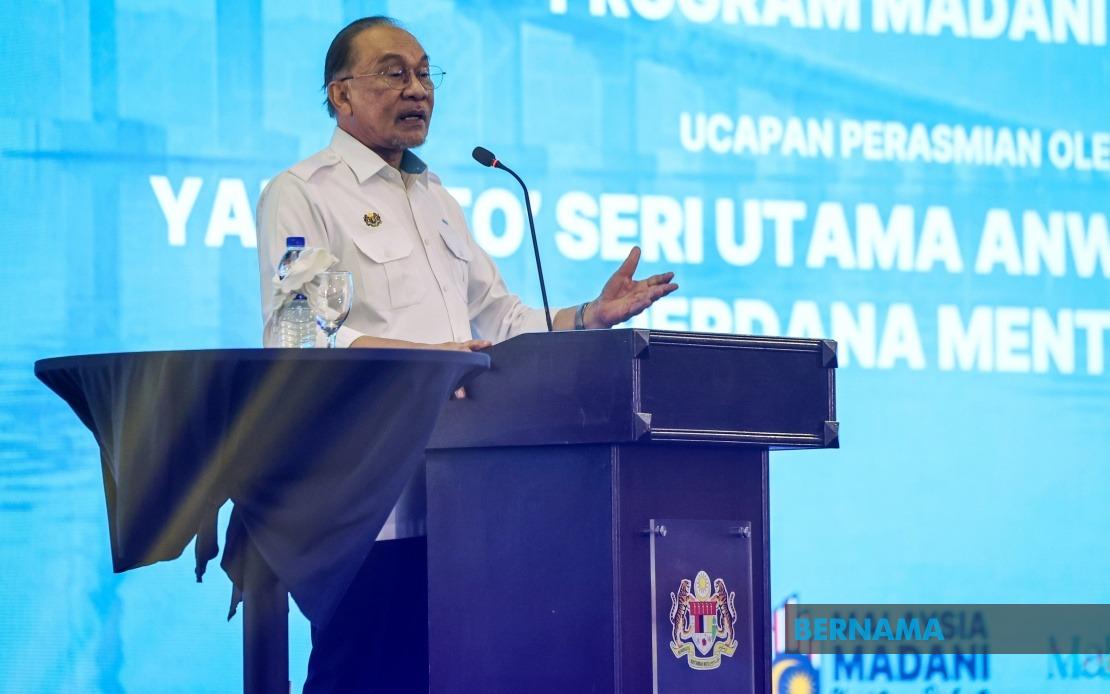
Prime Minister Datuk Seri Anwar Ibrahim has outlined a strategic vision for Malaysia's halal sector, insisting that the country's growing international reputation for halal certification must be matched by equally strong domestic industrial capabilities. Speaking at the Penang International Halal Expo (PIHEX) 2026 and Penang Bumiputera Entrepreneurs Gathering (HUBPP) at Politeknik Seberang Perai in Permatang Pauh, Anwar highlighted the unique opportunity Malaysia faces to leverage its globally recognized halal certification system into a broader leadership role within the worldwide halal industry.
The Prime Minister's remarks reflect a nuanced understanding of what underpins genuine market leadership. While Malaysia has successfully established its halal certification as a trusted international standard, translating that credibility into sustained economic advantage requires far more than regulatory frameworks alone. Anwar's emphasis on "robust industry capabilities" suggests recognition that certification authority means little without a vibrant ecosystem of manufacturers, processors, exporters, and service providers capable of meeting international standards consistently and at scale. This represents a critical juncture for Malaysian policymakers who must ensure that administrative excellence in certification is mirrored by competitive excellence across the entire halal supply chain.
The geopolitical dimension of Anwar's remarks carries particular significance for Malaysia's regional positioning. By noting that world leaders including Chinese President Xi Jinping, Brazilian President Luiz Inacio Lula da Silva, and South African President Matamela Cyril Ramaphosa have all expressed interest in collaborating with Malaysia to obtain halal certification and recognition, the Prime Minister underscores how Malaysia's halal credibility has become a diplomatic asset. These nations represent different regions and economic systems, yet each apparently sees value in aligning with Malaysian halal standards. This convergence suggests that Malaysia's halal certification has transcended niche religious relevance to become a marker of quality and trust that appeals across cultural and geographical boundaries.
For Malaysian businesses, the implications are substantial. As demand for halal-certified products grows globally—driven by rising Muslim populations, increasing consumer awareness among non-Muslims, and corporate commitment to inclusive supply chains—the ability to sell products bearing Malaysian halal certification creates a competitive premium. However, this advantage remains fragile. If Malaysian manufacturers cannot consistently deliver quality products at competitive prices, or if the country's halal supply chain becomes seen as inefficient or unreliable, international interest will eventually migrate elsewhere. Several countries including Indonesia, Thailand, and Singapore have invested heavily in halal infrastructure, and none will remain passive competitors.
The halal industry's value extends well beyond the food and beverage sector that typically dominates discussions. Malaysian halal-certified pharmaceuticals, cosmetics, logistics services, and financial products increasingly compete in global markets where certification provides differentiation and consumer confidence. The strategic imperative Anwar articulates is therefore to deepen integration between Malaysia's certification authority and its productive capacity across these diverse sectors. Fragmentation between regulatory success and industrial weakness would represent a missed opportunity of significant proportions.
International collaboration emerges as the third pillar of Anwar's framework. The interest expressed by major global players in developing halal industries within their own borders creates both opportunity and risk for Malaysia. On one hand, Malaysian companies and consultants can export expertise, establish joint ventures, and build long-term relationships in critical markets. On the other, other countries may develop their own certification systems that compete with Malaysia's, or may eventually prefer to certify products domestically rather than maintain dependency on Malaysian oversight. Strategic partnerships must therefore be structured to build sustained advantage rather than merely capturing short-term revenue from consultation and certification fees.
The Penang venue for these announcements also merits attention. Penang has historically been a centre of trade and commerce in Southeast Asia, and positioning it as a hub for halal industry development taps into both historical precedent and current economic diversification efforts. The state's existing strengths in manufacturing and logistics, combined with its multicultural composition and established business infrastructure, provide a credible foundation for scaling halal-related economic activity. However, infrastructure investment, workforce development, and regulatory streamlining will all be necessary to translate potential into concrete results.
For Malaysia's neighbours and regional competitors, Anwar's emphasis on halal as a pillar of national economic strategy signals competitive intensity ahead. Indonesia, despite its larger Muslim population, has less internationally recognized halal certification authority than Malaysia. Thailand's halal sector remains underdeveloped relative to its potential. Singapore lacks the manufacturing base to compete directly but may position itself as a halal services hub. Understanding Malaysia's strategic direction therefore matters for businesses and policymakers across Southeast Asia who must navigate an increasingly structured and competitive halal marketplace.
The sustainability of Malaysia's halal advantage ultimately depends on continuous innovation and adaptation. As global supply chains shift, climate pressures mount, and consumer preferences evolve, the halal standards that command respect today may require substantial revision tomorrow. Malaysian institutions and industry must maintain the institutional flexibility and forward vision to anticipate these changes rather than merely react to them. Anwar's framework—certification backed by capability, enabled by international partnership—provides a sensible starting point, but success will require consistent execution across both public and private sectors over many years.

