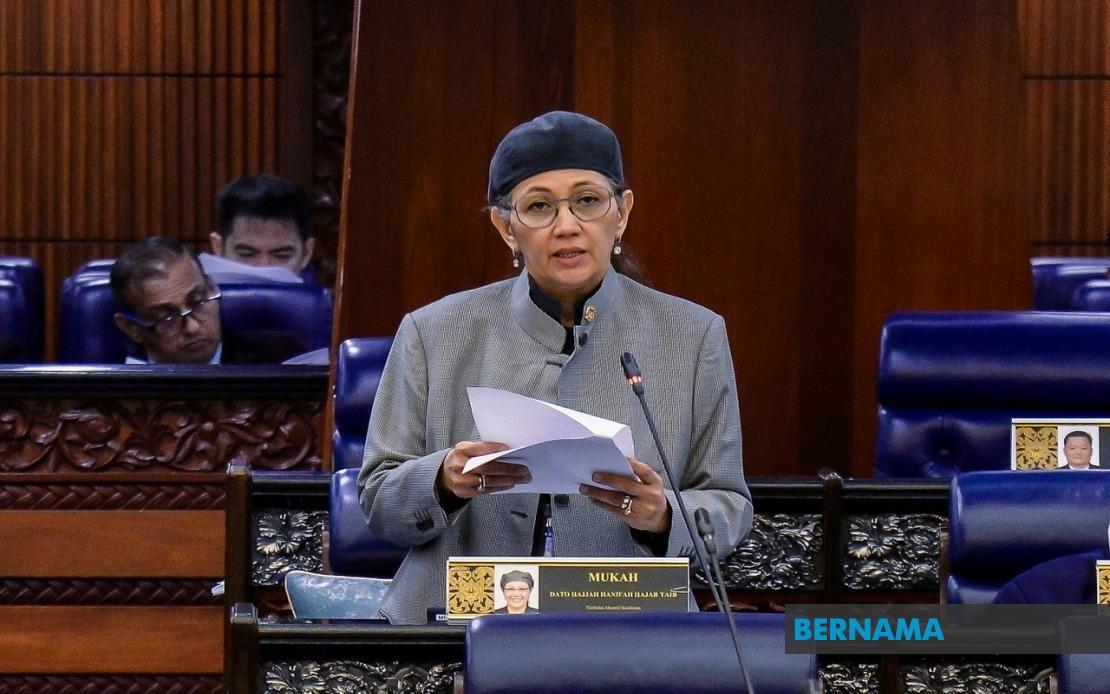
Malaysia's health system is taking concrete steps to address one of Sabah's most pressing healthcare challenges. The Ministry of Health announced plans to deploy 560 new permanent medical officers to the state beginning in October, according to Deputy Health Minister Datuk Hanifah Hajar Taib during a recent parliamentary session. The initiative represents a significant investment in resolving what has become a chronic workforce crisis that threatens service delivery across the state's public health network.
Yet the announcement carries a sobering caveat that underscores the systemic difficulties plaguing medical recruitment in Malaysia's eastern regions. Historical data reveals that barely half of appointed doctors actually report for duty in their assigned postings. Using this precedent, ministry officials estimate that only approximately 280 of the 560 newly appointed officers will actually materialise in Sabah. Even this optimistic projection—assuming a 50 per cent acceptance rate—would still leave the state short by 256 medical officer positions, indicating that the shortage problem extends beyond simple recruitment numbers into deeper issues of retention, incentivisation, and quality-of-life considerations for healthcare professionals.
The broader context reveals a nationwide struggle to stabilise the medical workforce. The Ministry is executing an accelerated two-phase recruitment drive to fill 4,500 permanent medical officer positions across Malaysia. The first phase, which commenced in June 2026, demonstrated the scale of the challenge: of 39 positions offered to Sabah, only 20 doctors accepted and reported, while 19 outright rejected their placements. This pattern suggests that simply creating positions and extending offers is insufficient without addressing the underlying factors discouraging doctors from working in Sabah and other underserved regions.
Current staffing levels in Sabah paint a picture of an overstretched system. The state maintains 2,803 established medical officer posts, of which only 1,863—or 66.5 per cent—are actually filled. An additional 366 officers, representing 13.1 per cent of the establishment, are on study leave, further thinning available manpower. This leaves 570 positions, or 20.3 per cent of the total, sitting vacant. To manage this crisis, the Ministry has deployed 680 contract doctors throughout Sabah, essentially plugging gaps with temporary arrangements that lack the stability and career certainty that permanent positions theoretically offer.
Sabah's healthcare challenge is not unique within Malaysia. According to the 2024 Health Indicators report, eight states fall below the national average for doctor-to-population ratio, with Sabah among them. This suggests a structural imbalance in healthcare resource distribution across the federation. However, officials highlight a modest positive development: Sabah's doctor-to-population ratio improved by 25.1 per cent between 2020 and 2023, indicating that previous interventions have yielded measurable progress, albeit incremental. Maintaining and accelerating this upward trajectory remains critical for population health outcomes.
The Ministry has introduced procedural reforms aimed at improving placement outcomes and addressing recruitment resistance. A notable mechanism requires contract officers transitioning to permanent posts to select at least one placement in Sabah, Sarawak, or Labuan as a condition of their permanent appointment. This mandatory geographic consideration, embedded within an upgraded e-Placement system implemented in 2025, represents an attempt to redistribute talent more strategically across underserved areas. The system acknowledges that voluntary placement mechanisms often fail to redirect doctors toward less-popular destinations.
Placement quotas under the e-Placement system reflect acknowledged regional disparities. Sarawak receives 650 permanent medical officer positions while Sabah receives 310, together representing 42.7 per cent of the total nationwide placement quota of 2,248. This substantial allocation—collectively 960 positions across Malaysia's two largest East Malaysian states—underscores official recognition that Borneo's healthcare systems require sustained investment and dedicated resources. Yet the quotas also reveal the magnitude of disparity: East Malaysia receives less than 43 per cent of placements despite serving geographically vast territories with dispersed populations and inherent logistical challenges.
The deeper issue confronting Malaysian healthcare is why doctors consistently reject postings to Sabah despite permanent employment guarantees. Factors likely include limited career advancement opportunities, geographic isolation, family separation, lower spouse employment prospects in smaller urban centres, and perceived quality-of-life concerns. These structural deterrents cannot be resolved through recruitment announcements alone. Until the Ministry addresses working conditions, professional development pathways, and comparative compensation adjustments for hardship postings, recruitment campaigns risk continuing the frustrating pattern of offers made and refused.
For Malaysian policymakers and healthcare administrators, Sabah's situation serves as a cautionary indicator of fragmentation within the federal health system. The state's ability to deliver equitable healthcare depends not only on funding and facilities but fundamentally on attracting and retaining qualified medical professionals. The 560-officer initiative represents necessary investment, but its success will ultimately depend on whether accompanying measures—whether regulatory requirements or incentive structures—can overcome the persistent reluctance of doctors to work in the state long-term.
Moving forward, the Ministry's approach suggests evolving recognition that workforce distribution cannot be achieved through supply-side interventions alone. Mandatory placement conditions and quota systems represent implicit acknowledgement that market-based recruitment fails peripheral regions. Whether this represents a sustainable long-term solution, or merely a temporary measure buying time while deeper structural problems persist, remains to be seen. For Sabah's 1.8 million residents and the healthcare professionals tasked with serving them, the success of this initiative carries profound implications.

