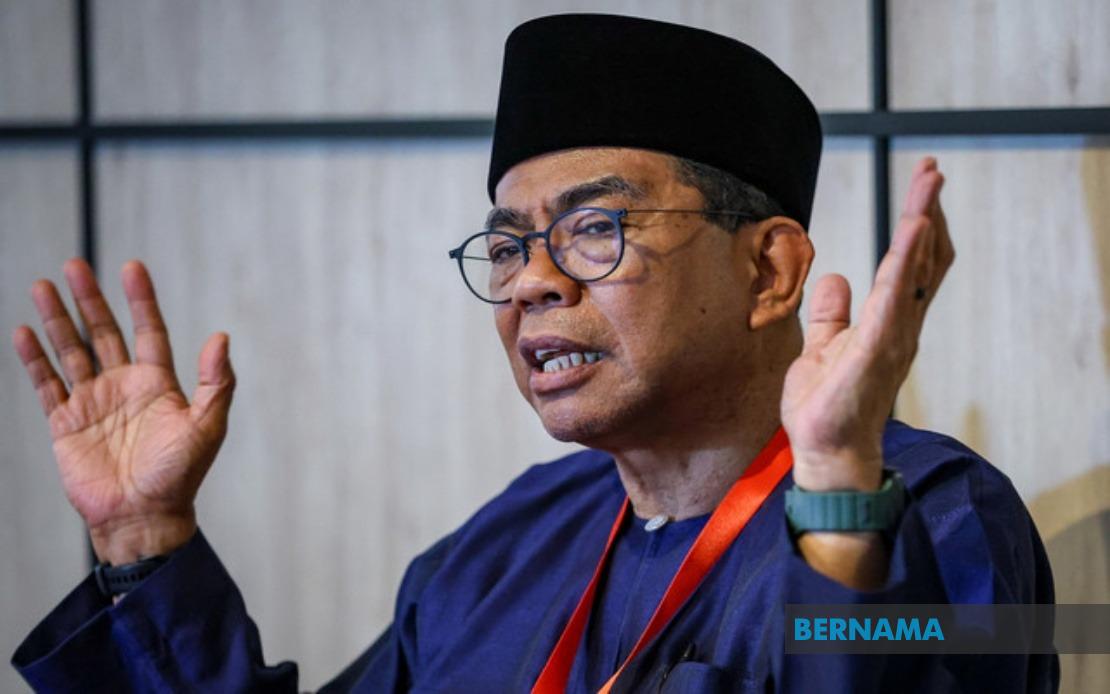
Malaysia is standing firm on its refusal to recognise the State of Israel, with Defence Minister Datuk Seri Mohamed Khaled Nordin asserting that recent expulsions of Israeli nationals reflect a policy implemented with unwavering consistency. Speaking at the Pasir Gudang UMNO division delegates meeting in Johor Bahru on July 25, Mohamed Khaled made clear that the government's enforcement actions, including the removal of Israeli citizens from the country, represent nothing more than the practical application of a principle that has governed Malaysian foreign policy for decades.
The expulsion measures came in response to allegations that Israeli nationals had entered Malaysia, including one individual who allegedly used a passport issued by another country to gain entry in connection with the Network School development in Forest City. Mohamed Khaled indicated that the government's investigative agencies have been tasked with examining the circumstances surrounding these entries to ensure no Israeli nationals remain active within the country. The Defence Minister's remarks signal that the expulsions were deliberate and targeted, aimed at enforcing immigration protocols tied to the non-recognition doctrine.
This position from Malaysia's security establishment carries particular weight given the timing and context of international pressure. Eight members of the United States Congress sent a letter dated July 21 to US Secretary of State Marco Rubio, urging the American administration to review its security and economic relationships with Malaysia. The congressional letter specifically referenced the enforcement action against the Israeli passport holder and demanded that Malaysia reverse its position within 15 days, threatening suspension of funding under the International Military Education and Training (IMET) programme if the country did not comply.
For Malaysian readers, the significance of this American pressure lies in the potential economic and security implications. The IMET programme has historically provided valuable military training opportunities and resources that strengthen Malaysia's defence capabilities and foster strategic partnerships with the United States military establishment. The congressional threat to suspend this funding represents a direct challenge to Malaysia's autonomy in foreign policy matters and reflects broader tensions between American support for Israel and Malaysia's principled stance on Middle Eastern geopolitics.
Mohamed Khaled's response to the congressional pressure was notably measured yet resolute. He stated that Malaysia's implementation of its non-recognition policy has not, to date, resulted in any loss of IMET funding, suggesting that American defence assistance remains intact despite the legislative demands from Congress. The Defence Minister framed the matter as a bilateral issue between individual US lawmakers and their government, implying that Malaysia does not view congressional threats as representative of official American policy.
Prime Minister Datuk Seri Anwar Ibrahim has already weighed in on the controversy, declaring that the government would not compromise on this principle and would continue expelling any Israeli national discovered within Malaysia's borders. His statement underscore that the non-recognition policy enjoys the full backing of Malaysia's political leadership across multiple ministerial portfolios. Anwar's explicit commitment to zero tolerance for Israeli presence indicates that expulsions will likely continue if further individuals are discovered.
The broader regional context is significant for understanding Malaysia's position. As a Muslim-majority nation with substantial Palestinian advocacy constituencies, Malaysia has long maintained this non-recognition stance as a matter of principle and domestic political importance. The policy reflects deep-rooted commitments to Palestinian rights and has become embedded in Malaysia's national identity and foreign policy architecture. For regional audiences in Southeast Asia, Malaysia's willingness to challenge American pressure on this issue demonstrates that smaller nations can resist great power influence on matters they consider fundamental.
The Network School situation in Forest City, which triggered the recent expulsion controversy, appears to have provided the government with an opportunity to demonstrate the seriousness of its enforcement commitment. Rather than treating the non-recognition policy as a ceremonial gesture, Malaysia's security agencies have conducted investigations and taken action to ensure compliance. This suggests that the policy is not merely rhetorical but represents genuine operational constraints on Israeli activity within Malaysian territory.
The congressional pressure, while significant, appears unlikely to alter Malaysia's stance. Mohamed Khaled's comments suggest the government views the American demands as external interference in a matter of sovereign policy determination. The language used by Malaysian officials—emphasising clarity, consistency, and firmness—indicates preparedness to weather any American response, including potential reductions in military aid. This resilience may reflect confidence in Malaysia's diversifying security partnerships and its ability to access military training and equipment from other sources, including regional and non-aligned partners.
For the wider Southeast Asian region, Malaysia's resistance to American pressure on this issue sends a signal about the limits of Washington's influence in Asia-Pacific foreign policy matters. Despite the strategic importance of American military partnerships and the IMET programme's genuine value, Malaysia has chosen to prioritise its principled stance on Israel recognition. This suggests that regional countries will not automatically defer to American preferences on matters they consider integral to national identity or domestic political consensus.
The government's thorough investigation into allegations of Israeli entry represents an attempt to close potential security gaps and prevent future such incidents. By demonstrating enforcement capacity and willingness to act, Malaysian authorities aim to prevent any recurrence that might invite further international complications or domestic political criticism. The ongoing security review reflects the seriousness with which the government takes its non-recognition policy and the operational measures required to sustain it.
Moving forward, the question becomes whether American pressure will escalate or whether the congressional initiative will fade without broader administration support. Mohamed Khaled's suggestion that IMET funding remains intact implies either that the congressional threat lacks teeth or that the administration has chosen not to enforce it. Either way, Malaysia appears positioned to continue its current policy without immediate economic consequences, though the long-term implications for Malaysian-American military cooperation remain uncertain.

