The Malaysian government's commitment to supporting religious diversity has taken concrete form through a substantial four-year funding initiative launched in 2023. The Ministry of Housing and Local Government has dedicated RM200 million to maintain non-Muslim houses of worship across the country, encompassing churches, gurdwaras, Hindu temples, and other religious establishments. This initiative represents a deliberate policy choice to ensure equitable development reaches all communities regardless of their faith, reflecting what the government describes as the MADANI philosophy of inclusive nation-building.
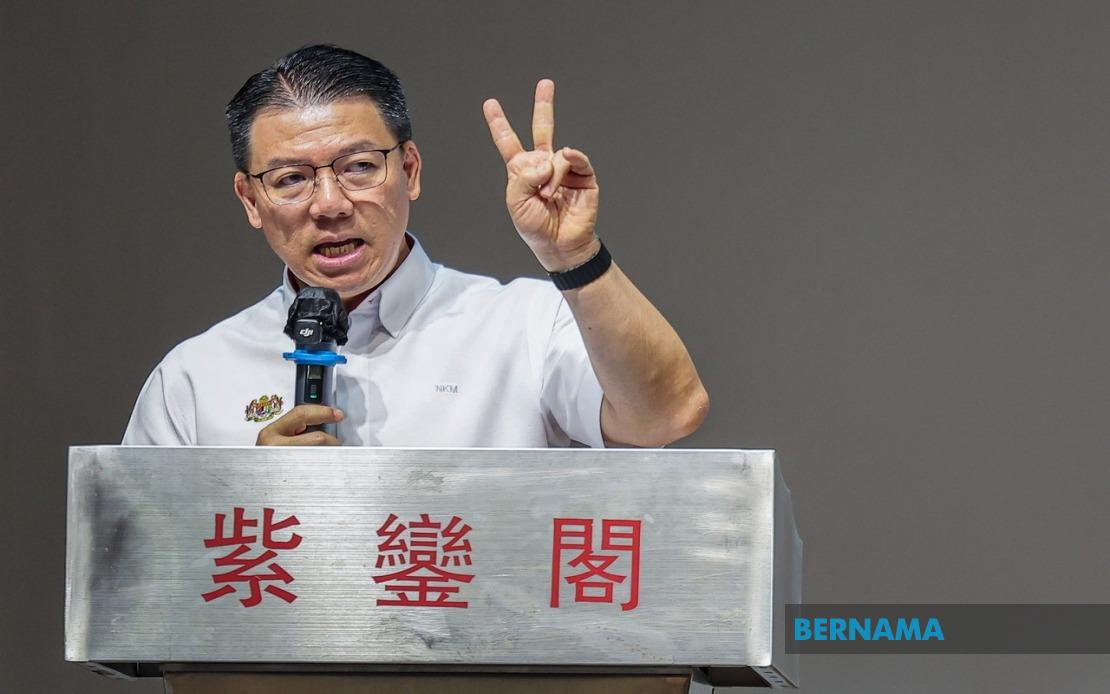
During an event in Kluang, Johor on June 26, Housing and Local Government Minister Nga Kor Ming underscored the scale of community engagement with this programme. The electronic RIBI System—the digital platform managing applications—has already processed 1,478 requests with a cumulative value exceeding RM279 million. This figure, substantially higher than the initial RM200 million allocation, signals both the pent-up maintenance needs across Malaysia's religious infrastructure and communities' trust in the government mechanism for accessing funds. The gap between applications received and funds available will likely shape future budgetary discussions around religious institutional support.
For Johor specifically, the state has emerged as a significant beneficiary of this programme. The Housing Ministry announced an additional RM3.14 million in allocations directed toward 27 religious establishments in the state during the current funding cycle. Since the initiative's inception in 2023 through May 20, 2026, Johor has accumulated RM18.75 million in total disbursements benefiting 154 separate institutions. These funds address diverse requirements ranging from routine maintenance and renovations to emergency repairs and new construction, ensuring that religious venues can maintain operational standards and provide safe environments for their communities.
The political messaging accompanying this initiative carries significance beyond its budgetary dimensions. Minister Nga framed the programme as evidence of the MADANI government's commitment to avoiding exclusion and marginalization. His rhetoric explicitly positioned the funding as a counterweight to divisive political narratives, contrasting those who "build walls" with his government's approach of "building bridges." This language reflects the government's awareness that religious and ethnic relations remain sensitive terrain in Malaysian politics, and that tangible investments in minority communities' infrastructure carry symbolic weight regarding national cohesion and fair governance.
Understanding the economic rationale behind this initiative reveals additional layers of government thinking. Officials connected the maintenance programme to broader development objectives, arguing that religious institutional stability contributes to social harmony, which in turn attracts foreign investment and creates employment opportunities. This framing transforms what might appear as purely communal support into an economic development argument. A stable, cohesive society with confident minority communities represents better business environment for investors, according to this logic, making the RM200 million investment simultaneously a social and economic policy tool.
The RIBI initiative also reflects lessons from Malaysia's experience managing religious and ethnic diversity. Rather than treating religious communities as isolated constituencies, the programme integrates maintenance support into broader governance frameworks. The connection to the KPKT 4.0 Sentuhan Kasih Programme 2026 tour series demonstrates how the government attempts to embed minority community support within comprehensive ministry-wide initiatives rather than treating it as a separate or ancillary concern. This structural approach potentially normalizes intercommunal equity as a regular feature of government operations.
The establishment of transparent monitoring mechanisms for the RIBI initiative addresses a persistent governance challenge in Malaysian public spending. Minister Nga emphasized that the Housing Ministry would oversee every approved project with professional oversight, efficiency assessments, and transparent tracking to ensure allocations reach genuinely deserving organizations. This commitment to accountability serves multiple purposes: it protects public funds from misuse, it provides assurance to religious communities that their applications will be fairly evaluated, and it creates documentary evidence of fair-handed governance that can counter perceptions of communal favoritism in development spending.
The scale of unmet applications—1,478 requests for RM279 million against a RM200 million four-year budget—raises questions about future allocation trajectories. If demand continues at current levels, the government will face pressure to either expand funding or implement more competitive selection criteria. How these choices are made will significantly impact perceptions of government commitment to religious infrastructure equity. States with larger applicant backlogs may become focal points for renewed funding announcements, creating potential political constituencies organized around infrastructure support.
For regional observers, Malaysia's RIBI initiative offers a case study in how governments can operationalize diversity rhetoric through institutional mechanisms. The programme demonstrates that abstract commitments to unity require corresponding budget allocations, transparent systems, and political leadership willing to frame minority community support as beneficial to national interests rather than as special treatment. Whether similar models might apply to other Southeast Asian nations managing multi-religious populations remains an open question, though Malaysia's experience suggests that institutionalizing intercommunal equity requires sustained political commitment and adequate resourcing.
The implications for Malaysian religious communities extend beyond immediate maintenance funding. The existence of this dedicated programme, with digital application systems and transparent allocation processes, potentially shifts power dynamics by creating formal channels through which communities can access state resources. Previously, religious facility maintenance might have depended on ad hoc political intervention or community self-sufficiency; the RIBI framework establishes it as a systematized government function. This institutionalization may gradually reshape expectations about government responsibility for maintaining the physical infrastructure of religious life.
Looking forward, the RIBI initiative's success will likely influence how the government approaches other areas where minority community interests intersect with public investment. If the programme delivers tangible improvements to religious facilities while maintaining transparent operations, it may provide a model for similar initiatives addressing education, healthcare, or cultural preservation needs within non-majority communities. Conversely, if implementation problems emerge or if funding proves inadequate relative to demand, the initiative could become a focal point for criticism about government sincerity regarding diversity commitments.
The MADANI government's framing of this RM200 million commitment as evidence of fair governance reflects broader positioning in Malaysian politics. By directing substantial resources toward non-Muslim religious infrastructure while emphasizing transparency and equity, the government attempts to occupy the political center on communal relations. How opposition parties respond—whether by arguing the funding is insufficient, inadequately distributed, or appropriately targeted—will shape ongoing public discourse about the government's track record on religious and ethnic relations as Malaysia moves toward future electoral cycles.

