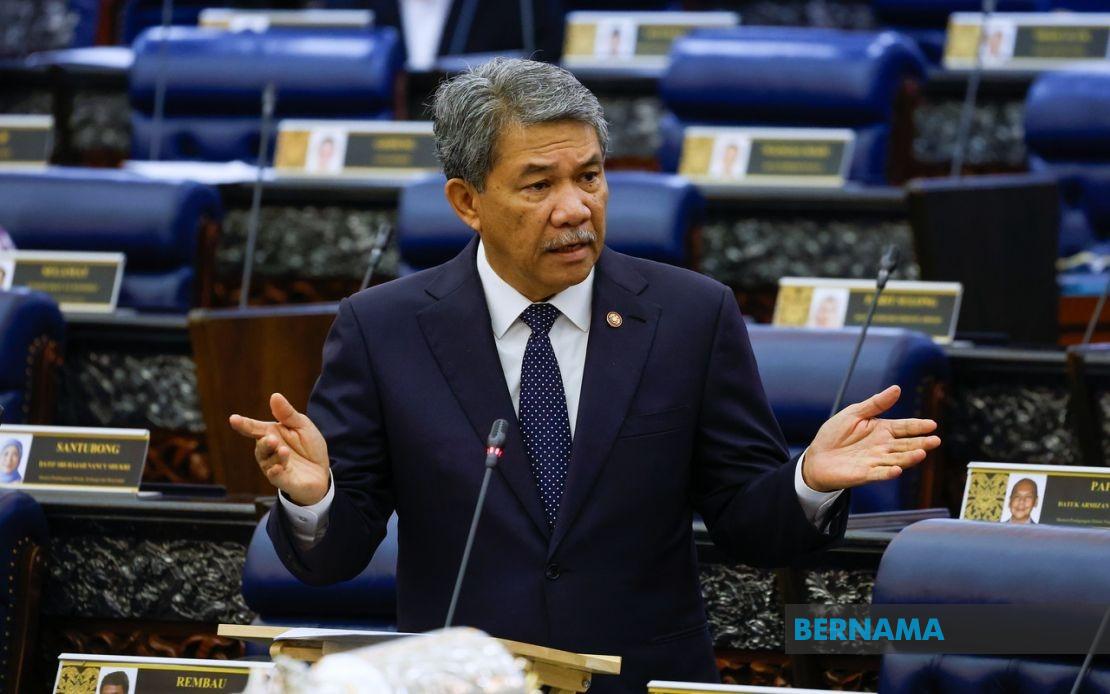
Malaysia's diplomatic engagement with Myanmar in May should not be construed as formal recognition of the country's military-controlled administration, Foreign Minister Datuk Seri Mohamad Hasan insisted in Parliament today. The clarification came as the government faces scrutiny over its approach to the Myanmar crisis, with Mohamad emphasising that Malaysia continues to withhold acknowledgment of the junta while pursuing what he characterised as constructive dialogue aimed at resolving the regional impasse.
The ministerial visit was conducted within the framework of a decision adopted at the 48th ASEAN Summit, which had instructed the bloc's foreign ministers to pursue informal engagement channels with Myanmar. Mohamad pointed out that his meeting with Myanmar Foreign Minister Tin Maung Swe occurred at a hotel rather than an official government building, a deliberate choice intended to signal Malaysia's nuanced position. During the encounter, Mohamad conveyed Malaysian and broader ASEAN concerns regarding the trajectory of Myanmar's political situation and the conditions necessary for substantive change to take root.
The distinction between engagement and recognition represents a critical aspect of Malaysia's foreign policy positioning on the Myanmar question. By maintaining informal contact rather than upgrading diplomatic ties, Malaysia seeks to preserve influence while refusing to legitimise the military government's hold on power. This balancing act reflects the complexities facing ASEAN nations attempting to shape developments in one of their own members without appearing to condone or reward authoritarian consolidation. The approach acknowledges that complete isolation of Myanmar would diminish ASEAN's leverage while tacit acceptance would undermine the bloc's stated commitment to democratic principles.
During his parliamentary explanation, Mohamad reinforced that Malaysia's Five-Point Consensus position remains unaltered. This framework, which represents ASEAN's collective response to Myanmar's political crisis, calls for an end to violence, initiation of dialogue among conflicting parties, humanitarian assistance delivery, appointment of an ASEAN envoy, and eventual implementation of a political settlement. The foreign minister stressed that engagement with Myanmar does not translate into compromise on these fundamental principles, though the gap between aspiration and implementation has widened considerably since the consensus was adopted in April 2021.
A particularly significant element of Mohamad's message to the Myanmar delegation involved reiterating that while Myanmar enjoys rights as an ASEAN member, these entitlements come paired with corresponding obligations. The statement carries weight given rising international frustration with Myanmar's perceived intransigence on humanitarian grounds and political reform. Mohamad's formulation suggests that Malaysia views continued ASEAN membership as conditional upon Myanmar meeting certain standards of conduct, though the enforcement mechanism for such expectations remains ambiguous within the regional framework.
The rationale underpinning Malaysia's cautious engagement strategy focuses on preventing Myanmar's further marginalisation from regional affairs. According to Mohamad, allowing Myanmar to drift into complete isolation risks creating a power vacuum that external actors with competing geopolitical interests might exploit. This concern reflects broader Southeast Asian apprehensions about great power competition in the region, particularly involving China and India, both of which maintain significant interests in Myanmar's trajectory. By maintaining open communication channels, Malaysia and ASEAN theoretically preserve their ability to shape outcomes rather than ceding influence to global powers operating outside the regional framework.
The foreign minister disclosed plans for additional rounds of engagement with Myanmar stakeholders, with the next meeting scheduled for early to mid-July. These continuing discussions represent an ongoing effort to broker movement toward the Five-Point Consensus objectives. However, the extended timeline since the consensus's adoption raises questions about whether dialogue alone can address the fundamental political divisions within Myanmar, particularly given the military's apparent reluctance to expedite political transformation or genuinely engage with opposition elements.
Malaysia's messaging also emphasised the humanitarian dimension of the crisis, with Mohamad reaffirming national commitment to ensuring that aid reaches Myanmar's civilian population. This focus reflects growing international concern about deteriorating conditions in Myanmar, where conflict has displaced hundreds of thousands and created severe shortages of essential supplies. The humanitarian framing allows Malaysia to maintain a position of principled concern without appearing to abandon the country or entirely align with Beijing, which has advocated for normalisation.
The parliamentary exchange itself underscores persistent domestic political interest in Malaysia's Myanmar policy. The question from Datuk Seri Saifuddin Abdullah suggests that even within the government coalition, there exists interest in clarifying the exact nature and implications of diplomatic engagement with Myanmar. This internal scrutiny reflects broader Malaysian concern about being perceived as tacitly accepting authoritarian outcomes in a neighbouring state, particularly given Malaysia's own constitutional commitment to democracy and parliamentary governance.
Moving forward, Malaysia faces the challenge of threading a diplomatic needle: maintaining enough engagement to influence Myanmar's trajectory while avoiding actions that could be interpreted as recognising or normalising military rule. This positioning remains precarious, as Myanmar's political situation continues evolving and international pressure for stronger ASEAN action persists. The effectiveness of the current approach will ultimately depend on whether informal dialogue channels can eventually translate into measurable progress toward genuine political reform and humanitarian improvement, rather than serving merely as a mechanism through which the military consolidates its position while buying diplomatic time.

