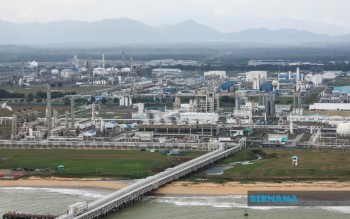
Malaysia's decision to examine the feasibility of establishing a national petroleum reserve reflects growing recognition among policymakers that energy security threats are no longer episodic crises but permanent features of the global energy landscape. Prime Minister Datuk Seri Anwar Ibrahim has instructed relevant agencies to investigate both the necessity and mechanisms for building strategic petroleum stockpiles as a buffer against geopolitical instability and supply chain fractures. This initiative comes at a moment when shipping chokepoints central to global energy flows face escalating interference and mounting operational costs for maritime commerce.
The geopolitical geography constraining energy flows has become increasingly precarious over the past year. The Strait of Hormuz, which channels approximately 20 million barrels of crude and refined products daily—representing roughly one-fifth of global petroleum supply—has transformed from an occasional flashpoint into a chronically vulnerable passage. According to analysts, the combination of threats, shipping delays, elevated insurance premiums and constrained tanker availability has embedded a persistent risk premium into international energy markets that shows no signs of dissipating soon.
Stephen Innes, managing partner at SPI Asset Management, argues that the nature of the challenge has fundamentally shifted. Rather than treating disruptions as temporary shocks with eventual resolution, energy markets and policymakers must now reckon with what appears to be a more durable structural condition. The development of alternative pipeline networks, export corridors and maritime bypasses—the only genuine long-term solutions to concentration risk—requires years of construction and international coordination. Until such infrastructure materialises, the Strait of Hormuz will remain a recurring source of price volatility and supply anxiety for energy-dependent economies across the region.
The risk profile has widened beyond the Persian Gulf. Recent months have witnessed coordinated pressure across multiple chokepoints, with Iranian-aligned Houthi forces in Yemen conducting preparation and attack operations against commercial shipping transiting the Red Sea's southern gateway. Following American military strikes on Iranian assets, these groups claimed responsibility for strikes against Saudi oil tankers, demonstrating capability to execute coordinated operations against high-value targets. This geographic expansion of disruption risk from the Gulf to the Red Sea and beyond creates a more complex threat matrix that simultaneous disruptions could expose Southeast Asia to sharply elevated crude costs, freight expenses and material delays in fuel deliveries.
For Malaysia specifically, the vulnerabilities are acute and measurable. The country produces approximately 570,000 barrels daily from domestic fields but remains structurally dependent on imports to meet total energy consumption. Strikingly, nearly 70 percent of Malaysia's crude oil purchases in 2025 originated from suppliers located in or near the Strait of Hormuz region—a concentration that amplifies exposure to any disruption affecting that waterway. Commercial petroleum inventories, designed primarily for maintaining smooth operational continuity during routine trading conditions, lack the scale and duration to absorb extended external supply shocks of the type increasingly plausible given current geopolitical trajectories.
Tariro Chiweza, oil and gas analyst at BMI, contends that Malaysia's examination of a national petroleum reserve has become genuinely urgent rather than merely prudential. Commercial storage serves operational purposes but cannot substitute for strategic reserves designed to weather months-long disruptions to normal supply patterns. A national reserve would function as emergency insurance, enabling government decision-makers to navigate crisis periods without immediately triggering severe rationing, industrial shutdowns or price spikes that cascade through the broader economy. The reserve should operate as a complement to, rather than replacement for, diversified procurement networks and enhanced storage capacity.
Implementing an effective strategic reserve requires integration into a comprehensive energy resilience framework rather than functioning as a standalone measure. Innes emphasises that true energy resilience encompasses not merely access to supply but the capacity for energy systems to continue functioning when normal distribution channels experience interruption. This necessitates maintained backup inventories, geographically dispersed and politically diversified suppliers, alternative shipping pathways to reduce dependence on single routes, strengthened electrical grids capable of managing generation variations, and the technical flexibility to shift between different fuel sources during emergencies. A national petroleum reserve represents one critical component within this broader architecture but cannot alone provide comprehensive protection.
Malaysia's existing initiatives in renewable expansion and energy transition, including the Solar@PETRA programme, the Corporate Renewable Energy Supply Scheme for commercial electricity consumers, biodiesel blending through the B15 programme and electric public transportation development, reinforce this multi-faceted approach to long-term resilience. These programmes address both the immediate challenge of reducing vulnerability to petroleum supply disruptions and the parallel imperative of managing energy transition toward lower-carbon systems. Projected increases in domestic dry gas production, forecast to reach 82.3 billion cubic metres by 2026, provide additional domestic supply foundation to complement strategic reserves and renewable capacity.
Regional coordination mechanisms require strengthening to amplify the effectiveness of individual national measures. Innes advocates for Southeast Asian governments to establish stronger Association of Southeast Asian Nations protocols governing strategic inventory levels, mechanisms for communicating shipping disruptions, and pre-arranged emergency supply-sharing arrangements. A coordinated regional approach would reduce the probability of one country's emergency measures creating scarcities for neighbours and establish frameworks for mutual assistance should disruptions affect multiple economies simultaneously. Such coordination appears particularly valuable given that major shipping routes serving Southeast Asia often pass through zones vulnerable to contemporary geopolitical interference.
Government subsidy structures warrant reassessment alongside strategic reserve establishment. Broad fuel subsidies that maintain artificially depressed prices regardless of global cost conditions create moral hazard by obscuring true energy costs and incentivising consumption patterns unsustainable if prices remain persistently elevated. Targeted financial support directed toward lower-income households and critical industries—rather than universal price caps—provides fiscal sustainability while preserving protection for vulnerable populations. This reframing proves essential if Malaysia faces a scenario of prolonged elevated global petroleum prices resulting from entrenched regional instability.
Current global energy prices reflect these mounting anxieties. Brent crude, the international benchmark, has climbed to approximately US$96.86 per barrel, while West Texas Intermediate traded near US$88.76 per barrel, with these levels incorporating expectations of continued friction across critical shipping corridors. The price premium reflects the accumulated impact of repeated disruptions, rising insurance and shipping costs, and persistent uncertainty about future accessibility to traditional supply sources. For Malaysian importers, these prices translate into higher fuel costs that ultimately ripple through transportation, manufacturing and utility sectors.
The establishment of a national petroleum reserve should proceed according to a structured timeline with explicit governance rules determining the conditions for reserve release and the mechanisms for replenishment after use. Ad hoc political decisions about reserve deployment during crises risk exhausting strategic stockpiles before underlying supply problems resolve. Clear operating parameters established in advance—specifying the severity of supply disruption triggers and the maximum permissible drawdown rates—enable reserves to function as genuinely strategic assets rather than short-term political expedients. Innes notes that such discipline requires institutional insulation from immediate political pressure, a governance challenge as important as the physical infrastructure itself.
Malaysia's prospective national petroleum reserve initiative represents recognition that the regional security environment has shifted in ways that demand new policy instruments and fresh strategic thinking about long-term vulnerability. The combination of expanding renewable energy deployment, diversified fuel supplier relationships, enhanced domestic gas production, strengthened regional infrastructure connectivity and now strategic petroleum stockpiles creates a more resilient energy foundation than reliance on any single protective mechanism. The challenge involves coordinating these complementary elements into a coherent strategy while establishing the political and institutional frameworks necessary to maintain consistency across economic cycles and shifting geopolitical circumstances.

