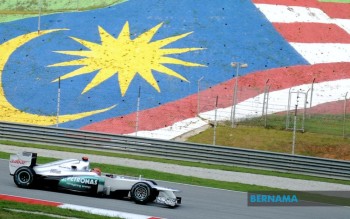
Malaysia's return as a Formula 1 venue arrives in October 2026 when the Sepang International Circuit hosts the Bahrain Grand Prix, an arrangement that has sparked optimism among motorsport authorities and industry figures despite the compressed timeline for preparation. The confirmation by Formula 1 and the Fédération Internationale de l'Automobile on Sunday positions the Malaysian round between the Azerbaijan and Singapore races, a strategic placement that opens several commercial possibilities for the region. For a nation that last hosted the championship in 2017, the eight-year absence has left a void in both prestige and revenue generation that this interim arrangement may help fill.
The decision to stage this event at Sepang represents a pragmatic choice for Bahrain and the broader F1 calendar. Datuk Razlan Razali, the former chief executive of Sepang International Circuit, emphasises that Malaysia's track offers considerable advantages when weighed against other potential alternatives like Portimao. The cost-effectiveness of hosting at Sepang, combined with its existing infrastructure and operational standards, creates an attractive proposition for organisers looking to expand the championship's reach into Southeast Asia without incurring prohibitive expenses. This calculus underscores how established venues in developed markets retain competitive advantages over newer or less-equipped circuits competing for calendar slots.
From a technical standpoint, Sepang requires minimal overhaul to accommodate the machinery and personnel demands of modern Formula 1, though questions of homologation remain pending an FIA inspection. Razali clarifies that while the circuit currently operates at the highest FIM standards and requires no substantial modifications for racing operations, any upgrades to meet F1's specific requirements would likely fall within Bahrain's purview as the event's commercial rights holder. This arrangement places the burden of investment on the organising entity rather than Malaysian authorities, fundamentally altering the risk calculus compared to previous championship hosting commitments that the nation undertook.
The immediate economic stimulus from the three-day October event centres on tourism and ancillary services, though the tight preparation window presents a double-edged proposition. Tan Sri Mokhzani Mahathir, president of the Motorsports Association of Malaysia, estimates that roughly 30 percent of typical Formula 1 spectators hail from overseas, a cohort that tends to generate substantial spending across hospitality, accommodation, and dining sectors. However, industry observers acknowledge that the abbreviated lead time before October 2026 will likely constrain international visitor numbers, as F1 enthusiasts customarily book travel six months or more in advance. The resulting attendance profile may skew towards domestic motorsport enthusiasts and regional fans with shorter planning horizons.
The strategic positioning of the Malaysian round one week before Singapore's established Grand Prix creates a compelling cross-border itinerary that could extend visitor stays throughout the region. Mokhzani highlights Malaysia's cost advantage relative to Singapore, suggesting that many international spectators may base themselves in Kuala Lumpur or surrounding areas whilst attending both races. This clustering effect would distribute spending across hotels, restaurants, ground transport, and entertainment venues across the Klang Valley and beyond. Airlines operating Malaysian routes would similarly benefit from increased passenger volumes, as would ground transport operators managing the influx during the race weekend.
Small and medium-sized enterprises, particularly those in food and beverage, catering, logistics, and local supply chains, stand to capture meaningful opportunities from the event's operational requirements. Razali notes that Bahrain's appointment of local contractors and workforce for weekend operations represents the optimal scenario for spreading economic benefits through the Malaysian business ecosystem. The race's financial structure, whereby Bahrain assumes the primary commercial risk and investment burden, creates an unusually favourable risk-return profile for Malaysia. As Mokhzani observes, when external parties fund the bulk of an event's costs, the host nation's return on any investment it does make becomes disproportionately attractive.
Beyond the immediate economic calculations, motorsport authorities view this October race as a critical diagnostic tool for assessing Formula 1's viability as a permanent fixture on Malaysia's sporting calendar. Razali characterises the event as a "litmus test" enabling government decision-makers to evaluate public enthusiasm, operational feasibility, and economic outcomes before committing to the substantially higher costs associated with hosting the championship annually. Whether Prime Minister Datuk Seri Anwar Ibrahim chooses to pursue permanent reinstatement would depend heavily on how this interim arrangement unfolds, though Razali candidly acknowledges that restoring Malaysia as a permanent F1 venue remains "very remote" given the championship's escalating hosting costs and competing demands on government resources.
The Motorsports Association of Malaysia's role in the October event will concentrate on ensuring compliance with FIA regulations, safety protocols, and circuit readiness standards rather than overseeing the commercial or organisational dimensions that Bahrain manages. This demarcation of responsibilities streamlines the approval process and minimises bureaucratic friction, allowing the Malaysian motorsport authority to focus its limited resources on technical oversight. Such a division of labour reflects the sophistication that Malaysian sporting institutions have developed through decades of international event hosting experience.
Former Formula 1 driver Alex Yoong extends the conversation beyond the immediate race weekend, advocating that any return of the championship to Sepang should catalyse broader investment in grassroots motorsport development and regional driver cultivation. Yoong argues that hosting the pinnacle of motorsport carries obligations to strengthen the ecosystem supporting emerging talent and junior categories, creating pathways for Southeast Asian drivers to eventually compete at international levels. This perspective shifts focus from transactional economic gains to structural advancement of motorsport as a competitive discipline within Malaysia and the region, positioning the October event as a potential inflection point for long-term sporting development.
The timing of this announcement arrives as Malaysia seeks to bolster its international sporting profile and position the Klang Valley as a premier destination for mega-events. The Sepang circuit's hosting experience with Formula 1, MotoGP, and other championships provides institutional knowledge that reduces operational uncertainty compared to untested venues. Infrastructure supporting these international gatherings—from transportation networks to hospitality facilities—already exists, lowering the marginal cost of staging another world-class motorsport competition. This advantage becomes increasingly valuable as global competition intensifies among cities and nations vying to attract premium sporting events and their associated economic spillovers.
For Malaysian motorsport enthusiasts and industry participants, the October 2026 date marks a symbolic reconnection with Formula 1 after nearly a decade's absence. Younger fans who never experienced a world championship race at Sepang represent a significant demographic for whom this event offers a formative motorsport memory. Mokhzani emphasises the developmental value of exposing the next generation to F1's pageantry and technical excellence, understanding that sustained interest in motorsport depends on regular high-profile competitions accessible to domestic audiences. This generational consideration adds a soft-power dimension to what initially appears as a straightforward commercial calculation.
The compressed timeline for organising the October race will test Malaysian event management capabilities and supply chain responsiveness. The racing industry must rapidly mobilise personnel, equipment, and logistics networks that typically receive months of advance planning. Success in executing the event despite truncated preparation timelines would validate Malaysia's operational readiness and potentially enhance the nation's competitive positioning for future international sporting competitions. Conversely, any organisational difficulties would provide cautionary lessons about the feasibility of rapid-response event hosting at championship scale.
Ultimately, Malaysia's hosting of the Formula 1 Bahrain Grand Prix represents a calculated opportunity to recapture motorsport prominence whilst minimising financial exposure. The event's placement on the global calendar, the outsourcing of primary costs to Bahrain, and the strategic positioning adjacent to Singapore create a convergence of favourable circumstances unlikely to recur frequently. Whether this October race catalyses a permanent return to the championship calendar or remains a singular highlight remains contingent on political will, economic outcomes, and broader strategic priorities within Malaysian governance and sporting administration.

