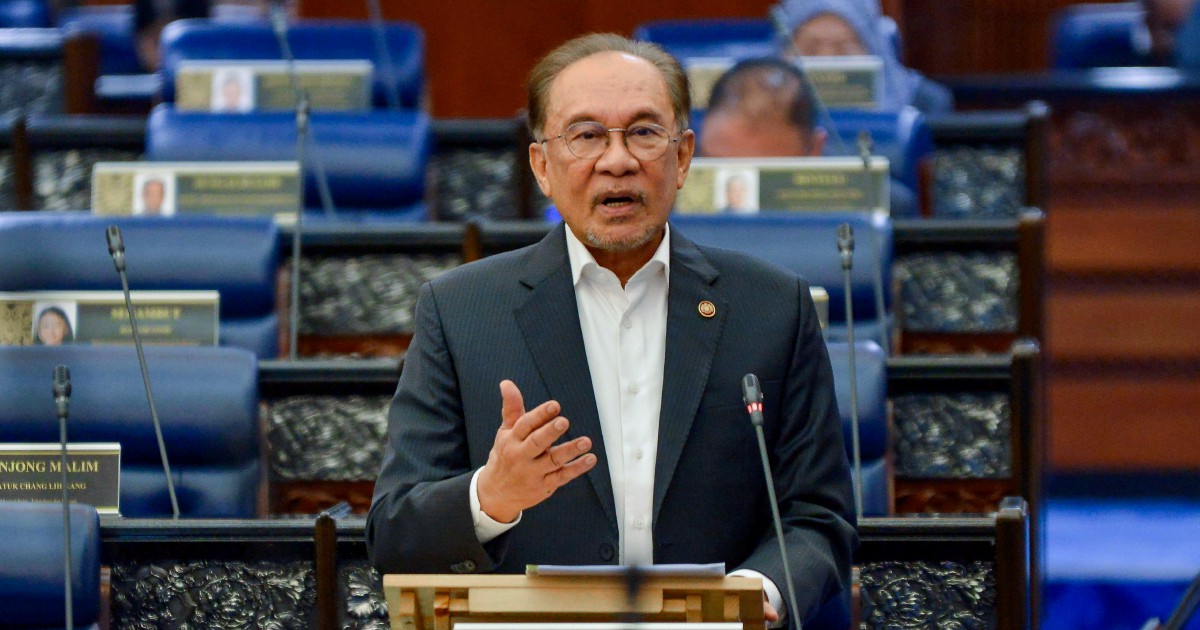
Malaysia faces a widening gap between investment income generated by its retirement fund and the mounting cost of honouring pension commitments to former and current government employees. Prime Minister Datuk Seri Anwar Ibrahim highlighted this fiscal imbalance, noting that the Retirement Fund Incorporated (KWAP) generated RM12.9 billion in investment earnings while the government's pension obligations reached nearly RM45 billion annually. The disparity underscores a structural challenge that policymakers must address as the nation's ageing population and expanding retiree base continue to strain public finances.
The pension system represents one of Malaysia's most substantial unfunded liabilities. Unlike contributory schemes where workers and employers set aside funds during employment years, Malaysia's civil service pension system operates largely on a pay-as-you-go basis. This means current government revenues must finance current pension payments rather than relying primarily on accumulated investment pools. The RM32 billion shortfall between KWAP's earnings and annual obligations illustrates the mathematical impossibility of maintaining the current structure without drawing on other government resources or implementing structural reforms.
KWAP's investment performance, whilst substantial in absolute terms, reflects the reality facing many sovereign wealth and retirement funds globally. The fund manages assets accumulated from decades of government pension contributions and investment returns. Yet even with sophisticated portfolio management and diversified holdings across equities, fixed income, and alternative investments, the earnings cannot match obligations that have grown exponentially. The issue is not merely about investment returns but fundamentally about demographic trends and the unsustainable mathematics of pension promises made under different economic and demographic conditions.
This fiscal reality resonates particularly for Southeast Asian nations grappling with similar challenges. Indonesia, Thailand, and the Philippines all confront questions about pension sustainability as populations age and dependency ratios shift unfavourably. Malaysia's experience provides a cautionary case study. Decades of generous pension commitments, whilst politically popular and arguably justified as compensation for public service, have created obligations that current and foreseeable future revenues struggle to accommodate. The Prime Minister's public acknowledgement of this gap signals potential preparedness to discuss difficult policy options with stakeholders.
The implications extend beyond retirees and government employees. Meeting pension obligations diverts substantial resources from other budget priorities including education, healthcare infrastructure, and economic development initiatives. When pension costs consume an outsized portion of the fiscal budget, governments face constrained choices about spending elsewhere. For Malaysia, which aspires to higher-income nation status and sustained development, this crowding-out effect represents an opportunity cost measured in foregone investments in future growth.
Policymakers examining this challenge typically consider several approaches. Increasing contributions from current workers, raising retirement ages, adjusting benefit formulas, or means-testing pensions for higher-income retirees represent common reform pathways implemented globally. Each carries political consequences and affects different demographic groups unequally. Delaying action typically exacerbates the problem, as unfunded liabilities compound over time and required adjustments become more severe. Early action allowing gradual transitions protects those near retirement whilst implementing changes that primarily affect younger workers and future recruits.
The investment earnings figure of RM12.9 billion, whilst demonstrating KWAP's competent fund management, also highlights the scale of the underlying challenge. Even doubling or tripling investment returns would not fully resolve the structural imbalance without corresponding reforms to the benefit structure or contribution rates. This mathematical reality frames the choices realistically. No amount of investment performance can indefinitely bridge a gap of this magnitude when demographic and benefit structure variables remain unchanged. Financial engineering alone cannot substitute for policy adjustments aligned with economic fundamentals.
Malaysia's experience with pension fund challenges also connects to broader governance concerns. Transparency about unfunded liabilities and frank discussions regarding long-term sustainability strengthen public confidence in institutions. When governments acknowledge difficulties transparently rather than obscuring them, citizens better understand the necessity for reforms and can engage constructively in policy discussions. The Prime Minister's public statement represents a step toward such transparency, potentially preparing the ground for addressing these issues substantively.
Looking forward, stakeholders including retirees, current civil servants, younger workers, taxpayers, and policymakers must engage in informed dialogue about sustainable solutions. International experience demonstrates that gradual, well-communicated reforms implemented with adequate transition periods prove more politically and socially manageable than sudden, crisis-driven adjustments. Malaysia's demographic window for implementing changes remains open but narrows annually as the retiree population grows. The RM32 billion annual shortfall represents not merely an accounting entry but a clarion signal that the current trajectory remains fundamentally unsustainable without material changes to pension policy or contribution structures.

