Pakatan Harapan is pushing back strongly against a political narrative that portrays one bloc as the sole legitimate voice of Malaysia's Malay-Muslim community, characterising such claims as fundamentally at odds with the nation's multicultural fabric. Speaking during the Negeri Sembilan state election campaign on July 23, party officials emphasised that this exclusive framing of political representation undermines the inclusive values upon which the coalition is built and risks fracturing the broader cohesion that multiethnic Malaysia requires.
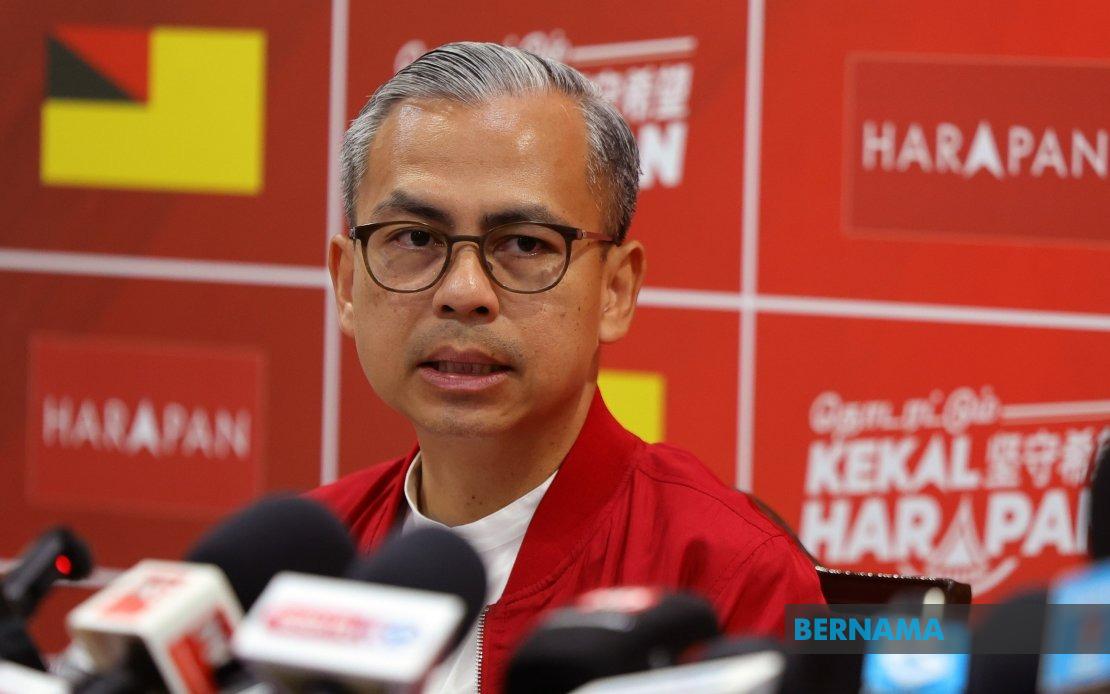
Datak Seri Fahmi Fadzil, who serves as PH's communications director alongside his roles as PKR information chief and Communications Minister, directly challenged the premise that Malay-Muslim representation remains limited to a single political organisation. His intervention was pointedly personal, questioning whether prominent Malay-Muslim leaders within PH's ranks—including himself—could somehow be excluded from conversations about their own community's political voice. This rhetorical approach highlighted the logical inconsistency at the heart of claims suggesting only one group can authentically speak for Malaysia's largest demographic segment.
Also participating in the press conference was Khalid Abdul Samad, who heads communications for Amanah, one of PH's constituent parties, and Cha Kee Chin, the Negeri Sembilan DAP secretary. Their presence underscored the coalition's deliberate effort to demonstrate internal diversity and shared commitment to rejecting divisive political messaging. The gathering itself became a visual counterargument to the very narrative PH was denouncing—a coalition of Malay-Muslim and non-Muslim leaders united behind common principles rather than segmented by ethnic political calculation.
Fahmi articulated PH's broader political philosophy, emphasising that the coalition advocates unity rooted in shared values and collective welfare rather than ethnic mobilisation. He framed the alternative as a form of chauvinism that fragments Malaysian society by privileging race over principle, citizenship over compassion. This positioning reflects PH's strategic effort to occupy the middle ground of Malaysian politics, distinguishing itself from competitors perceived as relying on ethnic divisiveness to consolidate power. The approach carries particular significance during state elections, where local grievances can amplify broader identity-based political messaging.
The coalition has deployed empirical evidence to substantiate its claims that Malay-Muslim interests remain central to its governance agenda. Fahmi pointed specifically to Negeri Sembilan's record under Menteri Besar Datuk Seri Aminuddin Harun, noting that mosque construction has accelerated and zakat collections have increased by approximately two and a half times compared with the previous administration. These metrics function as tangible rebuttals to suggestions that a PH-led government neglects Islamic or Malay-Muslim priorities, translating abstract political claims into measurable outcomes relevant to Muslim voters' daily concerns.
The timing of these remarks during the Negeri Sembilan campaign reflects broader pressures PH faces across multiple electoral contests. Opposition parties have increasingly employed ethnically and religiously charged messaging, attempting to persuade Malay-Muslim voters that their interests are imperiled under multiracial coalitions. This political strategy has proven effective in various contexts, particularly when economic challenges or social anxieties intersect with identity-based appeals. PH's counter-offensive suggests the coalition recognises that defending its multiracial character requires not passive acceptance but active, persistent engagement with communities that might otherwise default to single-identity politics.
Fahmi's insistence that PH will intensify outreach efforts signals recognition that rhetorical clarity alone proves insufficient when competing against well-resourced opponents employing emotionally resonant communal messaging. The coalition plans more direct voter engagement to communicate that Malay-Muslim membership within PH remains not merely accepted but foundational. This ground-level work attempts to address the persistent narrative gap between PH's philosophical commitments and voter perceptions of those commitments, a challenge that internal party diversity does not automatically resolve.
The broader context of Malaysian politics reveals deepening competitive pressures around ethnic and religious representation. Multiple coalitions and independent parties compete for Malay-Muslim support, and the political marketplace has increasingly rewarded organisations willing to employ exclusionary rhetoric. PH's decision to explicitly reject this framework represents both a principled stance and a calculated political risk, betting that sufficient Malaysian voters value pluralism and multiracial governance over ethnic chauvinism. This gambit remains contested across the nation's electoral landscape.
Negeri Sembilan's political trajectory holds particular importance for assessing whether PH's multiracial coalition model can sustain electoral support at the state level. The state has traditionally been competitive between major coalitions, and the Malay-Muslim voter bloc remains pivotal to electoral outcomes. The early voting scheduled for July 28, ahead of the August 1 polling day, will provide initial indicators of whether PH's messaging about inclusive representation resonates with voters or whether opposition claims about exclusive ethnic politics gain traction.
The fundamental tension at the heart of PH's position reflects a broader challenge facing multiracial coalitions across Southeast Asia. Maintaining internal diversity while competing against organisations willing to mobilise single-identity politics requires constant effort, repeated messaging, and demonstrable governance achievements. PH's leaders appear committed to this challenge, recognising that Malaysia's long-term stability and prosperity depend on political coalitions that transcend ethnic calculation. Whether voters reward such commitment across successive elections remains the ongoing test of Malaysia's democratic maturity and commitment to pluralist values.

