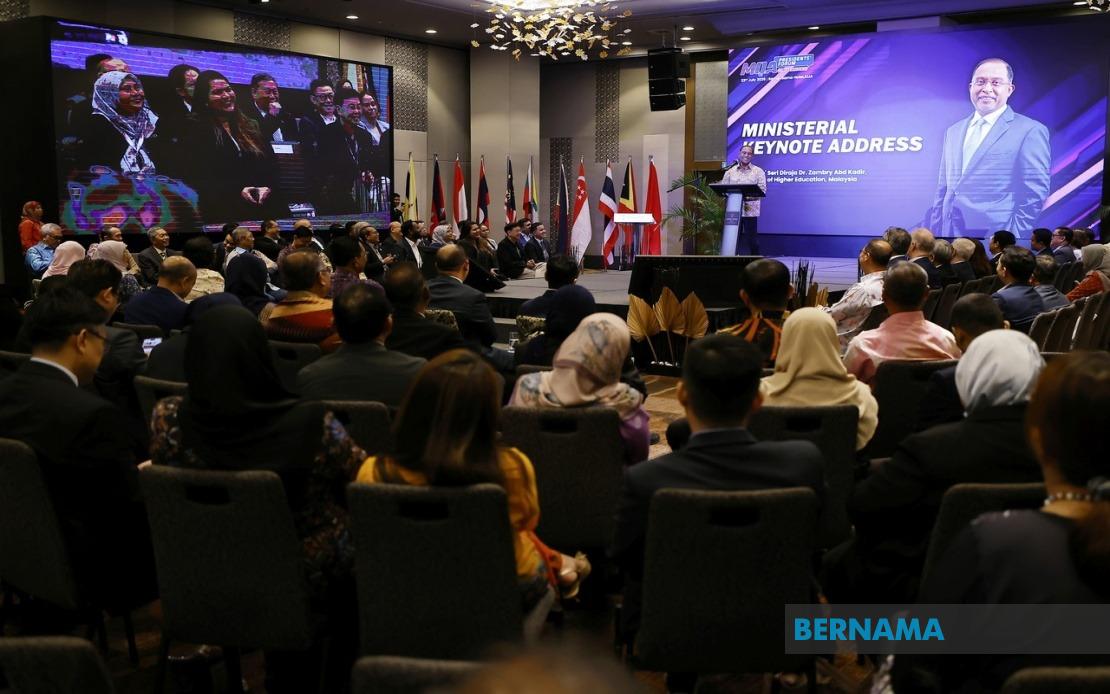
The proliferation of student enrolments at Malaysia's polytechnics has created an unexpected accommodation crisis, forcing the Higher Education Ministry to accelerate infrastructure improvements at institutions nationwide. Speaking at the 2026 Malaysian Qualifications Agency Presidents' Forum in Sepang on July 23, Higher Education Minister Datuk Seri Dr Zambry Abd Kadir acknowledged the dormitory shortfall while framing it as an unintended consequence of policy success.
The surge reflects a deliberate government initiative to redirect secondary school graduates toward technical and vocational education and training, a strategic pivot designed to address Malaysia's skills shortage in critical sectors. By promoting polytechnics and technical colleges as viable alternatives to traditional university pathways, policymakers sought to build a workforce aligned with industrial needs. The strategy appears to have resonated considerably: polytechnics recorded more than 125 per cent achievement in applications this cycle, translating to 30,488 new students registering for the 2026/2027 Session 1 intake on June 22 alone—a figure that significantly exceeded planning assumptions.
Yet this remarkable success in attracting students has exposed long-standing infrastructure deficiencies at several polytechnic campuses. The accommodation constraints predominantly affect institutions with aging hostel structures that require substantial remedial work. Many of these buildings predate the recent push to expand technical education enrolment and were never designed to accommodate the current student volumes. Zambry indicated that the ministry had begun a systematic review to identify which facilities posed the greatest risks to student welfare and required immediate intervention.
The housing problem carries particular significance for polytechnic students, many of whom travel from rural or distant regions to attend programmes unavailable locally. Unlike university students, who increasingly commute from nearby residential areas, polytechnic learners typically depend on on-campus accommodation or institutional support to access education. Inadequate hostels therefore threaten not merely comfort but educational continuity and retention rates, especially among disadvantaged cohorts who lack financial resources to secure private lodging.
Zambry stated that the government had already submitted formal requests to repair deficient hostels at multiple polytechnics, with maintenance prioritised at facilities in the poorest condition. The ministry intends to address these renovation needs through dedicated budget allocations and phased implementation schedules. However, he offered no specific timeline, budget allocation, or list of affected institutions, leaving considerable uncertainty about the pace and scope of repairs.
The minister's directive to Polytechnic and Community College Education Department director-general Dr Shamsuri Abdullah underscores the urgency senior leadership has attached to resolving placement and logistics issues arising from the enrolment surge. This top-down instruction suggests the crisis has escalated beyond routine administrative management, requiring intervention at the highest departmental levels to coordinate emergency measures.
From a policy perspective, this accommodation crunch reveals a persistent gap between strategic vision and operational readiness in Malaysia's technical education expansion. While government messaging has successfully convinced students to pursue TVET pathways, corresponding investments in physical infrastructure have lagged behind demand. This mismatch illustrates a broader phenomenon in Southeast Asian education systems, where policy ambitions frequently outpace capital budgeting and asset management capabilities.
The situation also raises questions about sustainability. If application rates continue at or above 125 per cent annually, Malaysia faces a chronic rather than temporary housing deficit. Relying on repairs to aging facilities offers only short-term relief; meaningful resolution requires comprehensive capacity planning, strategic facility expansion, and possibly partnership with private sector accommodation providers in polytechnic vicinities. Some regional counterparts have explored public-private models to supplement institutional housing, an approach worth examining for the Malaysian context.
Moreover, the enrolment surge presents an opportunity to recalibrate resource allocation across the polytechnic network. Some institutions may have excess capacity while others operate at saturation, suggesting that redistributing students geographically or temporally—through intake scheduling or programme relocation—could ease immediate pressure while optimising national asset utilisation. The ministry's response will therefore signal whether this is treated as a crisis requiring emergency fixes or as a planning inflection point necessitating systemic restructuring.
For Malaysian employers and industry bodies, the polytechnic accommodation challenge carries indirect implications. Students experiencing substandard housing environments face heightened stress, reduced academic engagement, and diminished professional preparation. The quality of TVET graduates entering the workforce depends partly on their learning environment and institutional support systems. Delays in resolving housing issues thus risk compromising the very skills pipeline that government policy aims to strengthen.
Zambry's public acknowledgement of the problem and commitment to remediation, while reassuring in tone, lacks the specificity required to evaluate implementation prospects. Malaysian policymakers have previously announced infrastructure projects without corresponding follow-through, eroding public confidence in stated intentions. The polytechnic accommodation issue will ultimately be judged not by ministerial statements but by observable improvements in dormitory conditions and student satisfaction within the academic year.
Looking ahead, the Higher Education Ministry must balance immediate crisis management with longer-term strategic planning. Repair works at existing facilities may relieve acute pressure temporarily, but sustainable resolution demands expanded capacity across the polytechnic system, improved forecasting methodologies, and integrated budgeting that treats student accommodation as essential educational infrastructure rather than optional amenity. The government's willingness to invest meaningfully in TVET infrastructure will significantly influence whether Malaysia can maintain momentum in skills development or whether infrastructure constraints become a bottleneck limiting enrolment growth and programme quality.

