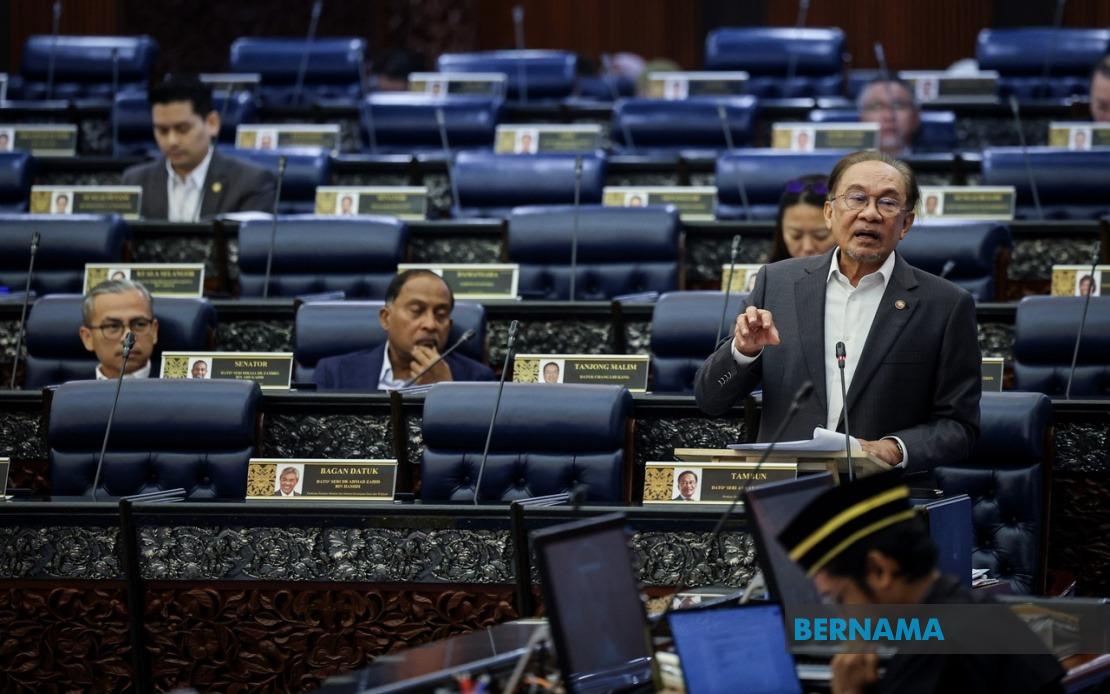
Malaysia's tumble in the 2026 World Press Freedom Index to 95th position, down from 88th the previous year, reflects a complex interplay of regulatory actions and international assessment standards rather than systematic press suppression, according to Prime Minister Datuk Seri Anwar Ibrahim. Speaking in Parliament, the Prime Minister acknowledged that several high-profile enforcement cases involving established news organisations have influenced the country's international reputation for media freedom, yet he maintained that such actions target only specific categories of content deemed sensitive to national cohesion and institutional integrity.
The government's enforcement approach has concentrated on what officials describe as the "3R" framework—content touching on religion, race, and the royal institution—alongside material deemed to threaten national security. This targeted approach differs fundamentally, according to Anwar, from wholesale censorship or political intimidation. He emphasised that the government continues to tolerate robust political criticism and factual inaccuracy alone does not trigger enforcement, positioning Malaysia's regulatory stance as narrowly calibrated rather than broadly restrictive. This distinction carries particular significance for regional observers seeking to understand how Southeast Asian democracies balance press freedom with communal sensitivities in multi-ethnic, multi-religious societies.
Two recent cases have become emblematic of Malaysia's evolving press regulation and contributed substantially to the country's declining ranking. Sin Chew Daily faced action over publication of what the government deemed an inaccurate rendering of the Jalur Gemilang national flag, while Sinar Harian encountered enforcement related to publication of the Inspector-General of Police's biography. Anwar acknowledged that the international media community, particularly Reporters Without Borders (RSF) which compiles the World Press Freedom Index, views such enforcement actions as serious violations of journalistic prerogatives. However, the Prime Minister contended that Malaysia's approach to national symbols and institutional imagery reflects cultural and constitutional priorities that may not align with international press freedom standards developed in different contexts.
The government has sought to recalibrate its regulatory approach through legislative amendments, particularly modifications to Section 233 of the Communications and Multimedia Act 1998. These changes, implemented to address press freedom concerns, explicitly carve out satirical remarks directed at political leaders including the Prime Minister himself from criminal classification. This legislative move signals recognition that Malaysia's media environment requires clearer boundaries between protected speech and regulated content, acknowledging that indefinite enforcement discretion generates press freedom concerns regardless of enforcement rationale.
A significant dimension of Malaysia's press freedom ranking reflects factors beyond direct government action. Anwar highlighted that international assessments by RSF encompass multiple indicators including the political environment, legal framework, economic conditions, socio-cultural context, and security environment. This comprehensive methodology means that Malaysia's ranking reflects not merely government enforcement choices but the aggregate effect of these various systemic factors. Moreover, the removal of online content by major social media platforms based on user complaints rather than government directives constitutes another pressure point on Malaysia's international press freedom standing, one over which the government exercises limited control.
The Prime Minister noted that even his own social media posts have faced removal by platform operators, including content related to Hamas, demonstrating that content moderation decisions increasingly emanate from corporate platforms rather than state authorities. Requests from Malaysia's Communications and Multimedia Commission (MCMC) do not automatically receive platform compliance, as ultimate moderation authority resides with the respective platform operators themselves. This shift in power dynamics has created a complex landscape where Malaysia's press freedom metrics reflect not only government action but also the global content policies of technology companies operating within the Malaysian information ecosystem.
Government enforcement philosophy, according to Anwar, privileges clarification over prosecution. Rather than immediately initiating legal action against publications, the government has adopted a practice of providing public explanations and corrections, including through Parliamentary discourse. This approach reflects recognition that enforcement actions against established news organisations generate international criticism and ranking penalties, whereas transparent public response to alleged inaccuracies or problematic content can address concerns while minimising institutional friction. Such strategic communications choices suggest evolving sophistication within Malaysia's regulatory approach to balancing press freedom concerns against the government's substantive interests.
The Conference of Rulers, Malaysia's constitutional institution representing the nine Malay-Muslim states and federal territories, maintains a supervisory role regarding content affecting the royal institution. Anwar emphasised that government enforcement of 3R constraints reflects the position agreed upon through this constitutional mechanism, placing such regulations within Malaysia's foundational legal and institutional structure rather than characterising them as arbitrary executive impositions. This framing connects press regulation to federalism and constitutional monarchy principles, anchoring enforcement choices in Malaysia's unique constitutional architecture in ways that may resonate differently in international assessments developed for unitary or republican systems.
The government's assertion that no enforcement action is undertaken solely for factual inaccuracy or political criticism represents an effort to distinguish Malaysia's regulatory model from authoritarian systems that suppress dissent wholesale. This distinction matters significantly for international investors, journalists, and regional analysts assessing whether Malaysia remains a relatively open information environment within Southeast Asia. The government appears to be signalling that Malaysia's press ecosystem, while constrained on certain sensitive topics, retains substantial space for reporting, analysis, and political commentary on matters outside the 3R framework and security considerations.
For Malaysian and regional observers, the policy implications extend beyond press freedom metrics to encompass broader questions about how diverse, federal democracies manage tensions between cultural sensitivity and open information environments. Malaysia's experience suggests that constitutional frameworks privileging particular institutions and communities may inevitably constrain press freedom metrics developed in different constitutional contexts. Whether Malaysia's current approach can simultaneously satisfy international press freedom assessments while maintaining the constitutional protections the government deems essential remains a central tension in Malaysian media policy. The government's apparent strategy involves accepting some ranking penalties as the cost of enforcing 3R protections while attempting to expand freedom in other domains through legislative amendment and clarification-focused enforcement practices.

