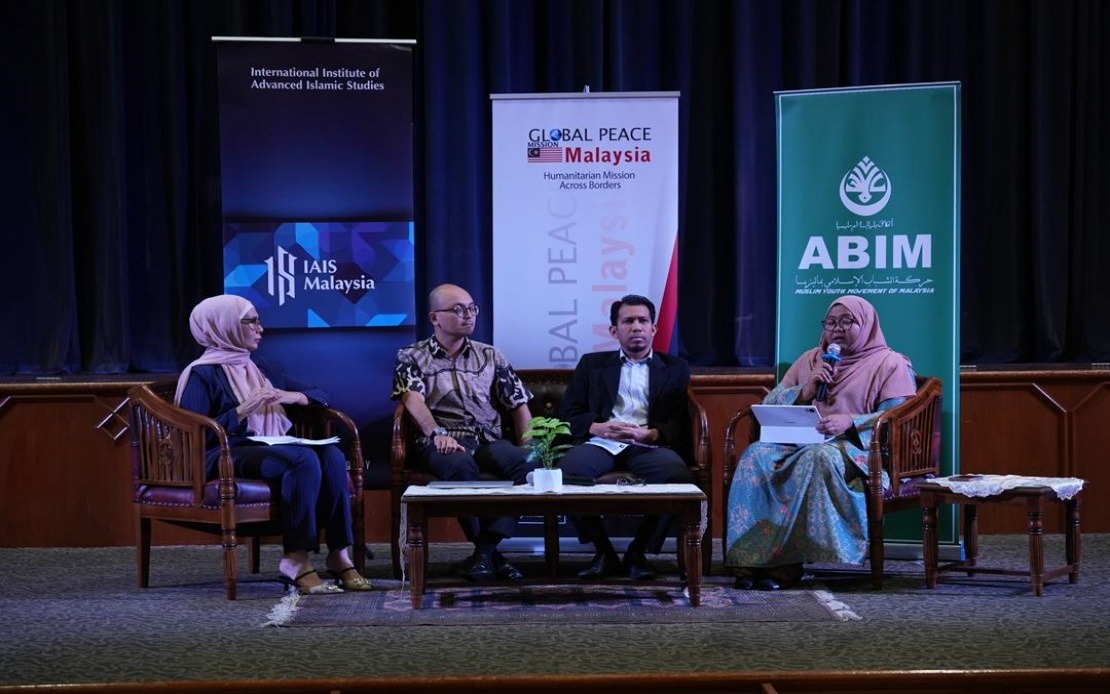
Malaysia's civil society, humanitarian groups and academic institutions have collectively endorsed a substantial framework for tackling refugee challenges in the country, moving beyond polarised debate toward a middle-ground approach. The Kuala Lumpur: Solidarity with Refugees Conference, held on June 20 in conjunction with World Refugee Day 2026, produced 10 resolutions designed to guide policymakers toward more balanced and effective solutions that acknowledge both national security imperatives and humanitarian obligations.
The gathering at the International Institute of Advanced Islamic Studies brought together representatives from non-governmental organisations, universities, international bodies and community leaders to deliberate on how Malaysia can better manage its refugee populations. Ahmad Fahmi Mohd Samsudin, president of Angkatan Belia Islam Malaysia (ABIM), explained that the resolutions emerged from grassroots experience and direct engagement with refugee communities. The intention is to transmit these findings to Members of Parliament and key stakeholders, creating a foundation for more informed legislative and administrative responses to refugee-related policy challenges.
A critical dimension of the conference was its emphasis on countering inflammatory narratives that have increasingly characterised public discourse around refugee populations. Ahmad Fahmi stressed that Malaysia faces a dual challenge: addressing genuine concerns about security, law enforcement and social cohesion without allowing xenophobic rhetoric to dominate policy discussions. He warned that unchecked anti-refugee sentiment risks spreading to other vulnerable populations, potentially fracturing social stability and community relations across the country.
Malaysia's historical position on refugee matters deserves particular attention. Despite not being a signatory to the 1951 Refugee Convention, the country has accumulated substantial experience managing large-scale humanitarian crises. Vietnamese refugees who fled during the late Cold War, Syrian asylum seekers escaping civil war, and populations from Bosnia and Palestine have all found temporary sanctuary on Malaysian soil. This track record demonstrates institutional capacity and humanitarian precedent, yet current public perception often overlooks this nuanced history in favour of more recent anxieties.
Among the substantive resolutions were unequivocal rejections of hatred, discrimination and dehumanisation targeting refugees and asylum seekers. The conference participants recognised that legitimate public concerns—rooted in real challenges around security, law enforcement and community resources—warrant serious engagement and fact-based responses rather than dismissal. This distinction separates rational policy deliberation from xenophobic agitation, a crucial separation that Ahmad Fahmi identified as essential for moving the conversation forward.
The resolutions also championed collaborative strengthening of refugee data collection and registration systems in partnership with the United Nations High Commissioner for Refugees and other international stakeholders. Improved documentation and orderly management processes could enhance transparency and public confidence whilst reducing ambiguity that often fuels misconceptions. Such infrastructure changes require sustained investment but offer long-term benefits for both refugee protection and community integration outcomes.
Education and information ecosystems featured prominently in the adopted framework. Participants called for expanded public education initiatives, improved media literacy and concerted action against disinformation campaigns and hate speech that corrode social cohesion. The digital environment presents particular challenges, as social media platforms enable rapid amplification of false narratives and xenophobic messaging. The conference recognised that countering these dynamics requires dedicated communication strategies and mechanisms supporting civil society organisations facing online harassment and coordinated smear campaigns.
The conference's joint organisation by Global Peace Mission Malaysia, ABIM and IAIS Malaysia reflected a broader coalition-building approach. By uniting religious organisations, academic institutions and humanitarian bodies, the event demonstrated that concern for refugee welfare extends across different sectors and constituencies in Malaysian society. This breadth suggests potential for building sustainable consensus around more nuanced policies that move beyond simplistic dichotomies between security and compassion.
Ahmad Fahmi indicated plans to pursue follow-up discussions with the Home Ministry and the National Security Council, positioning the conference outcomes as launching points for substantive policy engagement rather than symbolic gestures. This administrative roadmap suggests the resolutions may translate into concrete institutional changes, though success will depend on receptiveness from relevant government bodies and their capacity to integrate humanitarian considerations into existing security and immigration frameworks.
For Malaysia and the broader Southeast Asian region, the conference's emphasis on fact-based deliberation offers a model for managing contentious issues. As refugee and migration pressures continue across Asia, countries grappling with similar challenges can observe how Malaysia navigates the balance between legitimate governance concerns and humanitarian responsibilities. The resolutions implicitly reject both reflexive openness and wholesale rejection of refugee populations in favour of pragmatic, evidence-informed policy-making grounded in respect for human dignity.

