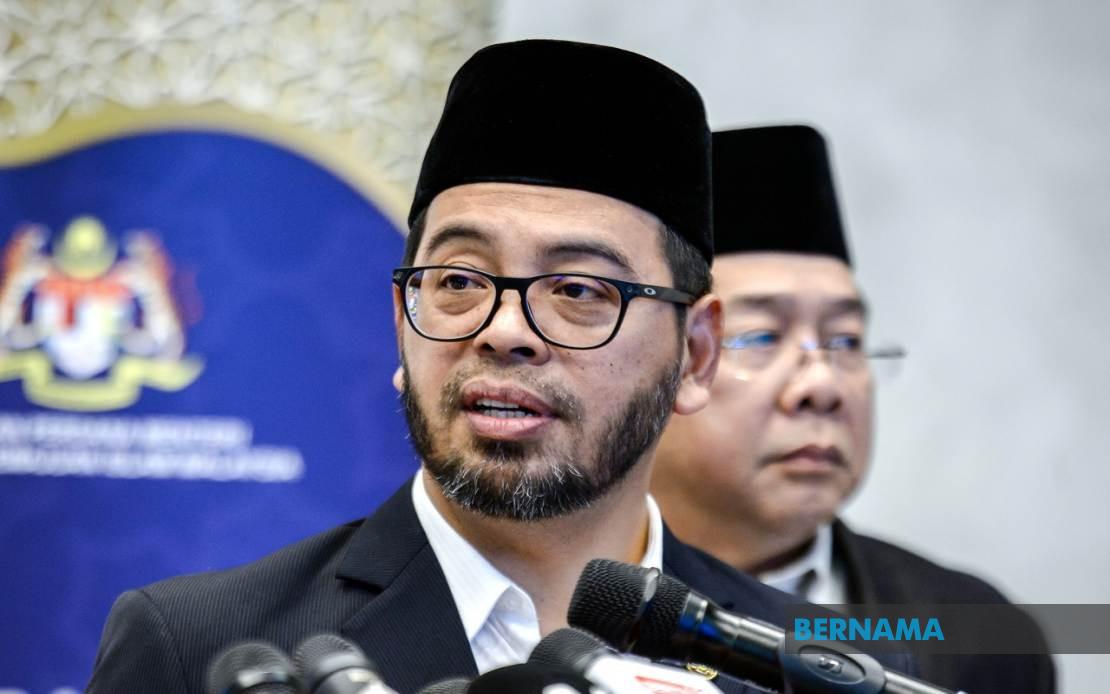
Malaysia has escalated its diplomatic stance on Jerusalem affairs, with the Religious Affairs Ministry launching a pointed condemnation of the detention of Jerusalem's Grand Mufti Sheikh Muhammad Hussein following Friday prayers at the Al-Aqsa Mosque. Although Sheikh Muhammad Hussein was subsequently released, the incident has prompted Senator Dr Zulkifli Hasan, who serves as Minister in the Prime Minister's Department overseeing Religious Affairs, to underscore what Kuala Lumpur views as a serious breach of international humanitarian standards and religious freedoms.
The temporary detention of a senior Islamic religious figure whilst performing his spiritual duties at one of Islam's most sacred sites carries symbolic weight that extends far beyond the immediate incident. Dr Zulkifli characterised the episode as constituting a fundamental violation of religious freedom, one that simultaneously denigrates the sanctity of Al-Aqsa Mosque itself. This rhetorical framing reflects Malaysia's consistent positioning as a defender of Muslim interests on the global stage, particularly regarding matters involving Palestine and Jerusalem.
Kuala Lumpur has escalated its appeal to multilateral institutions to intervene decisively. The statement specifically invokes both the United Nations and the Organisation of Islamic Cooperation as bodies capable of enforcing international law protections for worship rights, the physical safety of religious leaders, and the institutional status of Al-Aqsa Mosque. This dual-track approach—appealing to universal human rights frameworks whilst simultaneously mobilising the Islamic bloc—represents Malaysia's strategic approach to leveraging both Western-led and Muslim-majority international mechanisms.
The Malaysian government's reaffirmation of solidarity with Palestinian people and commitment to supporting efforts toward what it terms a "just peace" reflects longstanding domestic political positioning. Malaysia's significant Muslim majority and the historical influence of pro-Palestinian sentiment across civil society mean that Palestinian matters retain considerable political salience. The ministry's emphasis on defending Palestinian rights and opposing all forms of oppression signals continuity with prior administrations' foreign policy orientations.
Parallel to the Jerusalem controversy, the Religious Affairs Ministry has drawn national attention to the 31st anniversary of the Srebrenica massacre, situating this historical trauma within Malaysia's broader advocacy for Muslim communities globally. The 1995 tragedy, in which Bosnian Serb forces systematically executed over 8,000 Bosniak Muslim men and boys across several days in July despite the town's UN designation as a safe area, remains an unhealed wound. More than 1,000 victims remain unidentified, whilst ongoing forensic and identification efforts continue to provide closure to survivors and bereaved families.
Malaysia has positioned itself as a meaningful actor in the Bosnian Muslim tragedy narrative, both historically and contemporaneously. The government credits former Prime Minister Tun Dr Mahathir Mohamad and current Prime Minister Datuk Seri Anwar Ibrahim with championing Bosnian Muslim causes at the international level. Additionally, Malaysia highlights the humanitarian pioneering work undertaken by the Muslim Youth Movement of Malaysia (ABIM) during the conflict period, signalling how civil society organisations complement official diplomatic efforts.
The Malaysian military and diplomatic contributions to the Bosnian crisis constitute substantial historical commitments. Between 1993 and 1998, the Malaysian Armed Forces deployed 10,514 officers and personnel through UN peacekeeping operations, serving under both the Malaysian Battalion (MALBAT) and the Implementation Force (IFOR). These deployments represented Malaysia's concrete military contribution to stabilising the region and protecting vulnerable populations. Furthermore, Malaysia extended educational opportunities to Bosnian refugees through the International Islamic University Malaysia (IIUM), offering pathways to knowledge and professional advancement for displaced persons.
Dr Zulkifli has framed the Srebrenica commemoration as an educational imperative for Malaysian youth, positioning the massacre as a historical lesson with contemporary relevance. The minister urges younger generations to extract moral teaching from this tragedy—specifically, to reject hatred, sectarian division, and systems of oppression that enable communal violence. This pedagogical framing connects historical trauma to present-day values formation, attempting to instil anti-violence and pro-coexistence principles among Malaysia's younger demographic.
The religious invocation with which Dr Zulkifli concludes his statement—"Allahimanet Bosna" (May Allah protect Bosnia)—adds spiritual dimension to the secular commemoration. Prayers for the elevated spiritual status of Srebrenica's martyrs and petitions for continuing strength for surviving families reflect the emotional and devotional dimensions of how Malaysia's leadership engages with Muslim traumas overseas. This language choice reinforces the spiritual affinity many Malaysians feel toward fellow Muslim communities experiencing conflict and suffering.
The twin issues of Jerusalem and Srebrenica together illustrate Malaysia's self-conception as an international advocate for Muslim interests, both contemporary and historical. Whether condemning detention at Al-Aqsa or commemorating 1990s mass atrocities in the Balkans, the Religious Affairs Ministry articulates Malaysia's commitment to transnational Muslim solidarity. For regional observers, these statements underscore how Malaysian foreign policy rhetoric consistently emphasises religious freedom, humanitarian protection, and the defence of Muslim communities as central pillars of national identity and international engagement.

