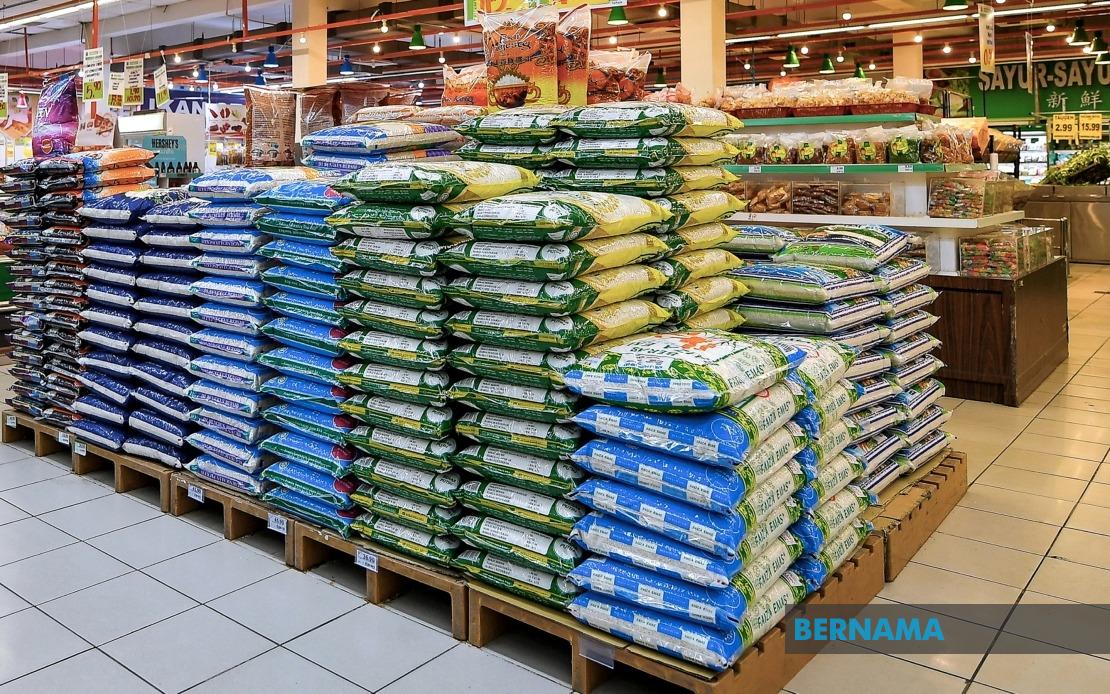
Malaysia's essential food supplies face no immediate threat, with government assurances that the country maintains adequate reserves to sustain its rice consumption for the next six months. Economy Minister Akmal Nasrullah Mohd Nasir delivered this reassurance during a briefing on global supply disruptions, underscoring the administration's commitment to protecting consumers from commodity price volatility that has affected nations worldwide.
The minister's statement addressed widespread concerns about food security in the region, where rice remains the dietary cornerstone for millions across Southeast Asia. By quantifying the buffer stock position, the government provided concrete evidence of preparedness rather than relying on general assurances, a significant gesture given the anxiety that commodity shortages have triggered in neighbouring countries during recent international crises.
A cornerstone of the government's food security strategy involves freezing prices for Local White Rice (BPT), Malaysia's benchmark staple product. Akmal Nasrullah confirmed that no price increases would occur despite external pressures, a critical decision that shields household budgets from inflationary impacts rippling through global markets. This commitment extends protection to low-income families for whom rice expenditure constitutes a substantial portion of monthly spending.
These measures emerged from discussions at the National Economic Action Council (MTEN), chaired by Prime Minister Datuk Seri Anwar Ibrahim at the Parliament building. The involvement of Malaysia's top economic policymakers signals that food security ranks among the government's highest priorities, particularly as geopolitical tensions and climate disruptions create unpredictable supply patterns affecting international grain markets.
The administration simultaneously addressed pressures facing domestic rice producers, recognizing that farmers shoulder mounting challenges from environmental volatility and escalating input costs. Through the Paddy Farmers Plowing Incentive programme, the government distributed RM45.98 million to 118,908 paddy farmers across Peninsular Malaysia. This financial support acknowledges the economic squeeze farmers experience when production expenses rise while market prices remain controlled, a structural tension that could otherwise discourage agricultural investment.
The timing of these interventions reflects broader regional dynamics. Supply chain disruptions affecting grain exports from major producers have prompted numerous countries to reconsider food sovereignty strategies. Malaysia's emphasis on maintaining domestic agricultural productivity, even while maintaining price controls for consumers, demonstrates an attempt to balance competing demands: safeguarding household food security while sustaining the farming sector that underpins that security.
For Malaysian consumers, these assurances provide stability in an uncertain environment. Rice price fluctuations have sparked social discontent in various Asian markets, making government intervention on pricing a politically sensitive matter. By pre-emptively freezing Local White Rice prices and demonstrating adequate reserves, authorities attempt to anchor public confidence in food availability and affordability.
The six-month buffer stock figure merits contextualisation within Malaysia's consumption patterns and demographic profile. With over 34 million people, the nation's rice requirements remain substantial despite dietary diversification in urban areas. The buffer duration provides sufficient runway for addressing supply disruptions without immediately triggering emergency measures or price deregulation, though it also implies that strategic planning for replenishment must remain actively managed.
Farmers in Peninsular Malaysia, who received the plowing incentive funds, represent a crucial component in this security equation. Rice cultivation requires significant upfront investment in seeds, fertilizers, labour, and equipment, with returns dependent on stable market conditions and reasonable commodity prices. By providing financial assistance, the government attempts to prevent farm abandonment or production contraction that could ultimately undermine domestic supply capacity, even if international supplies remained available.
The government's multi-faceted approach—combining price stability, adequate reserves, and producer support—reflects lessons learned from previous global supply crises. Rather than implementing reactive measures when shortages materialise, Malaysian policymakers appear committed to proactive management, though sustained effectiveness depends on consistent implementation and market monitoring. The challenge lies in maintaining these protections while navigating international trade obligations and market dynamics that governments cannot entirely control.

