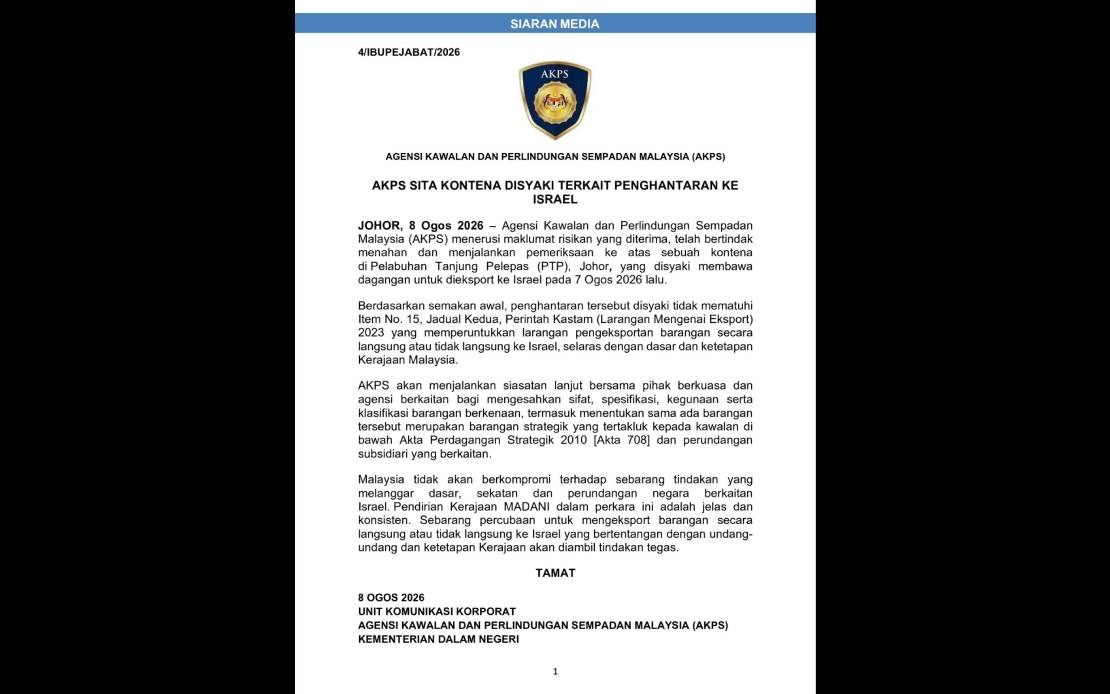
Malaysia's border authorities have intercepted a shipping container at the Port of Tanjung Pelepas in Johor that was suspected of containing strategic goods intended for export to Israel, drawing commendation from Prime Minister Datuk Seri Anwar Ibrahim. The seizure by the Malaysian Border Control and Protection Agency (AKPS) underscores Kuala Lumpur's determination to prevent the country's ports and infrastructure from facilitating commerce that could indirectly sustain Israeli economic and military capabilities.
Announcing the development through a Facebook statement, Anwar described the interception as a demonstration of Malaysia's firmness in maintaining stringent controls over its trade networks. The Prime Minister emphasised that such vigilance ensures Malaysian ports do not become conduits for goods that might ultimately support or enable what the government characterises as atrocities committed by the Israeli state against Palestinians. This language reflects the broader geopolitical positioning that has become increasingly prominent in Malaysian foreign policy discourse, particularly under Anwar's administration.
The government's action aligns with Malaysia's participation in The Hague Group, an international coalition focused on coordinating responses to Israeli policies. More immediately, it reflects a formal trade embargo that has remained in force since December 2023, which explicitly prohibits Israeli-registered vessels and ships carrying Israeli cargo from utilising Malaysian port facilities. This prohibition represents one of the most tangible policy measures through which Malaysia has operationalised its stated opposition to Israeli practices.
The AKPS statement revealed that inspectors detected the suspicious shipment and determined it appeared to violate Item No. 15 of the Second Schedule of the Customs (Prohibition of Exports) Order 2023. This regulatory framework forms the legal backbone of Malaysia's export controls concerning Israel, establishing that both direct and indirect shipments of goods to Israel are forbidden in accordance with government policy directives. The specific citation of this provision indicates that Malaysian authorities possess detailed operational guidelines for identifying and intercepting problematic cargo.
For Malaysian traders and logistics operators, the seizure carries practical implications. Shipping companies and exporters must conduct thorough due diligence on end-user destinations to avoid running afoul of customs regulations, particularly for strategic goods that might eventually reach Israeli consumers or businesses. The interception suggests that authorities are actively monitoring container manifests and investigating shipments that appear destined for Israel or Israeli intermediaries, even when goods transit through multiple countries.
International logistics networks have grown increasingly complex, with containerised cargo routinely changing hands multiple times before reaching final destinations. Malaysian companies operating in supply chains that touch Israel face reputational and legal risks if they inadvertently facilitate exports that violate the prohibition. Customs brokers and freight forwarders operating through Tanjung Pelepas and other Malaysian ports must implement enhanced screening procedures to verify that their clients' shipments do not breach the export order.
Anwar's public commendation of the AKPS action serves a dual purpose within Malaysia's domestic politics and regional diplomacy. Domestically, it reinforces the government's commitment to causes that enjoy broad support among the Muslim-majority population, where sympathy for Palestinian grievances remains significant. Regionally, it signals to neighbouring countries and international observers that Malaysia maintains principled positions on Middle Eastern issues, distinguishing itself from nations with less restrictive trade policies toward Israel.
Malaysia's approach reflects a broader pattern of using trade and commerce as instruments of foreign policy. While many nations maintain diplomatic relations and engage in trade with Israel, Malaysia has chosen to weaponise its port access and customs authority to impose costs on Israeli economic interests. This strategy assumes that denying Israeli businesses seamless access to Southeast Asian markets and logistics networks contributes meaningfully to international pressure on the Israeli government.
The consistency of enforcement matters considerably for the credibility of these policies. A single high-profile seizure, while symbolically important, requires sustained implementation across all entry points and regular monitoring of evolving smuggling tactics. Sophisticated traders occasionally attempt to obscure Israeli connections by routing goods through third countries or by misrepresenting end-users on shipping documents. The AKPS and customs authorities must maintain vigilance against such circumvention strategies to prevent the export ban from becoming merely performative.
For Southeast Asian neighbours and trading partners, Malaysia's actions raise questions about regional trade harmonisation and the potential for similar measures by other governments. Countries throughout the region face domestic political pressures regarding Middle Eastern affairs, and Malaysia's approach provides a template that others might consider adopting. However, such measures can complicate ASEAN economic cooperation, which nominally adheres to non-interference and pragmatic commercial engagement across geopolitical divides.
The interception also highlights the strategic importance of Malaysian ports within global trade networks. Tanjung Pelepas ranks among Asia's busiest container terminals, handling millions of containers annually destined for markets worldwide. Its strategic position on major shipping lanes between Europe and Asia means that many goods in transit through the port have no Malaysian origin or destination, yet may become subject to Malaysian regulatory jurisdiction during their passage through Johor waters.
Moving forward, the effectiveness of Malaysia's trade embargo will depend on sustained institutional capacity to detect violations and political will to enforce regulations consistently. As Anwar's statement demonstrates, the government views such enforcement as central to its foreign policy identity and domestic legitimacy. Whether this approach ultimately influences Israeli behaviour or generates meaningful diplomatic consequences remains subject to debate, but it clearly reflects Malaysia's determination to make Palestinian advocacy concrete through commercial policy.

