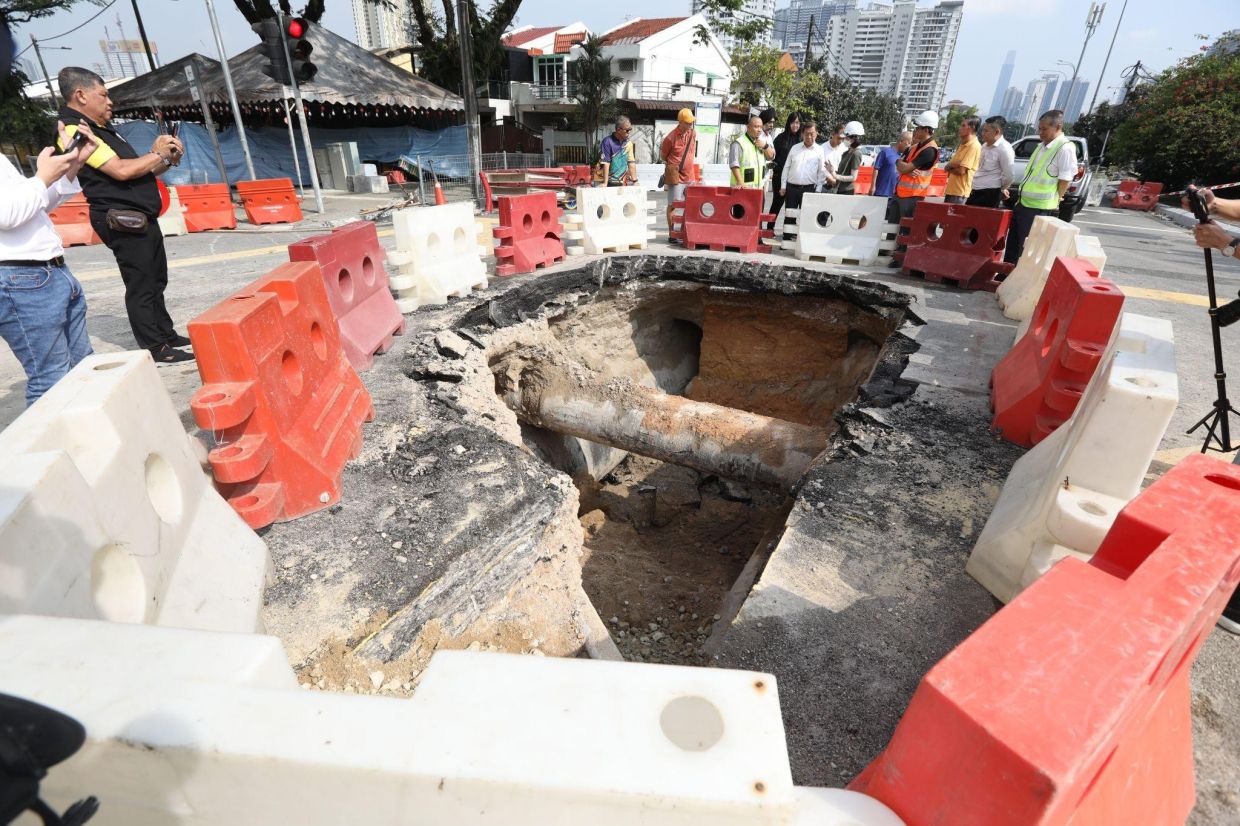
The frequency of sinkhole incidents in Malaysia is climbing in lockstep with more erratic rainfall patterns, creating a mounting headache for urban planners and utility managers grappling with deteriorating underground infrastructure. The phenomenon reflects a larger crisis: as climate patterns destabilise, the nation's vast network of buried sewers—many decades old and designed for different weather regimes—faces unprecedented strain that threatens both public safety and urban stability.
Sinkholes develop through a convergence of circumstances that vary case by case, making diagnosis complex. Natural geological composition, subsurface water dynamics, excavation and construction work, and the structural state of subterranean pipes and utilities all play roles in their formation. No two incidents are identical, and understanding the precise mechanism behind each collapse demands detailed forensic investigation combining geological analysis with infrastructure assessment.
Indah Water Konsortium (IWK), the entity responsible for sewerage services nationwide, has shifted toward preventive management rather than reactive crisis response. The approach hinges on continuous asset evaluation paired with targeted interventions designed to extend the lifespan of ageing systems and forestall catastrophic failure. The sheer scale of the responsibility is sobering: IWK oversees approximately 22,500 kilometres of public sewerage pipelines stretching across the country, with particularly vulnerable segments being the large trunk sewers—reinforced concrete conduits measuring 600 millimetres in diameter and above.
These major trunk lines operate perpetually at or close to maximum capacity, channelling sewage at high velocity while simultaneously trapping hydrogen sulphide gas, a corrosive compound that attacks concrete over prolonged exposure. The dual assault of mechanical stress and chemical degradation creates a perfect storm for structural failure, making these critical arteries priority targets for monitoring and repair.
To combat deterioration, IWK deploys sophisticated inspection methodologies that penetrate the opacity of underground systems. Ground Penetrating Radar, closed-circuit television crawler inspections, push rod cameras and pole cameras are deployed in combination, each suited to different pipe diameters and site conditions. The resulting data feeds into remedial programmes, with defective sections either rehabilitated using trenchless pipe lining technology or excavated and replaced entirely. The goal is straightforward: restore structural soundness, eliminate rupture hazards and guarantee the reliability that modern cities depend upon.
According to IWK chief executive officer Narendran Maniam, the connection between climate extremes and underground systems demands far greater attention as Malaysia confronts increasingly capricious weather. Intense rainfall destabilises ground composition, causing lateral shifting that dislodges or misaligns pipes and spawning blockages and fractures. The hydraulic pressure within flooded sewer lines can escalate dramatically, fracturing or splitting pipes and triggering breaches requiring full-line renewal. Saturation weakens soil integrity while amplifying tension on already-compromised pipelines, a double squeeze that makes failure likely.
When pipes crack, shift or burst beneath the surface, surrounding earth gradually washes into the cavity. As this underground void expands, the weight above becomes unsupported, and the ground abruptly collapses, punching a hole that endangers people, damages vehicles and destroys road surfaces and nearby buildings. Heavy downpours also introduce unintended rainwater into the network through ruptures, faulty joints and manhole openings, flooding the sewer system and overwhelming its capacity. Older pipelines suffer disproportionately, since decades of use have already degraded their structural resilience.
Recognising that extreme weather will intensify further, IWK pivoted toward comprehensive preparedness by staging a detailed crisis simulation at its Asian Sewerage Training, Research & Innovation Centre of Excellence (ASTRICE). The scenario modelled a major sinkhole with casualties and substantial sewer infrastructure compromise, deliberately straining the organisation's response protocols to identify gaps and weaknesses. Emergency mobilisation procedures, crisis management hierarchy, interagency communication and coordination with the Fire and Rescue Department, Royal Malaysia Police and other stakeholders were all tested under realistic pressure, revealing bottlenecks and inefficiencies in real time.
The exercise allowed IWK to validate response procedures, refine coordination across internal teams and partner agencies, and establish clearer decision-making pathways for time-critical situations. Rather than remaining theoretical, the findings translated into strengthened crisis management standard operating procedures, ensuring staff understand their assigned roles and possess the muscle memory to react effectively when disasters strike. Documentation created during the simulation now forms the backbone of emergency preparedness, with regular refresher training keeping personnel current.
As Malaysia enters an era of climatic unpredictability, infrastructure resilience cannot be an afterthought. IWK's multifaceted approach—combining preventive asset management, advanced diagnostics, rapid repair capabilities and rehearsed emergency response—reflects a mature recognition that protecting public welfare requires relentless vigilance. The sewerage network underpins urban hygiene, public health and economic function; its failure cascades across society. Through sustained investment in inspection technology, rehabilitation capacity and crisis coordination, IWK endeavours to keep this invisible but essential system operating reliably even as weather becomes increasingly hostile to the ageing pipes beneath Malaysia's streets.

