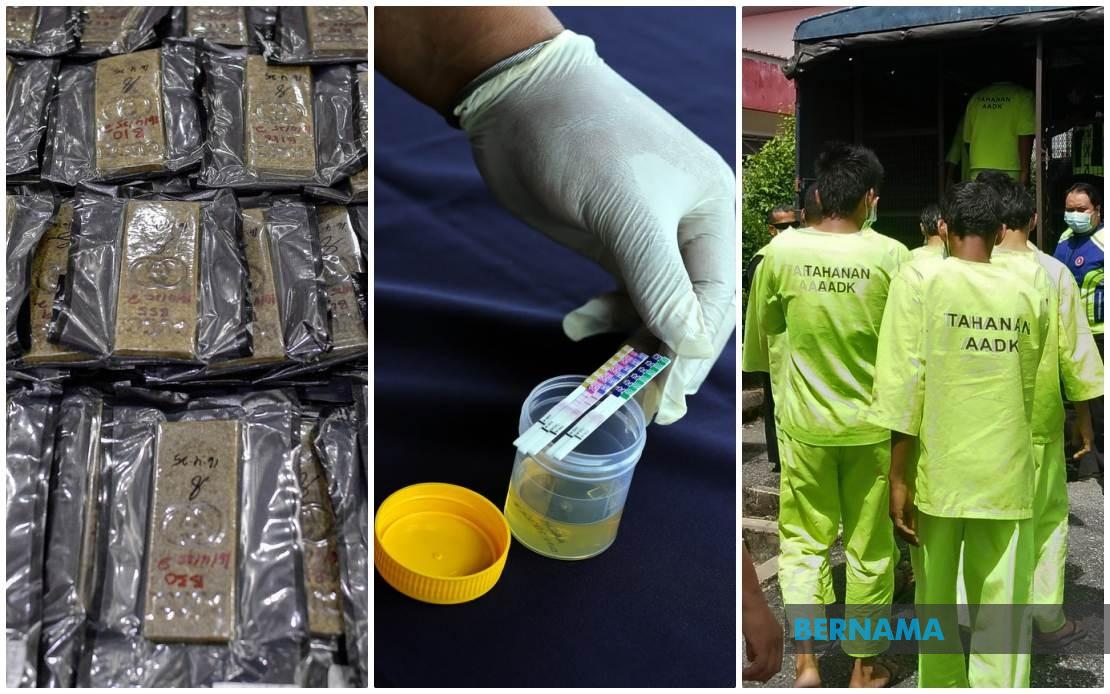
Malaysia's synthetic drug problem has reached alarming proportions, with Home Minister Datuk Seri Saifuddin Nasution Ismail revealing that 141,817 cases were documented in 2024—continuing a troubling upward trajectory that saw 145,526 cases in 2023. The progression illustrates an entrenched and expanding crisis that is consuming institutional resources and reshaping law enforcement priorities across the nation. Speaking during parliamentary question time, the minister disclosed data collated from multiple government agencies, painting a comprehensive picture of a narcotics landscape increasingly dominated by synthetic compounds rather than traditional drugs.
Synthetic substances have become the overwhelming choice among Malaysia's drug-using population, representing approximately 70 per cent of all documented abuse cases. Within this category, amphetamine-type stimulants dominate the landscape, with methamphetamine—locally known as syabu—representing the most prevalent form. This shift from heroin, cannabis, and traditional opioids reflects both evolving supply chains and changing user preferences, yet simultaneously indicates that intervention strategies designed around conventional narcotics may be losing effectiveness. The concentration of synthetic drug abuse suggests organised distribution networks have successfully established supply lines throughout the country, with particular success in capturing younger demographics and sustaining repeat use through highly addictive formulations.
Geographic analysis reveals that Malaysia's drug problem is not uniformly distributed, with the east coast region emerging as a particular flashpoint requiring urgent policy attention. Drawing on intelligence from the Ministry of Health, the National Anti-Drugs Agency, rehabilitation centres, and police forces, authorities have identified this corridor as disproportionately affected. Within this zone, the traditional drug hierarchy has inverted entirely—users have largely abandoned older substances in favour of amphetamine-type stimulants. This concentration suggests vulnerability factors specific to these states, potentially including economic dislocation, limited alternative employment, geographic isolation from treatment resources, or established criminal networks with particular strength in these regions. The distinction matters significantly for policy-makers, as interventions effective in urban centres may prove inadequate for addressing drivers of drug use in more peripheral areas.
Within the east coast, certain districts have become nationally notorious for drug-related problems. Pendang records the highest abuse rate, followed by Kuala Krai, while Bachok, Besut, and Mersing round out the most severely impacted areas. These specific localities represent concentrated zones requiring tailored intervention, suggesting that a one-size-fits-all national strategy may overlook distinctive local factors. The prison system reflects and amplifies these trends, with approximately 70 per cent of all inmates linked to drug-related convictions or remand status. In some facilities, such as Machang, drug-related cases approach complete saturation, essentially rendering these institutions de facto drug rehabilitation failures and warehouses for a revolving population with unaddressed addiction. This statistic suggests that incarceration without comprehensive treatment integration is merely displacing the problem rather than resolving it.
A significant development emerging from enforcement operations concerns fentanyl, a synthetic opioid exponentially more potent than morphine and capable of inducing fatal overdoses in minuscule quantities. Police operations targeting adulterated vaping products have begun detecting this substance, prompting legislative action through amendments to the Drug Dependants Act and the Dangerous Drugs Act 1952 that formally classify fentanyl as a controlled substance. While current fentanyl prevalence remains limited compared with amphetamine-type stimulants, the substance's extreme potency and the relative ease of producing counterfeit products suggests a concerning trajectory. For Malaysian policymakers and public health officials, fentanyl's emergence represents a particularly acute threat given its potential to rapidly escalate overdose mortality rates, a phenomenon witnessed devastatingly in North America and increasingly problematic across Asia.
Youth vulnerability represents another critical dimension of the crisis. Nearly three-quarters of documented drug abuse cases involve individuals aged fifteen to thirty-nine, indicating that addiction is entrenching itself within a generation during their most economically productive years. This age concentration suggests that intervention windows are closing for many Malaysians, as addiction during these years typically disrupts education completion, career formation, family formation, and civic participation. The concentration among youth implies that schools and tertiary institutions represent critical intervention points, yet whether current prevention programming adequately addresses the appeal and accessibility of synthetic drugs remains unclear from available evidence. The prevalence rate of approximately 560 cases per 100,000 Malaysians provides a sobering benchmark for regional comparison and suggests that Malaysia's drug crisis, while serious, remains manageable if comprehensive intervention systems achieve adequate coverage and effectiveness.
The National Anti-Drugs Agency has implemented a diversified response strategy encompassing community prevention initiatives, educational programming within schools, family intervention approaches, and workplace-based prevention efforts. These initiatives operate alongside enforcement coordination between the agency, police, and customs authorities. However, the persistence and growth of synthetic drug abuse despite these measures suggests that supply-side interventions may be insufficient without equally robust demand-reduction efforts. International evidence demonstrates that sustainable progress requires simultaneous attention to treatment availability, community reintegration support, and the underlying social factors driving initial drug experimentation. Current programming descriptions suggest emphasis on upstream prevention, yet the escalating numbers indicate that midstream intervention for established users and downstream reintegration support may require expansion.
Technological change has fundamentally altered the drug distribution landscape in ways that conventional enforcement struggles to address effectively. Online platforms enabling direct purchase of narcotics operate with minimal regulatory oversight, creating what the Home Minister characterised as an enforcement challenge and risk vector. This development complicates the traditional distinction between transit hub and distribution centre, as Malaysia may simultaneously occupy both roles—receiving shipments destined for regional distribution while serving as a consumer market with increasing direct online access to global supply chains. For Malaysian law enforcement and customs authorities, the shift toward digital distribution requires investment in cyber-surveillance capabilities, international information-sharing protocols, and coordination with platform operators—areas where institutional capacity may currently prove inadequate relative to the challenge's scale.
The synthetic drug crisis intersects with Malaysia's broader security, economic development, and public health agendas in consequential ways. High incarceration rates for drug offences consume prison capacity and correctional resources that might address other criminal activity. The concentration of youth within the addict population represents human capital loss during years when individuals would normally be establishing careers and building family units. Regional implications are particularly significant, as Malaysian drug trafficking networks operate within Southeast Asian supply chains that serve markets throughout the region and beyond. The government's acknowledgment of fentanyl's emergence aligns with broader Asian trends, suggesting that Malaysia may be approaching a phase where opioid-specific crises supplement the existing methamphetamine problem—a trajectory that would dramatically complicate treatment and enforcement responses.
Addressing this crisis comprehensively requires sustained political commitment, adequate resourcing of prevention and treatment infrastructure, and sophisticated understanding of the social, economic, and psychological factors driving drug use. The government's acknowledgment of the problem's scale represents a necessary precondition for effective response, yet acknowledging a challenge differs substantially from marshalling the integrated institutional responses that evidence suggests generate measurable improvement. For Malaysian citizens, regional observers, and international partners, the synthetic drug trajectory represents a policy test case—an opportunity to determine whether comprehensive, evidence-based interventions can reverse entrenched drug trends or whether structural factors driving addiction in Malaysia prove resistant to conventional policy tools.

