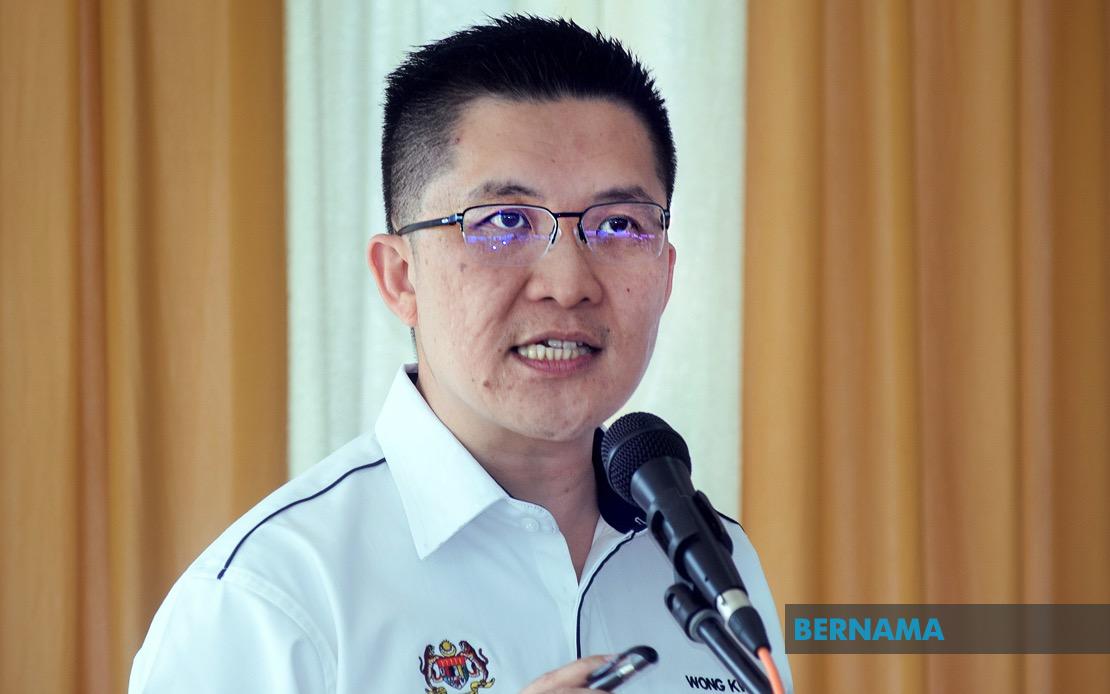
The Malaysian education system continues to maintain a significant network of Tamil-medium schools across the nation, with 528 Tamil national-type schools (SJKT) currently operating and serving a combined student population of 78,501 as of late May this year. Deputy Education Minister Wong Kah Woh disclosed these figures during parliamentary proceedings, providing updated data on the scale and scope of Tamil-language education throughout the country. The announcement comes amid ongoing discussions about language education policy and the government's commitment to preserving linguistic and cultural diversity within Malaysia's multicultural schooling framework.
Enrolment in Tamil-medium schools has shown a gradual decline in recent years when measured against SPM examination participation. The number of candidates sitting for Tamil at the Sijil Pelajaran Malaysia examination has contracted from 8,023 registrations in 2023 to 7,925 in 2024, then to 7,693 in 2025, and further still to 7,494 new candidates this year. Despite this downward trajectory, the Ministry of Education maintains that the Tamil language subject will remain permanently embedded within the suite of language options available to students sitting for the SPM qualification. This assurance addresses longstanding concerns within the Tamil-speaking community about the sustainability and institutional support for Tamil language studies at the secondary level.
A crucial clarification from the education ministry underscores the flexibility built into the examination system: students enrolled in schools that do not offer Tamil as a teaching subject remain fully eligible to register for and sit the SPM Tamil examination, provided they satisfy prevailing registration criteria. This provision ensures that Tamil language learning is not confined solely to Tamil-medium schools and allows students from mainstream vernacular or English-medium institutions to pursue Tamil studies independently. The policy reflects an inclusive approach to language acquisition and recognises the diverse pathways through which students may wish to engage with Tamil as an examination subject.
The Ministry of Education has outlined a comprehensive strategy to reinforce Tamil language education through multiple complementary initiatives. These include the adoption of the 2027 School Curriculum framework, aimed at modernising pedagogical approaches and content delivery within Tamil schools. The ministry simultaneously prioritises the elevation of teaching standards, the enrichment of Tamil literature resources, and the provision of sustained institutional backing to SJKT establishments. This multi-faceted approach addresses not merely the operational continuance of Tamil schools but their qualitative improvement and pedagogical innovation to ensure Tamil language education meets contemporary educational standards.
Johor presents a concentrated case study of Tamil school distribution and enrolment patterns. The state hosts 71 SJKTs collectively accommodating 12,906 pupils, representing a substantial proportion of the national cohort. Within Johor Bahru district specifically, fifteen Tamil schools serve 7,840 students, with four institutions demonstrating notably high capacity. These include SJKT Taman Tun Aminah housing 1,529 pupils, SJKT Ladang Rini with 1,055 students, SJKT Jalan Yahya Awal accommodating 890 children, and SJKT Masai serving 768 pupils. The concentration of large enrolments in particular schools reflects geographical population distribution and parental preferences within the district, creating divergent resource requirements and management challenges across the sector.
Infrastructure development represents a tangible manifestation of governmental commitment to strengthening Tamil school facilities. Two Johor institutions are currently benefiting from significant capital investment: SJKT Ladang Rini and SJKT Kulai Besar have each received allocations of RM4.3 million specifically designated for new building construction. These projects carry the anticipated capacity to accommodate an additional 200 to 300 pupils each, effectively expanding the physical infrastructure and student intake capability of these establishments. Such targeted investment demonstrates a proactive approach to addressing capacity constraints and improving the learning environment for Tamil-medium students, particularly in districts experiencing growth in student populations.
Conversely, the ministry confronts the challenge of under-enrolment affecting certain Tamil schools, particularly in peripheral or less densely populated areas. Two institutions in Johor Bahru—SJKT Ladang Sungai Plentong and SJKT Ladang Mados—currently operate with fewer than 30 pupils each, presenting acute sustainability challenges and raising questions about operational efficiency and resource allocation. Rather than pursuing wholesale closures, the Ministry of Education has developed a structured roadmap specifically addressing under-enrolment, incorporating measures such as multi-grade classroom configurations, physical relocation of schools to areas of greater demand, and retention determinations based on localised community needs and educational accessibility considerations.
The implementation of these adaptive strategies has already achieved measurable results across the SJKT landscape. As of the end of May 2026, 135 under-enrolled Tamil schools nationwide have introduced multi-grade teaching arrangements, wherein students of different year levels receive instruction collectively within single classrooms under unified teacher supervision. Additionally, 36 Tamil schools have received formal approval for relocation to alternative sites, ostensibly in response to shifting population demographics or to position institutions more effectively within their communities. These interventions represent pragmatic responses to structural challenges whilst preserving educational provision for Tamil-speaking communities.
Teacher recruitment and retention constitute critical infrastructure underpinning Tamil school functionality. The Tamil-medium primary sector requires 1,334 qualified teachers according to established need calculations, yet the current staffing complement has actually exceeded this threshold at 1,733 positions filled. This surplus position contrasts with secondary Tamil education, where 584 teachers are required but only 648 currently serve in post. The overall position suggests that primary Tamil schools enjoy robust educator supply, whilst secondary Tamil provision approaches capacity constraints. These staffing dynamics have implications for curriculum implementation quality, student-teacher ratios, and the sustainability of Tamil language education across both primary and secondary phases.
Examination grading protocols have come under periodic scrutiny, prompting clarification from the education ministry regarding the methodologies underpinning SPM assessment. Wong stated categorically that examination results are not determined according to predetermined quota systems or target percentage distributions requiring particular grade proportions among candidate cohorts. Rather, grades emerge from systematic professional evaluation of each individual candidate's actual mastery level relative to prescribed curriculum requirements, stated assessment objectives, and established subject-specific standards. The determination process involves specialist panels comprising subject matter experts, curriculum designers, and educational measurement specialists who collectively examine candidate performance, scrutinise the properties and difficulty calibration of examination instruments, and cross-reference learner outcomes against established competency benchmarks before finalising grade boundaries.
This approach aligns with international best practice in large-scale examination systems, where grade boundaries necessarily fluctuate according to the particular performance characteristics of each examination cohort and the psychometric properties of the assessment instruments deployed in any given year. The variation reflects genuine differences in candidate preparation and performance rather than artificial manipulation of results through predetermined grading curves. This transparency regarding examination methodology addresses concerns that have periodically emerged regarding fairness and consistency in national assessment processes, whilst simultaneously reaffirming the ministry's commitment to rigorous, evidence-based evaluation standards that maintain public confidence in qualification credibility and national assessment integrity.

