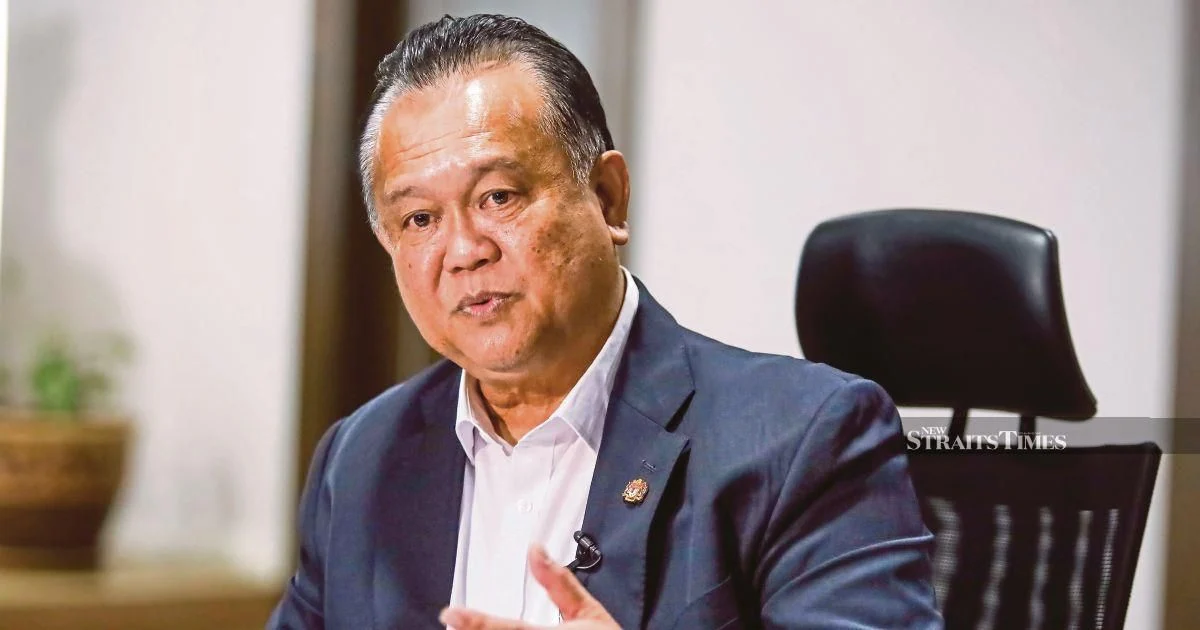
Malaysia's approach to transport infrastructure is undergoing a significant recalibration, with the Works Ministry signalling that the era of aggressive highway expansion is gradually concluding. Speaking in Kuala Lumpur, Works Minister Datuk Seri Alexander Nanta Linggi articulated a nuanced vision that acknowledges highways remain essential to the nation's mobility framework, yet acknowledges the necessity of pivoting toward a more balanced, multifaceted approach to connectivity.
The minister's statement represents a departure from decades of policy that prioritised motorway construction as the primary solution to congestion and regional connectivity challenges. Rather than abandoning road infrastructure entirely, the government's emerging strategy contemplates a future where the existing highway network becomes increasingly sophisticated, leveraging technology and design principles to enhance operational efficiency. This suggests investment priorities will shift toward optimisation of current assets rather than expansive new construction, a recognition that many urban and interurban corridors are already adequately serviced by road networks that require modernisation rather than duplication.
Integration emerges as a cornerstone of this reframed transport philosophy. The minister's emphasis on connectivity between highways and public transport systems reflects growing recognition that movement challenges cannot be solved through roads alone. This integration challenge remains particularly acute in Malaysia's major metropolitan areas, where commuters frequently experience bottlenecks at nodes where highway networks interface with local streets and public transport facilities. Enhanced integration would theoretically enable seamless transitions between private and public modes, reducing reliance on personal vehicles for entire journeys and allowing highways to function as genuine rapid transit corridors rather than congestion-prone parking lots.
The "smarter highways" concept invoked by the minister likely encompasses technological solutions gaining traction globally: dynamic traffic management systems, real-time incident response capabilities, and data-driven maintenance scheduling. Such technologies allow existing road capacity to function more efficiently without physical expansion. For Malaysian cities like Kuala Lumpur and George Town, where geographic constraints limit opportunities for new highway corridors, intelligent management of current infrastructure addresses capacity challenges while avoiding the astronomical land acquisition and environmental costs associated with new construction.
Public transport receives implicit elevation in this policy reorientation. The acknowledged need for better connections between highways and transit systems underscores recognition that sustainable urban mobility demands robust alternatives to private automobile travel. This has particular resonance for Southeast Asian nations grappling with air quality deterioration and traffic congestion. Malaysia's position as a middle-income nation with substantial urban populations makes public transit investment increasingly critical to livability and economic productivity. The minister's framing suggests future funding allocations may increasingly favour rapid rail, bus rapid transit, and last-mile connectivity solutions over traditional highway projects.
The timing of this policy signalling reflects broader global trends in transport planning. Developed economies increasingly emphasise transit-oriented development and multimodal connectivity over highway expansion, partly driven by environmental imperatives and partly by recognition that roads alone cannot solve fundamental congestion problems in high-density areas. Malaysia's adoption of similar principles indicates the country is learning from international experience rather than pursuing infrastructure strategies proven ineffective elsewhere. Cities that have invested heavily in public transit integration report substantially reduced congestion and improved air quality compared to those relying primarily on motorway construction.
Implementing this vision poses considerable challenges for Malaysian authorities and requires coordination across multiple government agencies. Current highways often operate independently of public transport networks, with limited interchange facilities or coordinated scheduling. Retrofitting integration into existing systems demands both capital investment and operational restructuring. Additionally, many Malaysians have become accustomed to private vehicle use; shifting travel behaviour toward public transit requires not merely infrastructure availability but also competitive service quality, affordability, and reliability that frequently exceeds current offerings in many regions.
The statement also carries implications for regional mobility. As ASEAN nations increasingly coordinate on transport corridors spanning multiple countries, Malaysia's transport philosophy influences broader Southeast Asian connectivity strategies. A Malaysian approach emphasising integrated, technology-enabled networks rather than corridor-based highway expansion could shape regional infrastructure investments and cross-border mobility arrangements. This becomes particularly significant for initiatives like the ASEAN Connectivity Master Plan and bilateral arrangements with neighbouring countries.
Funding mechanisms warrant consideration in assessing implementation feasibility. Historically, Malaysia financed major highways through tollway systems, creating revenue streams for maintenance and operation. Public transit systems typically operate at losses requiring government subsidisation. A policy emphasising public transport integration necessarily entails greater public expenditure commitments, raising questions about budgetary prioritisation amid competing spending pressures in healthcare, education, and social assistance. Private sector involvement through public-private partnerships may become increasingly important in financing integrated transport systems.
The minister's articulation of this transport vision also reflects political awareness that highway construction, while generating economic activity and appearing decisive, produces diminishing returns when undertaken indiscriminately. Traffic studies consistently demonstrate that new road capacity, absent accompanying public transit development, generates additional vehicle trips through induced demand, ultimately reproducing congestion at new locations. Malaysian planners increasingly recognise this phenomenon, suggesting that future transport investments will demonstrate greater sophistication in understanding how infrastructure interventions affect mobility outcomes.
Moving forward, the extent to which this policy articulation translates into concrete budgetary decisions and regulatory changes will determine its genuine significance. Transport planning frequently encounters resistance from incumbent interests benefiting from existing arrangements, and shifting funding from road construction toward public transit requires overcoming institutional inertia and potentially powerful constituencies favouring continued highway expansion. Nevertheless, the minister's public commitment to a rebalanced approach signals intellectual recognition within government that Malaysia's transport future requires greater diversity, integration, and sophistication than highways alone can provide.

