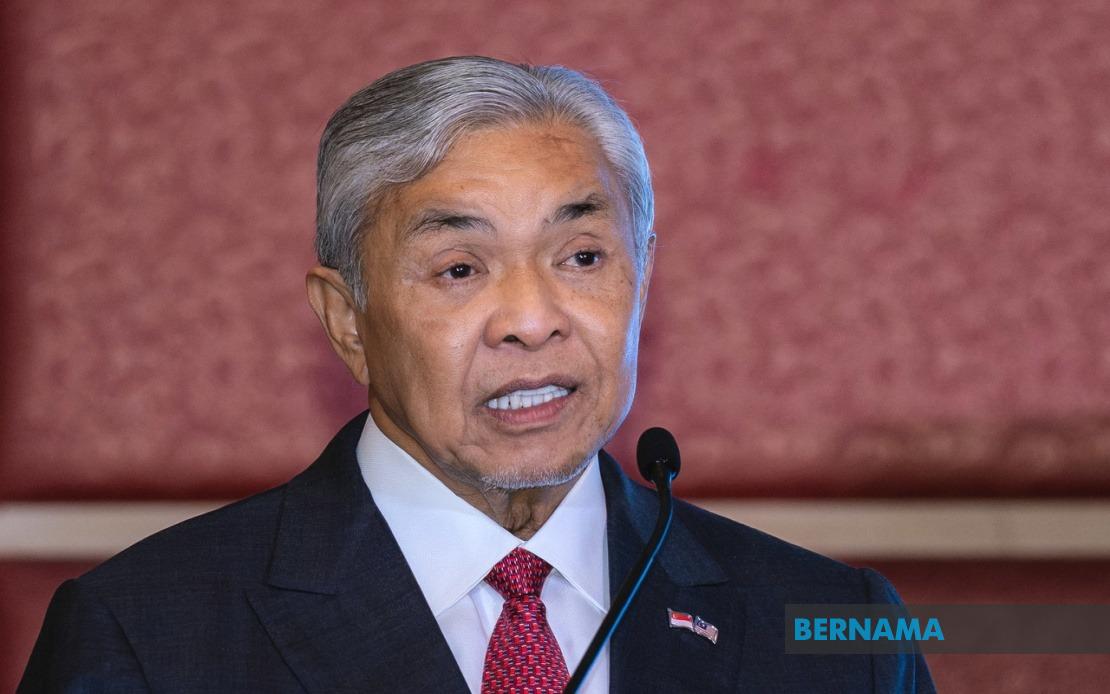
Malaysia's technical and vocational education sector is entering a new phase of employment certainty, with Deputy Prime Minister Datuk Seri Dr Ahmad Zahid Hamidi assuring graduates that industry partnerships will guarantee strong job prospects upon completion of their studies. Speaking in Kuala Lumpur on July 13, Ahmad Zahid outlined how the government's strategic approach to aligning TVET curricula with real-world labour market demands has produced tangible results, with employers now extending job offers to students while they remain enrolled in their programmes.
The mechanism underpinning this success lies in proactive engagement between TVET institutions and private sector employers before courses are even designed. Ahmad Zahid, who also serves as Rural and Regional Development Minister and chairs the National TVET Council, explained that this forward-planning ensures relevance between what students learn and what companies actually need. By involving industry stakeholders in curriculum development from the outset, Malaysia's TVET system sidesteps the perennial challenge facing many vocational education models: graduates equipped with outdated or misaligned skills finding themselves unemployable despite formal qualifications.
The government claims this collaborative framework has achieved a 100 per cent graduate employability rate, a remarkable assertion that reflects the depth of coordination between educational providers and hiring enterprises. This outcome appears to address several persistent concerns that have historically plagued Malaysia's labour market. The absence of jobs for graduates, skill mismatches between training and employer requirements, wage expectations misaligned with market realities, and the broader problem of youth unemployment have long taxed policymakers. If Ahmad Zahid's figures are accurate, Malaysia's TVET sector may have cracked a code that many developed nations continue to struggle with.
Particularly noteworthy is the government's emphasis on implementing High TVET courses designed to equip learners with advanced competencies meeting contemporary industry standards. This elevation of technical education beyond traditional vocational training reflects global trends where the line between vocational and higher education has become increasingly blurred. As automation, digitalisation, and emerging technologies reshape workplace requirements, the ability to offer sophisticated technical skills through accessible, shorter pathways becomes strategically important for a nation seeking to move up the value chain.
The urgency of this approach becomes evident when considering Malaysia's economic trajectory and regional positioning. Southeast Asia faces intense competition for investment and talent, with countries across the region investing heavily in technical skill development. Thailand, Vietnam, and Indonesia all recognise that vocational education represents a crucial lever for industrial upgrading and inclusive growth. Malaysia's commitment to deepening industry partnerships in TVET places it competitively alongside these peers, though questions about scaling and sustainability remain unresolved in public discourse.
The announcement comes as Malaysia's TVET contingent prepares for the WorldSkills Shanghai 2026 competition, a biennial showcase where nations pit their best technical students against international counterparts. Nine Malaysian participants from MARA TVET, Universiti Kuala Lumpur, and GIATMARA will represent the country across nine skill categories spanning Fashion Technology, Cyber Security, and Electronics among others. Ahmad Zahid's address to this cohort emphasised mental resilience and emotional discipline as preconditions for international success, framing the competition as an opportunity to demonstrate Malaysian capability on a global stage.
The composition of Malaysia's contingent itself reflects sectoral diversification within the TVET sphere. The inclusion of cyber security and electronics competitors signals acknowledgement that digital skills represent an increasingly critical frontier for technical vocational education. These disciplines typically command premium wages and possess higher growth trajectories than traditional trades, suggesting Malaysia's TVET strategy is attuned to labour market evolution rather than frozen in conventional vocational pathways.
However, translating political pronouncements about 100 per cent employability into sustained outcomes requires mechanisms that extend beyond simple industry coordination. Questions about wage adequacy, job quality, career progression, and whether placements represent genuine skill utilisation or underemployment masked by statistical categories warrant scrutiny. Malaysian policymakers should ensure that employability metrics encompass not merely job placement rates but employment quality indicators including salary levels, skill-job alignment, and worker satisfaction.
The two-month preparation window remaining before the Shanghai competition in late September underscores the compressed timelines within which Malaysia's vocational sector operates. Competing at international level demands not merely technical proficiency but psychological fortitude and refined competitive acumen. Ahmad Zahid's reminder to participants to strengthen discipline and maintain focus reflects an understanding that international competitions serve as calibration mechanisms, revealing gaps between domestic standards and global benchmarks.
For Malaysian employers and educational planners, the government's TVET initiative represents a potential solution to perennial skill shortages that have constrained economic productivity and investment attraction. When local graduates possess immediately applicable technical competencies and employers have shaped curriculum design, friction in labour market matching diminishes substantially. This creates positive externalities extending beyond individual career trajectories to broader macroeconomic resilience and competitiveness.
Looking forward, the sustainability of Malaysia's TVET employment success depends partly on labour market stability and continued industrial investment. Economic downturns or sector-specific disruptions could quickly unravel supply-demand alignment, leaving graduates without promised positions. The government must therefore complement current TVET initiatives with broader economic policies that sustain employer demand for technical talent, preventing the cyclical pattern where vocational graduates flood a contracting labour market.
The broader significance of Ahmad Zahid's assurances lies in their implicit recognition that education serves pragmatic economic functions alongside its formative dimensions. By anchoring TVET to verifiable employment outcomes rather than abstract learning objectives, Malaysia acknowledges the anxieties of working-class families investing time and resources in technical training. When young Malaysians can reasonably expect job security upon graduation, social cohesion strengthens and human capital deployment becomes more efficient across the economy.

