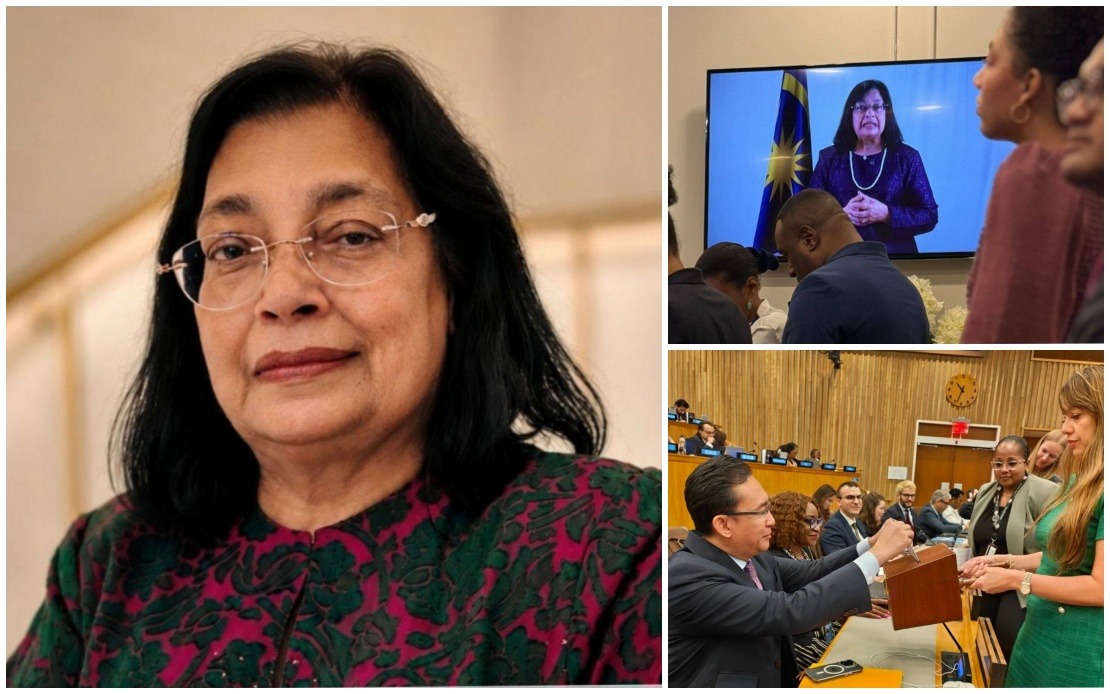
Malaysia has secured a significant seat on the international stage with the election of Datuk Yasmeen Muhamad Shariff to the United Nations Committee on the Rights of the Child for the 2027–2031 term. Voting took place on Tuesday at the UN Headquarters in New York during the 21st Meeting of States Parties to the Convention on the Rights of the Child, where Yasmeen emerged as the top candidate, attracting 136 votes from the 189 States Parties that participated in the ballot. Her decisive victory underscores international confidence in her expertise and commitment to child welfare issues that transcend borders and development levels.
The achievement carries particular weight for Malaysia, as Yasmeen's election represents continuity in the country's engagement with global child protection frameworks. This marks her second tenure on the prestigious committee, having previously served during the 2013–2017 term. Her re-election suggests that her earlier contributions were valued by the international community and that member states recognise the value of retaining experienced practitioners who understand the nuances of implementing child rights conventions across diverse national contexts. The Foreign Ministry, through a statement released on Wednesday, emphasized that this election reflects the confidence placed in her personal expertise and unwavering dedication to advancing the rights and well-being of children worldwide.
As an independent expert serving in her personal capacity rather than as a government representative, Yasmeen will shoulder significant responsibilities within the committee's framework. The committee's core mandate involves monitoring how States Parties implement the Convention on the Rights of the Child—a fundamental international instrument that has been ratified by nearly every nation. Beyond this supervisory role, committee members engage in constructive dialogue with governments, offering guidance and recommendations that shape national policies and international standards. They also champion a rights-based approach to addressing challenges that affect children, from education and health to protection from exploitation and violence.
For Malaysia specifically, this election carries strategic implications. The country has positioned itself as a committed advocate for children's rights through legislative reforms and targeted programmes designed to ensure every child can develop to their full potential. By maintaining representation at this elite level, Malaysia reinforces its voice in international deliberations about child protection standards and best practices. The government views Yasmeen's appointment as external validation of its policy direction, even as it acknowledges that work remains to be done domestically in areas such as early childhood development, education quality, and protection of vulnerable children including refugees and migrants.
The Ministry of Women, Family and Community Development played a crucial supporting role in facilitating Yasmeen's nomination and election, according to the Foreign Ministry's statement. This inter-ministerial collaboration highlights how child rights issues cut across different government portfolios in Malaysia. The women and family ministry's cooperation reflects the reality that advancing children's rights requires coordinated effort among agencies responsible for health, education, social welfare, and law enforcement. Without such coordination, even well-intentioned policies can fragment and fail to address the interconnected challenges facing young people in the modern world.
The global context in which this committee operates has become increasingly complex and urgent. The post-pandemic world has revealed vulnerabilities in child protection systems worldwide, with mental health challenges, educational disruption, and economic hardship affecting millions of young people. In Southeast Asia specifically, developing nations face particular pressure to balance economic growth with child welfare, often lacking sufficient resources to implement comprehensive protection frameworks. The committee's role in monitoring implementation and offering technical guidance becomes ever more critical as countries grapple with evolving threats including online exploitation, trafficking, and climate-related displacement affecting children disproportionately.
Yasmeen's expertise will be particularly valuable in bridging perspectives between developed and developing nations within the committee. Malaysia's position as an upper-middle-income country with a diverse population and complex challenges gives her insights that span different development contexts. She can contribute to discussions about how child rights principles apply across varied economic circumstances and cultural settings, helping prevent one-size-fits-all approaches that may not serve all nations effectively. This mediating role often proves crucial in consensus-building within UN bodies where interests and capacities diverge widely.
The broader implications for Southeast Asia extend beyond Malaysia's borders. As countries in the region continue strengthening their child protection laws and institutions, they look to international standards set and monitored by bodies such as this committee. Yasmeen's presence ensures that Southeast Asian perspectives—including those specific to the region's rapidly developing economies, demographic patterns, and social structures—are represented in discussions that shape global child rights standards. This representation helps ensure that international recommendations remain applicable and relevant across the diverse landscape of the Association of Southeast Asian Nations.
Looking forward, Malaysia's commitment to children's rights must translate into concrete action within national borders. While the country has made progress in legislative reform and institutional development, challenges persist in implementation and enforcement. Child labour, inadequate special education provision, and disparities in access to healthcare and nutrition continue affecting marginalised populations. Yasmeen's international platform can amplify these domestic concerns and encourage peer learning from other nations grappling with similar issues, potentially strengthening Malaysia's own policy responses. Her participation in the committee also creates opportunities for Malaysia to showcase successful initiatives that other nations might adapt or learn from in their own child protection efforts.
The election of Yasmeen Muhamad Shariff affirms Malaysia's standing in international human rights discussions and its commitment to principles that protect vulnerable populations. As the world confronts growing pressures on childhood—from climate change to digital transformation—the work of individuals like Yasmeen who dedicate themselves to monitoring and advancing child rights becomes increasingly indispensable. Her re-election is not merely a diplomatic success, but a signal that Malaysia intends to remain actively engaged in shaping the global agenda for child welfare and protection throughout the coming five-year term.

