Malaysia's Minister in the Prime Minister's Department (Religious Affairs) Datuk Dr Zulkifli Hasan has issued a call to young Malaysians to harness the principles underlying Prophet Muhammad's Hijrah as a catalyst for constructive change in their own lives and communities. Speaking in Putrajaya on June 16, the minister emphasised that the younger generation possesses considerable capacity to drive national transformation when guided by the spiritual and moral lessons embedded within this pivotal moment of Islamic history.
The Hijrah, commonly understood as Prophet Muhammad's migration from Makkah to Madinah, represents far more than a geographical journey in Islamic thought. It symbolises a deliberate shift towards building institutions, establishing justice, and creating civilised society from foundational principles. Zulkifli stressed that by reflecting on and internalising these deeper meanings, Malaysian youth could channel their energy and idealism into ventures that contribute meaningfully to the nation's development and social cohesion during a period of global economic uncertainty.
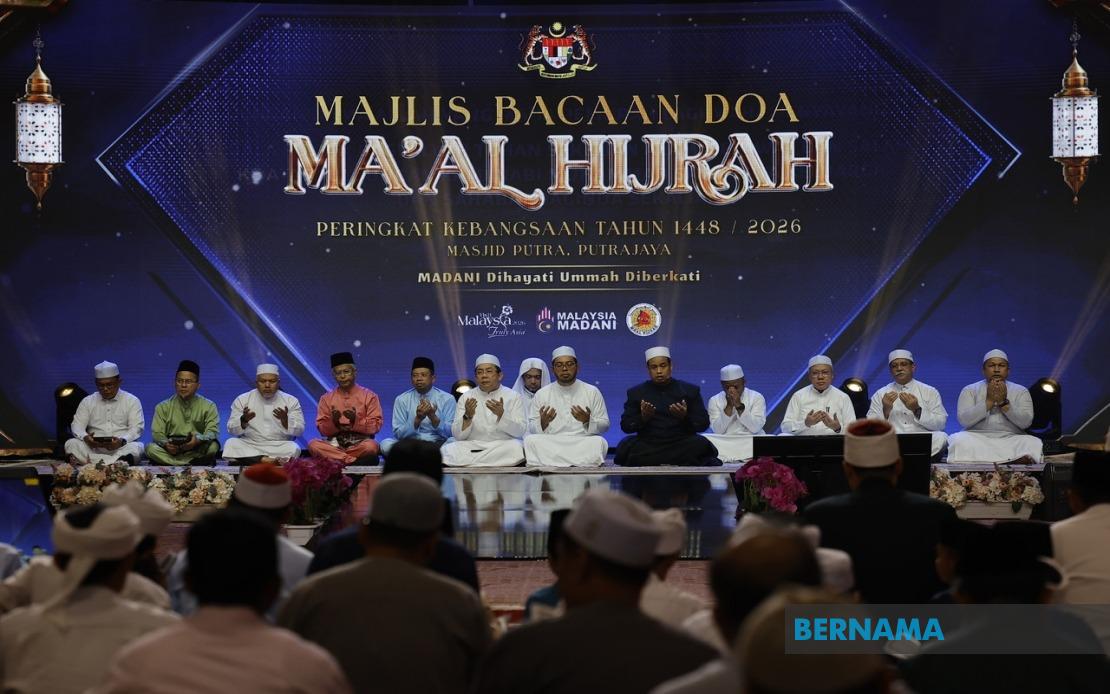
This year's national Maal Hijrah 1448H/2026M celebration carries particular significance through its thematic emphasis on positive transformation and renewal. The government has structured the commemoration to encourage participants to move beyond passive remembrance towards active engagement with the values the Hijrah represents. Rather than focusing solely on historical narratives, organisers have designed programmes intended to help attendees recognise how these centuries-old principles remain relevant to contemporary challenges facing Malaysian society.
A noteworthy aspect of this year's approach involves the deliberate choice of Putra Mosque as the epicentre of the main national programme. Zulkifli explained that selecting this venue reflects a deeper intention to ground the celebration in the institutional foundation that Prophet Muhammad established upon arriving in Madinah. By beginning activities at the mosque, the organisers aim to reignite awareness of how religious institutions have historically served as anchors for civilisation, learning, and community development. This physical location thus becomes pedagogical, teaching through place the connection between spiritual commitment and social progress.
Recognising Malaysia's position within global economic pressures, the government has adopted a measured approach to the celebration's scale and resource allocation. The decision to conduct festivities on a modest scale reflects consciousness of the ongoing international supply chain disruptions and energy conservation imperatives affecting many nations. This practical constraint, rather than diminishing the event's significance, demonstrates how the Hijrah's own principles of resourcefulness and adaptation can manifest in contemporary governance and community engagement.
The substantive content of this year's commemoration centres on a keynote lecture series scheduled for June 18 at the JAKIM Auditorium, anticipated to draw approximately 1,000 participants. This forum will feature both nationally and internationally recognised figures whose lived experiences and scholarly insights into the Hijrah spirit offer diverse perspectives on spiritual renewal and societal contribution. By bringing together speakers from multiple contexts and backgrounds, the programme creates space for cross-cultural dialogue about how Islamic principles translate into meaningful action across different societies and circumstances.
The main ceremonial highlight occurs tomorrow at Putra Mosque beginning at 7 am, coinciding with the Islamic date of 1 Muharam 1448H and marking the new Islamic year. This timing carries symbolic weight, aligning personal and communal renewal with the broader temporal rhythm of the Islamic calendar. The ceremony will include the presentation of national and international Maal Hijrah Figure awards, honouring individuals whose contributions exemplify the Hijrah spirit through their service, innovation, or moral leadership. These award recipients serve as contemporary exemplars, demonstrating how historical principles can animate modern achievement.
The Sultan of Perak, Sultan Nazrin Shah, will officiate the ceremony, underscoring the event's status as a significant national observance with support across government and institutional hierarchies. Royal participation emphasises continuity between Malaysia's constitutional framework and its religious and cultural traditions, sending a message that spiritual renewal and national development advance together rather than in tension.
For Malaysian youth specifically, the timing and framing of this appeal addresses a generation navigating rapid technological change, economic uncertainty, and evolving social expectations. The Hijrah narrative, properly understood, offers not escapism but engagement—a model for consciously choosing values-driven direction even amid challenging circumstances. By encouraging young people to examine their own circumstances through the lens of purposeful migration toward positive transformation, the minister invites them to become architects of change rather than passive observers of circumstance.
The broader regional context matters here. Throughout Southeast Asia, several Muslim-majority nations face similar questions about sustaining religious values within modernising societies while harnessing youth energy for constructive purposes. Malaysia's approach through this celebration—combining institutional ceremony with intellectual discourse and award recognition—offers a model for how traditional commemorations can be reimagined as platforms for contemporary engagement rather than mere historical reflection.
The emphasis on the mosque as civilisational foundation also carries implicit messages about social cohesion and institution-building relevant across Malaysian society. In an era when various institutions face trust deficits, anchoring a national celebration in religious spaces that simultaneously serve educational and community functions reinforces how traditional institutions remain vital for social stability and progress. This positioning suggests that modernisation need not mean abandonment of institutional wisdom, but rather creative reinterpretation of such wisdom for current needs.
Ultimately, Zulkifli's exhortation to youth reflects confidence in their capacity for meaningful contribution when provided with inspiring frameworks and clear pathways for engagement. The Maal Hijrah 1448H/2026M celebration, structured as it is, attempts to provide precisely these elements—historical inspiration, contemporary examples through award recipients, scholarly guidance through keynote lectures, and ceremonial affirmation of collective commitment to the principles the Hijrah embodies.