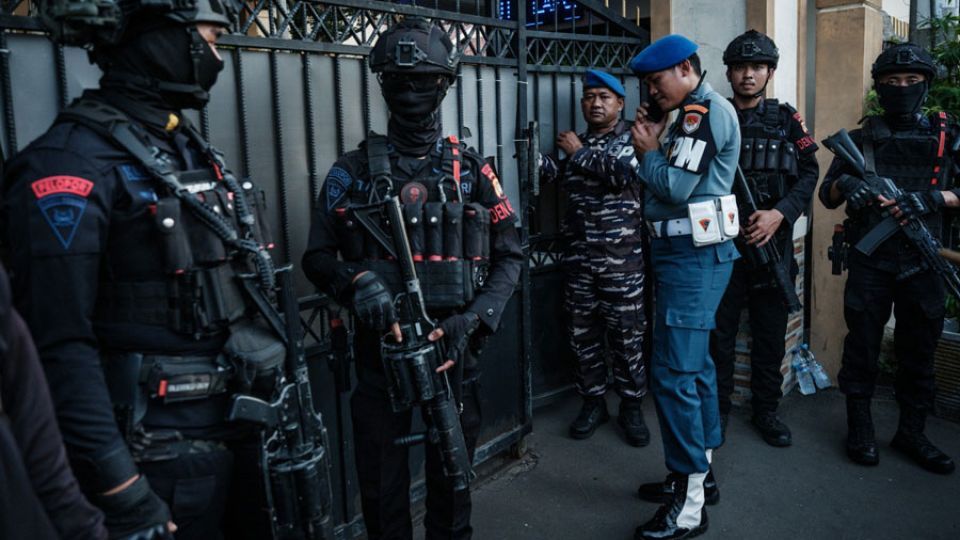
Police in Greater Jakarta have detained a 34-year-old suspect identified as MY following an incident in which a bomb threat message disrupted operations at SD Srengseng Sawah 15 Pagi, a state elementary school in the Jagakarsa district of South Jakarta. The threat arrived on Monday, the opening day of the school term, and was sent through WhatsApp to teaching staff and administrative personnel at the institution. The message claimed that explosives had been planted at eleven separate locations throughout the school's compound, creating panic among administrators and prompting an immediate response from law enforcement agencies.
The suspect was apprehended in the vicinity of the school within hours of the WhatsApp message being circulated, according to statements made by Greater Jakarta Police spokesperson Sr. Comr. Budi Hermanto. MY, who is reported to reside in close proximity to the school premises, was transferred to the South Jakarta Police headquarters where interrogation commenced. Investigators are currently attempting to establish the motive behind the threat and to determine what circumstances led the individual to initiate such an action, though details surrounding his background and any potential connection to the school remain under investigation.
The discovery of the threatening message occurred during a flag-raising ceremony attended by students, according to information provided by Jagakarsa Police chief Comr. Nurma Dewi. Staff members who received the WhatsApp notification did not immediately interrupt the ceremony but instead reported the threat after it had concluded, suggesting a measured response despite the alarming nature of the message. This decision to complete the initial school activity before taking action may have been deliberate, aimed at preventing panic among the student population.
Following the report of the threat, school authorities executed an immediate evacuation of all students and staff from the premises. The thoroughness of the response reflected standard security protocols in Indonesia, where schools have become increasingly alert to potential risks. With the entire school population relocated to a safe area, the grounds were then secured and prepared for a comprehensive search operation.
The Greater Jakarta Police mobilised significant resources in response to the incident, deploying personnel from the Gegana bomb disposal unit alongside operatives from Densus 88, the elite counterterrorism squad maintained by Indonesia's national police force. These specialized units conducted an extensive sweep of the school complex, examining the eleven locations that had been mentioned in the threatening message. Despite the scale and intensity of the search effort, no explosive devices or materials were discovered anywhere within the school grounds.
The incident unfolded against a backdrop of heightened security awareness in Indonesia's education sector. Bomb threats directed at schools, though relatively uncommon, trigger immediate and extensive response mechanisms designed to ensure the safety of young students and education staff. The decision to deploy both bomb disposal experts and a dedicated counterterrorism unit underscores the seriousness with which Indonesian authorities treat such incidents, regardless of their ultimate veracity.
For educational institutions across South Jakarta and the broader Greater Jakarta region, such security incidents raise important questions about communication protocols and emergency preparedness. The quick identification and arrest of a suspect suggests that investigating officers have made significant progress in tracing the origin of the WhatsApp message, likely through digital records maintained by the messaging platform or records held by affected recipients.
The timing of this incident, occurring on the very first day of the school term, is particularly notable. Schools operating at full capacity during the opening of an academic year represent potentially high-profile targets, and the selection of this moment may prove relevant to investigators seeking to understand MY's intentions. Whether the suspect harboured grievances against the institution, sought to create widespread disruption, or acted impulsively remains part of the ongoing investigation.
The resolution of this incident without discovered explosives or injuries represents a successful outcome for law enforcement coordination, yet it also highlights vulnerabilities in how WhatsApp communication can be weaponised to create public disruption and fear. Schools across Indonesia may now feel compelled to review their internal communication channels and threat-reporting procedures in light of this example.
As the investigation into MY's actions continues at South Jakarta Police headquarters, the school community must contend with both the practical disruption caused by the evacuation and the psychological impact of having been targeted by a serious threat on an important day. Educational authorities may subsequently implement revised security measures and staff training to enhance future preparedness. The broader implications for school safety across Jakarta's sprawling metropolitan area remain to be seen, though this incident will likely feature prominently in security briefings and planning discussions among institutional administrators throughout the region.

