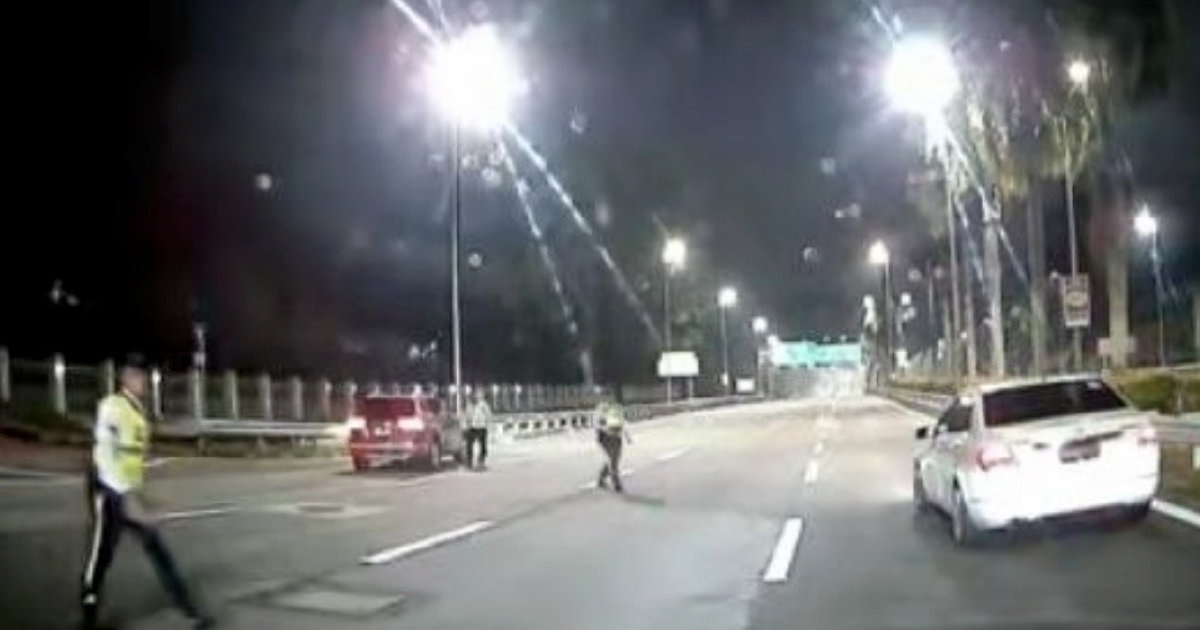
A 20-year-old driver remains in police custody after crashing his white Mercedes through an active roadblock on the Sprint Expressway near the National Institute of Public Administration (Intan) in a high-speed incident that has since circulated widely on social media. The dramatic nature of the collision and subsequent escape has intensified concerns about motorist behaviour and police enforcement on major expressway corridors serving the Klang Valley.
The incident raises significant questions about road safety protocols and how quickly law enforcement can respond to vehicles that evade routine traffic checks. Roadblocks, a standard tool in Malaysian traffic enforcement, are typically established to verify vehicle documents, check for contraband, or investigate specific traffic violations. The fact that a vehicle managed to breach such a checkpoint and continue at high speed along a busy expressway underscores the unpredictable risks that both road users and enforcement personnel encounter during routine operations.
The Sprint Expressway, which connects Kuala Lumpur to Selangor areas and handles substantial daily traffic volumes, has been the site of numerous incidents over the years. Its proximity to government institutions like Intan, a premier civil service training academy, means the road carries a mix of commuter traffic, official vehicles, and through-traffic bound for other destinations. The incident's viral spread on social platforms has amplified public awareness and sparked debate about driver accountability and the adequacy of current enforcement measures.
Investigations into the circumstances remain ongoing, with police seeking to establish why the driver chose to breach the roadblock and whether any traffic or criminal offences preceded the collision. Authorities will also examine vehicle maintenance records and driver behaviour patterns to determine if mechanical failure or deliberate action triggered the crash. Such detailed inquiries are essential for understanding whether this represents an isolated incident of poor judgment or part of a broader pattern of reckless driving.
The detention of the motorist signals that police view the incident seriously and intend to pursue all applicable charges. In Malaysia, failing to stop at a police checkpoint, dangerous driving, and causing damage through reckless conduct can each attract substantial penalties. The legal framework governing traffic offences on expressways is comparatively strict, reflecting the severity of incidents on high-speed corridors where collisions carry amplified risk.
For the families and passengers travelling along the Sprint Expressway daily, such incidents reinforce the reality of road hazards beyond their personal control. While most drivers exercise reasonable caution, the actions of a single motorist can endanger multiple vehicles and lives, particularly during peak traffic periods. This incident serves as a sobering reminder that expressway safety depends on consistent adherence to traffic rules by all road users.
The viral nature of the video has also placed scrutiny on police roadblock operations themselves. While checkpoints remain a legitimate and necessary enforcement tool, the incident prompts reflection on whether current protocols sufficiently protect officers and other motorists. Enhanced visibility, better positioning of vehicles, and communication systems that allow faster mobilisation of backup units are among measures that law enforcement agencies elsewhere have adopted to improve checkpoint safety.
Vehicle security researchers and transport analysts have noted that modern vehicles equipped with advanced braking and electronic stability systems should theoretically assist drivers in avoiding such collisions. The apparent failure to stop or slow significantly at the roadblock may therefore warrant investigation into whether vehicle systems functioned as designed or whether driver action or inaction proved decisive.
For Malaysian motorists, the incident underscores the importance of compliance at checkpoints. Attempting to evade police stops invariably escalates situations, increases danger to all parties, and guarantees far more serious legal consequences than would result from a standard traffic infraction. The decision to breach the roadblock will likely result in substantially harsher penalties than the original reason for the checkpoint's establishment.
Police have urged the public to remain alert to traffic conditions and report unusual driving behaviour to authorities. The incident also highlights the ongoing national conversation about road culture and whether Malaysia's traffic enforcement regime adequately deters dangerous driving. As investigations conclude, the case may set important precedents for how similar incidents are prosecuted and what preventive measures authorities implement.
The Sprint Expressway incident, though dramatic, is not entirely uncommon in Malaysian urban contexts where high-speed corridors intersect with enforcement activities. However, the viral attention and public concern generated suggest this case may become a focal point for broader discussions about improving road safety standards, better officer protection during enforcement operations, and more effective driver education campaigns emphasising the consequences of evading police authority on expressways.

