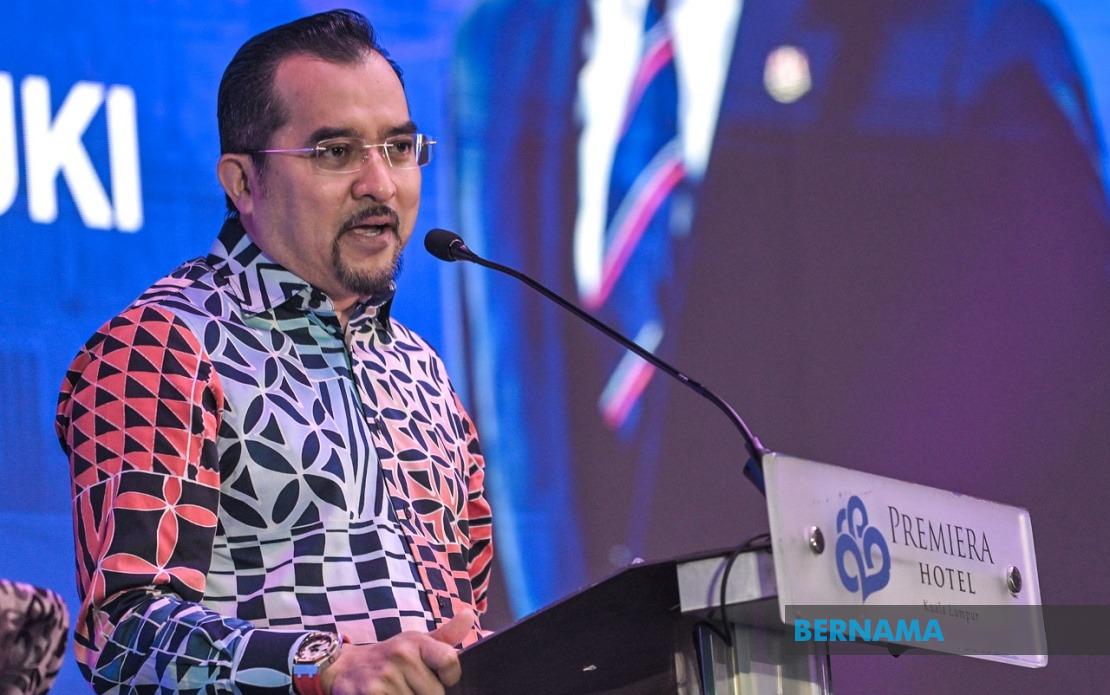
MARA is set to introduce a disciplinary framework centred on deploying retired military officers as dedicated wardens across its network of MARA Junior Science Colleges (MRSM), marking a significant shift in how the institution approaches student conduct and character formation. The initiative, announced by MARA chairman Datuk Dr Asyraf Wajdi Dusuki, represents a calculated effort to address behavioural and leadership gaps by leveraging the professional experience of former military personnel who bring institutional rigour and established protocols to residential college environments.
The phased implementation reflects MARA's cautious approach to institutional change. Rather than deploying wardens to all 58 colleges simultaneously, the organisation will begin operations at 10 selected MRSMs during the current year before extending the programme nationwide from January 2026 onwards. This staggered rollout allows MARA to assess effectiveness, refine operational procedures, and address practical challenges before full-scale deployment, thereby minimising disruption to existing college systems and enabling staff to adapt to new management structures.
Each college will accommodate a gender-balanced team of four wardens—two male and two female personnel—drawn exclusively from military backgrounds. This composition ensures that female students receive mentorship and oversight from women experienced in command structures and institutional discipline, while male students benefit from similar guidance. The deliberate pairing of genders reflects contemporary understanding of student welfare and recognises that residential college environments serve diverse populations with varying support needs that are better addressed through inclusive staffing arrangements.
The vetting process for these wardens has been rigorous. The selection and screening of male wardens had been completed at the time of the announcement, with the female cohort's finalisation expected within days. MARA conducted this recruitment in partnership with the Malaysian Armed Forces (ATM) and allied government agencies to ensure candidates possessed exemplary service records and demonstrated commitment to discipline and institutional values. This collaborative approach ensures that only individuals with proven track records of leadership and ethical conduct enter the college system.
According to Asyraf Wajdi, the decision to recruit from military backgrounds addresses a practical constraint within Malaysia's education sector. Teachers, already burdened with classroom instruction, curriculum development, and administrative responsibilities, have found it increasingly difficult to serve as full-time residential wardens. Military personnel, with their specialised training in group management, hierarchical systems, and structured routines, can assume these duties without diminishing classroom capacity. The move essentially unbundles the warden function from teaching responsibilities, allowing educators to concentrate on pedagogical excellence while former officers focus exclusively on dormitory management, discipline enforcement, and character-building activities.
Mara's leadership emphasises that the college system will not tolerate compromise on three interconnected pillars: student discipline, moral development, and character formation. This uncompromising stance reflects institutional philosophy that views residential college education as encompassing far more than academic instruction. By introducing military-trained wardens, MARA signals that graduates must emerge not only with technical competence and subject mastery but also with demonstrable ethical frameworks, resilience, and leadership capacity—qualities deemed essential for advancing Malaysia's economic and social development.
The announcement coincides with broader discussion of MARA's educational outcomes and graduate trajectories. The institution reported a 99.1 per cent employability rate among its Technical and Vocational Education and Training (TVET) graduates, a metric that underscores the relevance of MARA's curriculum to industry demands. Beyond mere employment, MARA TVET graduates command competitive starting salaries through strategic partnerships with major employers. Samsung's recent recruitment of 700 MARA students at RM3,500 monthly salary demonstrates tangible industry confidence in the calibre and readiness of the institution's graduates, validating MARA's dual commitment to both skills development and character formation.
This employability success provides context for understanding why MARA would invest in reinforcing discipline and character among residential college populations. The institution recognises that employers increasingly seek not merely technically proficient workers but individuals demonstrating reliability, teamwork capacity, and ethical conduct—attributes cultivated through disciplined residential environments. By strengthening the moral and behavioural dimensions of college life through experienced military wardens, MARA positions graduates more competitively in labour markets where soft skills and professional maturity differentiate candidates.
Separately, MARA announced RM145,000 in allocations supporting excellence programmes at five MRSMs that achieved top-ranking positions in the previous year's Sijil Pelajaran Malaysia (SPM) examination. This investment in high-performing institutions reflects MARA's strategy of simultaneously elevating institutional baselines while cultivating centres of academic excellence. The dual approach—strengthening discipline across the entire network while concentrating resources on proven performers—suggests institutional confidence that disciplined environments coupled with targeted academic support will compound achievement levels across the college system.
For Malaysian policymakers and education observers, the warden initiative invites reflection on evolving institutional approaches to student welfare in residential settings. The recruitment of retired military personnel represents neither privatisation of public functions nor ideological recalibration, but rather a pragmatic acknowledgment that specialised expertise in group dynamics, discipline implementation, and routine management serves distinct purposes from classroom instruction. The success of this model may influence how other residential institutions—including universities and military academies—conceptualise staff roles and student support structures, particularly as Malaysia navigates demographic shifts and changing expectations around higher education quality.
The programme's effectiveness will depend substantially on how smoothly military-trained wardens transition into civilian educational environments and on their capacity to balance disciplinary enforcement with mentorship and pastoral care. The next months will reveal whether formal military training translates productively into residential college contexts where authority must ultimately derive from student respect rather than institutional hierarchy alone.

