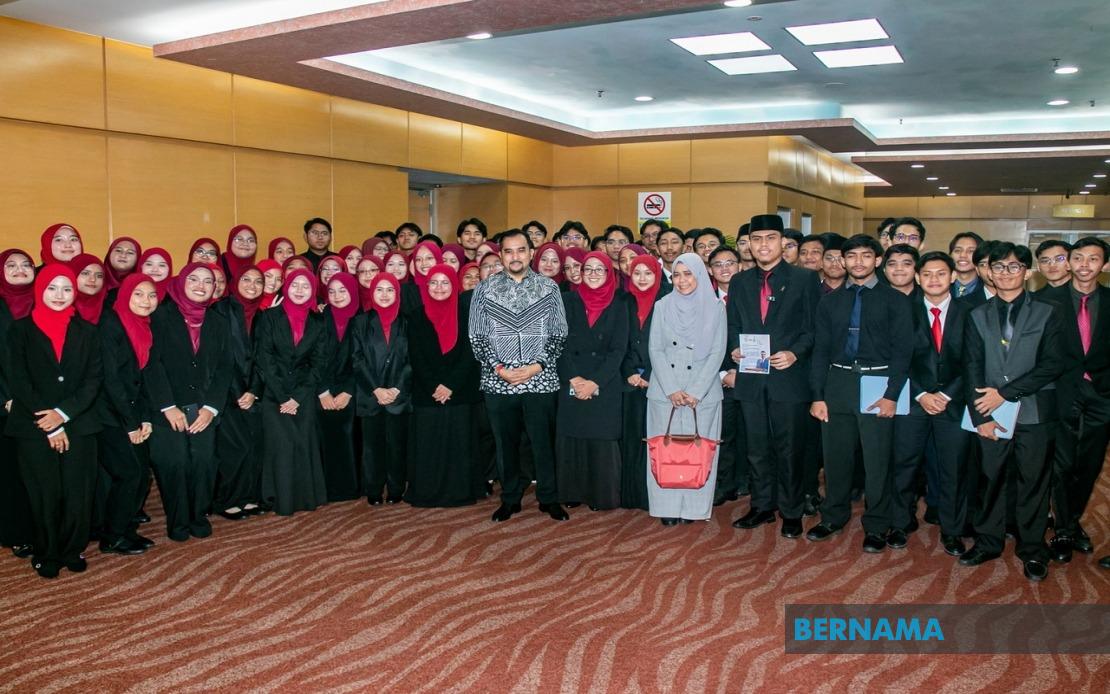
Malaysia's premier development agency, the Majlis Amanah Rakyat (MARA), has breathed new life into its medical education pathway abroad, formally reintroducing a scholarship scheme to Egypt's Al-Azhar University that languished for seven years. The agency is dispatching 78 students as the inaugural cohort under this renewed programme, marking a significant expansion of overseas educational opportunities for qualified Malaysian students seeking to enter the medical profession. The decision received formal Cabinet endorsement, reflecting the government's renewed commitment to diversifying higher education access beyond Malaysia's borders.
Datuk Dr Asyraf Wajdi Dusuki, MARA's chairman, disclosed that the financial architecture supporting the initiative delivers substantial relief to participating families. The comprehensive five-year package, encompassing tuition and residential arrangements, is pegged at RM350,000 per student—a figure achieved through a generous 50 per cent concession extended by Al-Azhar University itself. This cost structure carries considerable weight when measured against domestic alternatives, as pursuing a medical degree within Malaysia commands an estimated price tag ranging from RM700,000 to RM800,000 per student. The arithmetic reveals that the Egyptian pathway offers families nearly 60 per cent savings on what would otherwise be a substantial financial commitment.
The resurrection of the Al-Azhar scheme arrives at a juncture when access to affordable, internationally recognised medical training has become an increasingly pressing concern for middle-income Malaysian families. The local medical education landscape, whether through public universities with highly competitive intake ratios or private institutions commanding premium fees, has traditionally created bottlenecks that leave capable students without feasible options. By reopening this international channel, MARA effectively creates an alternative corridor that does not compromise on academic rigour or institutional standing. Al-Azhar, one of the Islamic world's most venerable educational establishments with centuries of medical teaching heritage, provides students with credentials recognised across multiple jurisdictions, enhancing their future mobility in the global healthcare sector.
The decision to resume the programme underscores Prime Minister Datuk Seri Anwar Ibrahim's administration's broader educational philosophy, one that emphasises accessibility alongside excellence. Asyraf Wajdi publicly acknowledged the premier's instrumental role in facilitating the Cabinet's approval, positioning this initiative within a larger governmental effort to expand pathways for talented students regardless of socioeconomic background. The timing suggests a deliberate policy realignment that prioritises human capital development through strategic international partnerships rather than exclusively relying on domestic institutional capacity.
Beyond the Al-Azhar medical cohort, MARA is simultaneously coordinating a substantially larger international student deployment. Some 600 graduates from the agency's preparatory colleges are scheduled to embark on overseas study programmes in phased departures commencing the following week. These students originate from three flagship MARA residential institutions—Kolej MARA Seremban in Negeri Sembilan, Kolej MARA Banting in Selangor, and Kolej MARA Kuala Nerang in Kedah—and will scatter across multiple continents pursuing diverse academic disciplines. Their destination countries span both traditional Western educational hubs and emerging alternatives, including New Zealand, Canada, Australia, South Korea, the United Kingdom, and Egypt, reflecting MARA's deliberate strategy to avoid geographic concentration and expose students to varied educational ecosystems.
The calibre of institutional placements secured by MARA-sponsored scholars offers a telling indicator of programme effectiveness. The agency reported that 11 of its sponsored students have gained admission to Imperial College London for the current academic year, a particularly noteworthy achievement given the institution's highly selective admissions standards and global standing in science and engineering disciplines. More broadly, MARA disclosed that 40 of its sponsored cohort have achieved places at universities ranked within the world's top ten, whilst 107 students have cleared admissions thresholds at top-20 global institutions. These figures suggest that MARA's selection and preparation mechanisms successfully identify and develop talent capable of competing at the highest international levels.
The resumption of the Al-Azhar programme carries particular resonance within Malaysia's Islamic educational landscape. The university's deep historical roots in Islamic scholarship, combined with its contemporary medical faculty's international accreditation, allows MARA to position the scheme as an option that satisfies both academic aspiration and cultural-religious considerations. For families seeking overseas medical training within an environment informed by Islamic values and teaching methodologies, Al-Azhar represents a distinctly positioned alternative to purely secular Western institutions. This dimension of the initiative speaks to MARA's role not merely as an educational funding mechanism but as a curator of pathways that acknowledge the diversity of Malaysian student preferences and family priorities.
The financial mathematics underlying the scheme warrant closer examination, particularly regarding sustainability and scalability. At RM350,000 per student across a five-year programme, MARA's annual per-student investment averages RM70,000—a sum that remains competitive with many Commonwealth and North American institutions whilst accessing Egyptian tuition rates. The 50 per cent discount from Al-Azhar suggests either deepening bilateral ties between Malaysian and Egyptian educational institutions or a broader strategic positioning by the Egyptian university to increase its international student enrolment and diversify its revenue streams. Subsequent cohorts may reveal whether this discount represents a permanent arrangement or a promotional offering for programme relaunch.
The broader regional implications merit consideration. Southeast Asian governments are increasingly leveraging international education as both a development tool and a strategic asset, using scholarships to build diplomatic relationships whilst developing human capital. MARA's renewed investment in Al-Azhar, by extension, may signal Malaysia's intent to strengthen educational and institutional connectivity with the broader Islamic world beyond traditional partnerships. For other ASEAN nations similarly grappling with medical education capacity constraints, MARA's approach offers a replicable model that combines affordability, quality assurance, and strategic partnership development.
Looking ahead, the success of this inaugural 78-student cohort will likely determine MARA's willingness to expand the Al-Azhar medical programme beyond its current envisaged scale. Medical education programmes demand rigorous quality monitoring, including curriculum alignment with Malaysian regulatory standards, graduate licensing pathways, and long-term career tracking. Should early cohorts demonstrate high completion rates, successful licensing outcomes, and strong professional integration into Malaysia's healthcare workforce, institutional confidence will likely translate into expanded intake capacity in subsequent years. The seven-year hiatus, whilst representing a discontinuity, may have inadvertently provided time for MARA to restructure partnerships, refine student selection criteria, and establish monitoring frameworks more robust than those that preceded the programme's original suspension.

