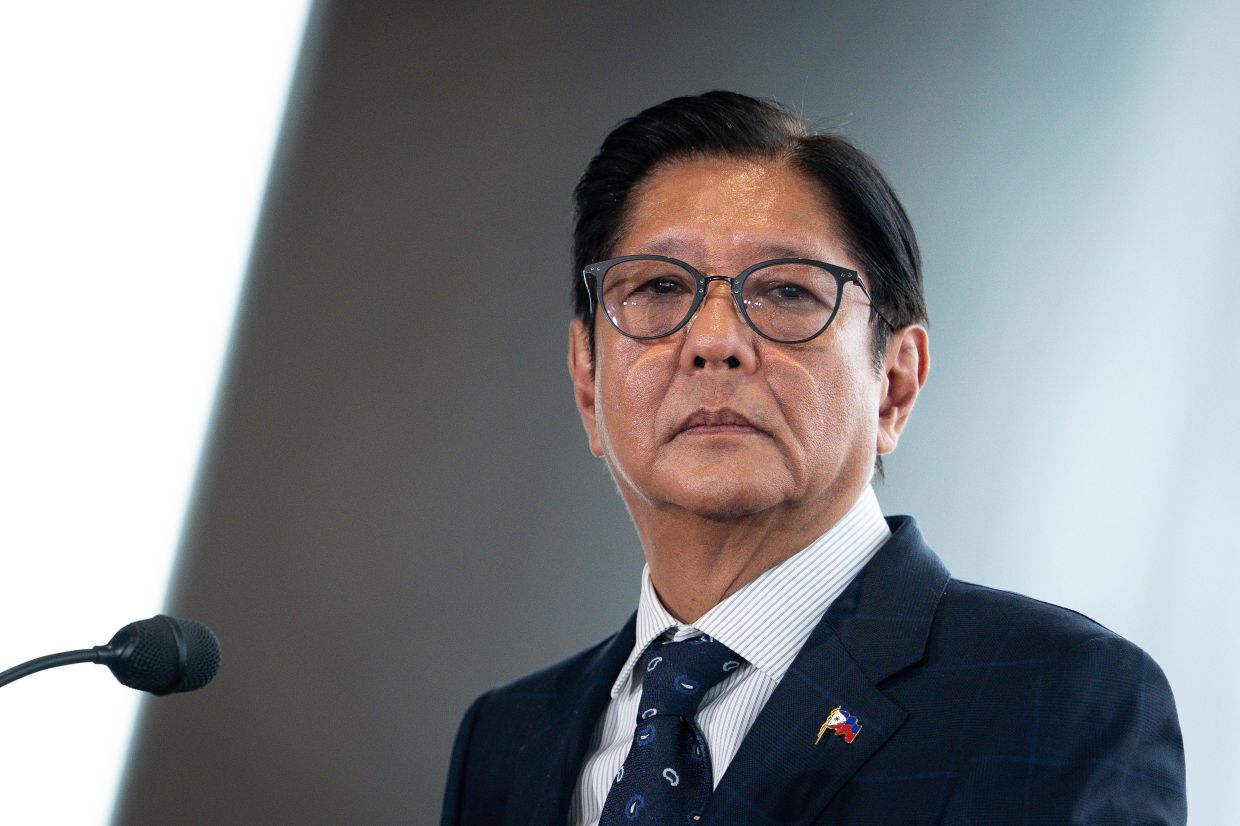
Philippine President Ferdinand Marcos Jr faces mounting pressure to reverse his political fortunes and revive a stuttering economy when he addresses Congress on Monday, exactly a year after shocking revelations of billions in corruption involving flood-control infrastructure projects rattled investor confidence and derailed consumer spending across the Southeast Asian nation.
The 68-year-old leader's credibility remains severely tarnished by the graft debacle, which exposed widespread misappropriation in major infrastructure schemes at a time when his administration has positioned itself as a crusade against the systemic corruption that plagued his father's authoritarian regime. The irony has not escaped critics, who contend that Marcos Jr has failed to demonstrate the political will necessary to translate anti-corruption rhetoric into meaningful prosecutions and institutional reform. Political observers note that public frustration centers not merely on the revelation of wrongdoing but on the apparent paralysis that has followed, leaving citizens questioning whether accountability will ever materialise.
The economic consequences have proven severe and measurable. Growth forecasts for 2026 were slashed dramatically to a range of 3.5 to 4.5 percent in June, down from expectations exceeding 6 percent before geopolitical tensions in the Middle East destabilised oil markets and investment sentiment. This slowdown is particularly painful for the Philippine economy, which has underperformed regional peers including Malaysia and Singapore. First-quarter expansion of just 2.8 percent represents a sharp deceleration from the 5.5 percent recorded in the quarter preceding Marcos's previous State of the Nation address, revealing how quickly the corruption scandal and its aftermath have dampened economic momentum.
Hansley Juliano, a political science instructor at Ateneo de Manila University, argues that the president's fundamental challenge transcends economic policy tweaking. Marcos Jr requires demonstrable action on multiple fronts: visible progress on prosecuting those implicated in the flood-control schemes, concrete measures to address the inflation that has squeezed household purchasing power, and a credible strategy for restoring consumer and business confidence. Without these elements working in concert, the analyst warns, Monday's speech risks being perceived as empty rhetoric from a presidency already struggling with credibility deficits.
The political landscape compounds Marcos's difficulties. His relationship with Vice President Sara Duterte has deteriorated into open conflict, with the vice president currently defending herself in Senate hearings against allegations involving graft and threats against the president. Should she be acquitted, Duterte potentially emerges as the frontrunner for the 2028 presidential election, presenting Marcos with a weakened hand in rallying his political coalition. Adding to administrative fragmentation, Senator Imee Marcos, the president's sister, has repeatedly distanced herself from his policies, signalling fissures within the ruling coalition that undermine his authority.
Infrastructure projects remain painfully incomplete despite their critical importance to vulnerable communities. In Calumpit, a municipality roughly 50 kilometres north of Manila, a broken dike stands as a symbol of stalled progress while flood-mitigation sheet piling has barely commenced construction. Local officials express bitter frustration at the glacial pace of works, with one administrator remarking sardonically that residents might develop immunity to floodwaters before remedial infrastructure materialises. For those already marginalised by typhoon exposure, the juxtaposition of revealed graft and incomplete safety measures generates anger that transcends normal policy criticism.
The investment community's concerns extend beyond traditional economic metrics. Radhika Rao, a senior economist at DBS Bank in Singapore, highlights that the Philippines currently captures less than 5 percent of investment flows destined for Southeast Asia, a troublingly modest share given the nation's size and demographic potential. She argues that resolving governance challenges and demonstrating competence in project execution remain prerequisites for reversing this investment deficit. Markets specifically demand clarity regarding fiscal stimulus deployment and pathways toward sustainable growth, with investors exhibiting heightened sensitivity to how the administration prioritises spending amid competing pressures.
Oil price volatility poses an additional headwind that complicates the administration's economic management. The Philippines sources more than 90 percent of its petroleum requirements from the Middle East, rendering the economy acutely vulnerable to regional geopolitical shocks. Energy costs ripple through supply chains and production expenses, contributing to inflationary pressures that erode real purchasing power for ordinary households. Analysts expect Marcos to address this vulnerability substantively, explaining how his government intends to mitigate energy-induced inflation on a durable basis rather than offering temporary palliatives.
Public trust in Marcos has declined to record lows, notwithstanding administration efforts to shield consumers from external economic shocks. The Management Association of the Philippines expressed pointed frustration in recent statements, arguing that while anti-corruption efforts deserve support, they cannot be allowed to become constraints on economic growth and project implementation. This represents a significant warning from the business community that political concerns must not entirely displace economic pragmatism in policy formulation.
Mondayís address coincides with commemorations of the Iglesia ni Cristo founding, with the religious organisation's recent anti-Marcos protests having disrupted the capital. Security officials have deployed more than 21,000 police personnel to manage large congregations of church members expected to gather near Congress, while protest groups representing marginalised communities are anticipated outside the legislature. The juxtaposition of ceremonial governance with demonstrations of discontent will frame Marcos's speech within a visual context of national division rather than unity.
Critical observers, including representatives of groups advocating for workers and farmers, argue that the Marcos administration has actively worsened conditions for the most vulnerable sectors. They contend that claims of economic management competence mask deteriorating living standards for poor Filipinos and fundamental disenfranchisement of marginalised groups. This counternarrative presents a direct challenge to any recovery narrative Marcos might attempt to construct during his address.
The stock market benchmark has declined 1.5 percent since last year's State of the Nation address, while the Philippine peso has depreciated nearly 8 percent against the US dollar, reflecting investor concerns about governance quality and growth prospects. These financial indicators suggest that rhetorical repackaging alone will prove insufficient to restore market confidence. The administration requires concrete policy announcements, prosecutorial progress on identified wrongdoers, and demonstrated capacity to execute the infrastructure projects whose mismanagement triggered the original scandal.
With merely two years remaining in his presidency, Marcos confronts a narrowing window for political rehabilitation. Monday's speech represents a crucial opportunity to reset expectations and demonstrate that his administration possesses both the competence and resolve necessary to navigate economic headwinds while addressing systemic corruption. Failure to deliver substantive commitments and visible progress will likely accelerate the erosion of his political capital and further diminish the investment confidence essential for economic recovery.

