President Ferdinand Marcos Jr has reaffirmed his confidence in the Armed Forces of the Philippines even as investigators reveal that active uniformed military personnel feature among those being scrutinized in connection with an alleged plot to assassinate him. The revelation came during impeachment proceedings against Vice President Sara Duterte, highlighting the extraordinary security concerns now dominating Philippine political discourse and raising uncomfortable questions about institutional loyalty within the military establishment.
National Bureau of Investigation Director Melvin Matibag disclosed the sensitive information during Wednesday's impeachment trial, stating that persons of interest in the purported assassination scheme include serving members of the armed forces. The investigation has also identified another individual connected to the Vice President's security detail as a person of interest, suggesting the alleged conspiracy may involve multiple security and law enforcement agencies—a troubling development for any administration.
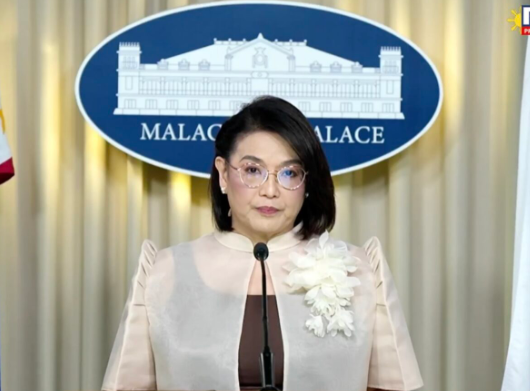
Despite these alarming revelations, the Presidential Palace moved quickly to reassure the nation and the international community of the President's unshaken faith in the military institution. During a press briefing, Palace Press Officer Claire Castro emphasized that Marcos Jr continues to demonstrate full trust and confidence in the Armed Forces, characterizing any potential wrongdoers as exceptions rather than systemic failures. Her remarks appeared designed to prevent the assassination allegations from morphing into a broader crisis of confidence that could destabilize the military hierarchy or undermine civilian control of the armed forces.
Castro's statement incorporated a crucial distinction that reflects the delicate position the administration faces. While affirming blanket confidence in the military as an institution, she simultaneously acknowledged that individual officers who deviate from their constitutional mandate must be identified and held accountable. This careful rhetorical balancing act attempts to preserve institutional cohesion while signaling that no individual, regardless of rank, stands above the law or investigation.
The Palace press officer further indicated that the identification and prosecution of any conspirators serves not merely as punishment but as an essential measure for protecting the President's physical safety. This framing recontextualizes the investigation as a security necessity rather than a witch hunt, though the mere existence of such allegations—particularly when they implicate active duty personnel—inevitably raises questions about the integrity of the presidential security apparatus itself.
When pressed on whether the administration has initiated loyalty reviews or special vetting procedures within the military ranks, Castro firmly denied that any such internal security audits are underway. She attributed responsibility for investigating and managing any institutional problems squarely to the security sector and military leadership, effectively delegating the burden to the armed forces' own command structure. This decision reflects either confidence that internal mechanisms will self-correct or an unwillingness to appear to conduct purges that might suggest deep institutional fracture.
The broader context of these allegations emerged during Vice President Duterte's impeachment trial, a proceeding that has already consumed the Philippine political calendar and exposed profound rifts within the national leadership. Duterte herself made the cryptic and startling declaration that she had previously instructed associates that if she were killed, they should also target key figures including President Marcos Jr, his cousin Liza Araneta, and House Speaker Martin Romualdez. This apparent reference to contingency instructions adds an extraordinary layer of complexity to the current security situation and raises questions about the relationship between the President and Vice President.
Duterte's statement, delivered in Filipino and without apparent irony or hedging, suggested she views herself as facing genuine mortal danger and has made arrangements accordingly. Whether this represents a literal security protocol, a rhetorical device to establish her credibility as a potential target, or something else entirely remains unclear. Her subsequent refusal to comply with an NBI subpoena has only deepened the opacity surrounding the alleged plot and her knowledge of it.
For Malaysian observers and Southeast Asian analysts, these developments illustrate the precarious nature of institutional stability in presidential systems where executive power concentrates heavily in a single individual. The alleged presence of active military personnel in an assassination plot represents not merely a crime but a potential indictment of civil-military relations and the effectiveness of command and control structures. The fact that investigators have identified security personnel from the Vice President's detail as persons of interest further suggests that the conspiracy, if it exists, cuts across institutional boundaries in ways that complicate investigation and prosecution.
The Palace's measured response—maintaining confidence while acknowledging that wrongdoers must face consequences—reflects a sophisticated understanding that security crises can metastasize into legitimacy crises if mishandled. Yet the inherent contradiction between claiming full institutional confidence while investigating alleged conspiracies within that same institution cannot be fully resolved through rhetoric alone. The coming weeks will demonstrate whether the armed forces' leadership can contain the investigation and prevent broader institutional paranoia or whether these allegations will precipitate deeper examinations of loyalty, command structures, and the professional military's relationship to democratic governance.
The implications extend beyond Manila's immediate political arena. Across Southeast Asia, where civil-military relations remain contested and democratic institutions face recurring stress tests, the Philippine experience provides a cautionary example of how security crises intertwine with political conflicts and how institutional survival depends on managing both security threats and the appearance of fairness in investigating them.

