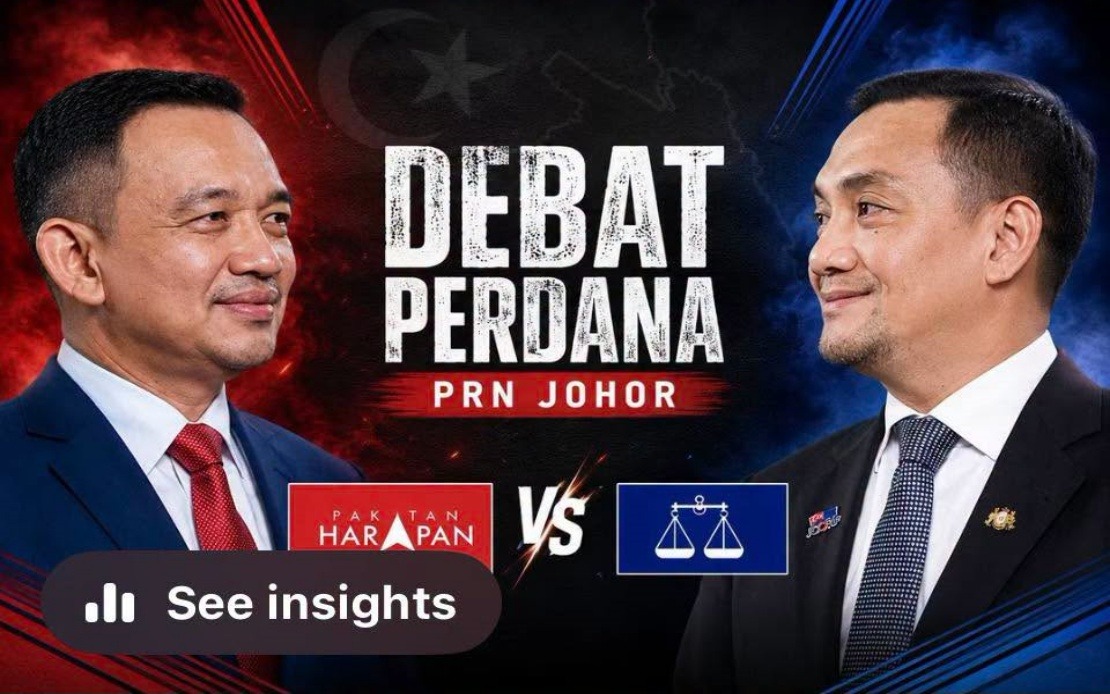
Pakatan Harapan's candidate for the Puteri Wangsa seat, Maszlee Malik, has confirmed his willingness to participate in a debate with Johor Menteri Besar Onn Hafiz Ghazi ahead of the state election scheduled for July 11. The former Education Minister announced his acceptance through a Facebook post on June 23, framing the decision as an endorsement of democratic principles and an attempt to elevate public discourse in Malaysia's political arena.
Maszlee's commitment to the debate comes after considerable public interest in the proposed event. Social media influencer Muhamad Harris Nasril had initially proposed organising a "Johor State Election Grand Debate," which subsequently gained traction after being shared on the Redaksi.com Facebook page. The proposal emerged following Pakatan Harapan chairman Anwar Ibrahim's announcement of all 56 coalition candidates contesting the Johor election, signalling that such electoral debates have become an anticipated feature of contemporary Malaysian campaign cycles.
In his public statement, Maszlee expressed his acceptance with deliberate emphasis on democratic values and civic engagement. He articulated a conviction that structured debates serve a broader educational function beyond mere political point-scoring, potentially cultivating a more sophisticated electorate capable of evaluating policy positions substantively. This positioning reflects a strategic shift among opposition politicians toward legitimising dialogue-based campaigning, particularly when facing incumbent administrations perceived as holding structural advantages through state machinery.
The Puteri Wangsa constituency represents a significant battleground for Pakatan Harapan in Johor. As a largely middle-class urban area, the seat attracts candidates and campaigns focused on bread-and-butter issues affecting city dwellers, from transportation and housing affordability to employment opportunities. Maszlee's previous role as Education Minister provides him with a platform to discuss policy continuity and reform, especially regarding education financing and curriculum development—matters of considerable concern to Puteri Wangsa's demographic profile.
Pakatan Harapan's overall strategy in this election involves fielding a diverse slate across the 56 contested seats, with personnel drawn from its three primary constituent parties. The coalition is running 20 candidates from PKR, 19 from Amanah, and 17 from DAP, representing an attempt to balance inter-party power dynamics while maintaining geographic and demographic representation. This careful allocation reflects broader tensions within the opposition coalition regarding resource distribution and electoral viability across constituencies with varying political landscapes.
Onn Hafiz Ghazi, as the incumbent Menteri Besar, carries the institutional advantages characteristic of office-holders in Malaysian state elections. Control over state-level development announcements, access to government apparatus, and established relationships with local authorities traditionally benefit ruling parties. However, Johor's political trajectory has shifted unpredictably over recent electoral cycles, with voters demonstrating willingness to change state governments. The Menteri Besar's acceptance of a public debate invitation signals confidence in his ability to defend the state administration's record while potentially acknowledging that contemporary voters expect candidates and office-holders to engage directly with political alternatives.
The timing of this electoral engagement matters considerably. The Election Commission has scheduled nomination day for June 24, with early voting permitted on July 7 and the main polling day set for July 11. This compressed campaign period means that high-profile debates gain disproportionate significance, potentially reaching wider audiences than traditional campaigning methods. For Maszlee specifically, debate participation offers an opportunity to project authority and policy expertise directly to undecided voters who may remain genuinely uncertain about opposition capability to govern effectively at the state level.
Debates in Malaysian state elections have historically functioned as crucibles for testing political messaging, candidate temperament, and coalition coherence. They provide neutral platforms where rhetoric meets scrutiny, potentially shifting voter calculations based on performance rather than party machinery or incumbency effects. For Pakatan Harapan, structured debate formats represent valuable opportunities to highlight policy alternatives to incumbent administrations and to present opposition candidates as serious, capable alternatives rather than protest votes against the status quo.
Maszlee's explicit framing of his debate acceptance around democratic principles and political maturity reflects broader positioning by opposition parties to occupy moral and institutional high ground. By emphasising the educational dimension of public political engagement, opposition figures attempt to redefine electoral competition beyond traditional zero-sum frameworks toward a model emphasising informed citizenry and deliberative democracy. Such rhetorical strategies, whether successful in shifting actual voter behaviour or not, indicate how Malaysian political discourse has evolved to incorporate expectations of substantive engagement beyond campaign rallies and party machinery mobilisation.
For Southeast Asian observers, the Johor state election demonstrates how Malaysian democracy continues experimenting with competitive electoral formats at sub-national levels. While federal politics remains constrained by various institutional factors, state elections increasingly showcase relatively open contestation where multiple political forces actively compete for voter support. The debate between Maszlee and Onn Hafiz exemplifies this dynamic, suggesting that Malaysian voters increasingly expect and demand opportunities to directly compare competing political visions before making electoral decisions.

