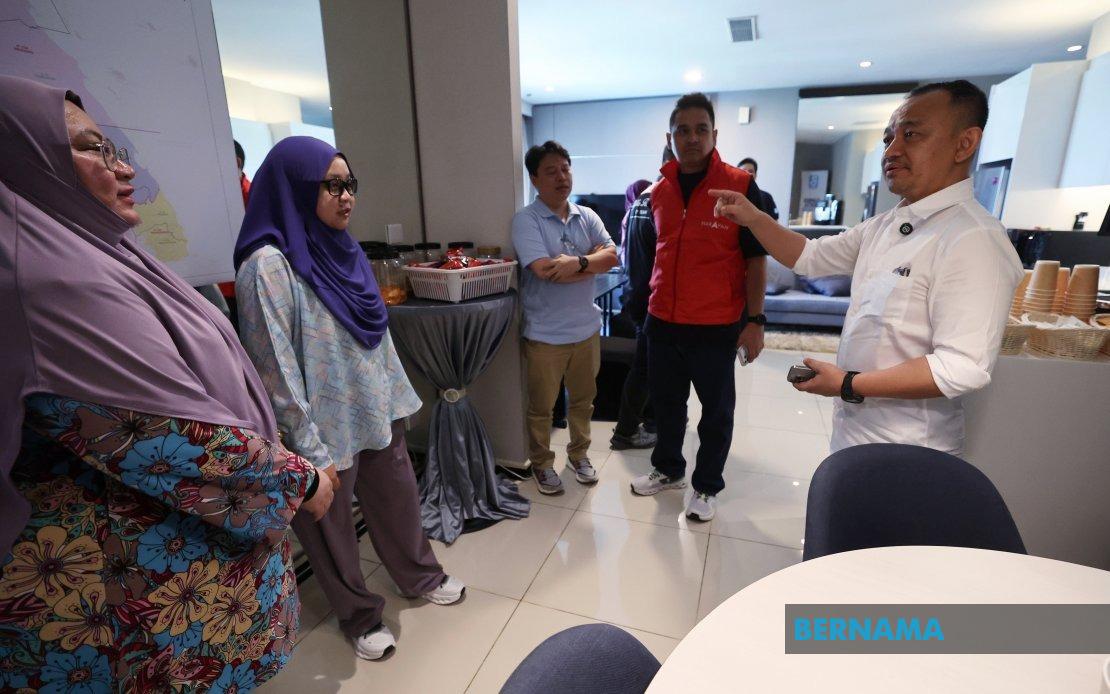
Dr Maszlee Malik, the Pakatan Harapan candidate for the Puteri Wangsa seat in Johor, is banking on digital innovation to enhance constituent services if he wins the Johor state election on July 11. His centrepiece proposal involves launching a dedicated mobile application that would enable residents to efficiently report problems and lodge complaints, addressing what he sees as a critical need given the constituency's sprawling geography and demographically mixed population. From upmarket enclaves like Austin Heights to rural Felda Ulu Tebrau, Puteri Wangsa encompasses vastly different communities with varying needs, a reality that Maszlee believes demands a technologically sophisticated yet pragmatic governing approach.
The former education minister's vision extends beyond simple complaint-handling. He envisions the app functioning as a comprehensive social safety net mechanism, capable of identifying and flagging individuals and families who qualify for government aid but remain uncovered by existing programmes. This includes single mothers and persons with disabilities who may struggle to navigate bureaucratic processes or lack awareness of assistance schemes available to them. By digitising the identification process, Maszlee argues that his administration could eliminate information gaps and procedural barriers that currently prevent vulnerable groups from accessing support they are entitled to receive.
Maszlee has looked internationally for inspiration, citing New York City Mayor Zohran Mamdani's community engagement model as a reference point. Mamdani's approach combines digital platforms and social media channels to create direct lines of communication between elected officials and constituents, bypassing traditional intermediaries. Maszlee believes this hybrid model—blending technology with genuine grassroots connection—offers lessons applicable to a Malaysian context, where constituent expectations increasingly demand responsive, accessible governance. Beyond the app itself, his broader engagement strategy incorporates regular liaison with non-governmental organisations, residents' associations and government agencies, supplemented by town hall meetings designed to surface and address hyperlocal concerns.
However, Maszlee's campaign recognises that digital outreach presents its own hurdles. Algorithmic filtering and social media echo chambers can inadvertently restrict campaign message visibility, particularly among audiences outside his natural support base. To navigate this challenge, his team has developed a sophisticated segmentation strategy that tailors messaging to specific demographic groups and geographic areas. This approach acknowledges that Gen Z voters, working professionals, Malaysians employed in Singapore, and residents in non-urban areas each possess distinct priorities shaped by their socio-economic circumstances, cultural background and life circumstances.
The targeting strategy reflects deeper campaign sophistication. Rather than deploying a uniform message across all platforms, Maszlee's team crafts content that speaks directly to the concerns of particular communities. For instance, messaging directed at Malaysians working across the Causeway in Singapore differs from content aimed at young urban professionals or rural inhabitants, with each variant calibrated to resonate with local preoccupations. This micro-targeted approach acknowledges that one-size-fits-all campaigning fails in a constituency as heterogeneous as Puteri Wangsa, where an affluent neighbourhood resident's concerns about infrastructure maintenance differ markedly from a Felda settler's priorities regarding agricultural support and rural amenities.
The emphasis on digital engagement particularly targets voters less reachable through conventional campaigning methods. Young voters and Malaysians working abroad often lack availability for traditional doorstep contact or walkabouts, making social media platforms their most accessible touchpoint. Maszlee's campaign recognises that while traditional canvassing remains important, demographic shifts and changing patterns of work and residence demand complementary strategies that meet voters where they actually spend their time and attention. This reflects broader trends in Malaysian politics where digital fluency increasingly determines campaign effectiveness, particularly among younger and more mobile populations.
Puteri Wangsa is contested by five candidates, transforming it into a competitive multi-cornered battle. Beyond Maszlee, voters will choose between Rashifa Aljunied representing the Malaysian United Democratic Alliance (MUDA), Barisan Nasional's Teow Chia Ling, Nicholas Paul Vincent of Parti Bersama Malaysia, and independent candidate Wang Wee Siong. This fragmented contest suggests that victory margins may narrow compared to previous elections, placing premium value on efficient ground operations and effective voter mobilisation—areas where sophisticated digital tools and targeted messaging could prove decisive.
The campaign strategies articulated by Maszlee offer a window into how Malaysian politicians are adapting to evolving electoral dynamics. Rather than viewing technology as antithetical to community connection, progressive candidates increasingly frame digital tools as complements to traditional engagement, arguing that innovation can enhance representative accountability. The mobile app concept, if executed effectively, could serve as a model for other constituencies grappling with similar challenges of geographic dispersal and demographic diversity. Whether it translates into electoral victory remains to be seen, but it demonstrates how technology-driven governance proposals are becoming mainstream in Malaysian political discourse.
The broader implications extend beyond Puteri Wangsa itself. Johor's election occurs amid increasing competition across Malaysia for constituent services that combine traditional accessibility with digital convenience. Voters increasingly expect elected representatives to provide multiple channels for raising concerns and accessing information, from in-person consultation to online platforms. Candidates who ignore this expectation risk appearing out of touch with contemporary governance standards. Maszlee's approach suggests that future political competition in urban and semi-urban constituencies will increasingly turn on candidates' capacity to deploy technology intelligently while maintaining genuine community engagement.
Early voting begins on July 7, with polling day set for July 11. For Maszlee and his opponents, the intervening period represents a critical window to consolidate support and communicate their visions for local governance. The candidate's emphasis on digital tools and targeted engagement reflects calculated judgments about how to win over a constituency characterised by mobility, diversity and escalating demands for responsive, accessible services. Whether his technology-enhanced approach resonates with voters will become clear once ballots are cast, but it signals the direction Malaysian political campaigns are increasingly heading.

