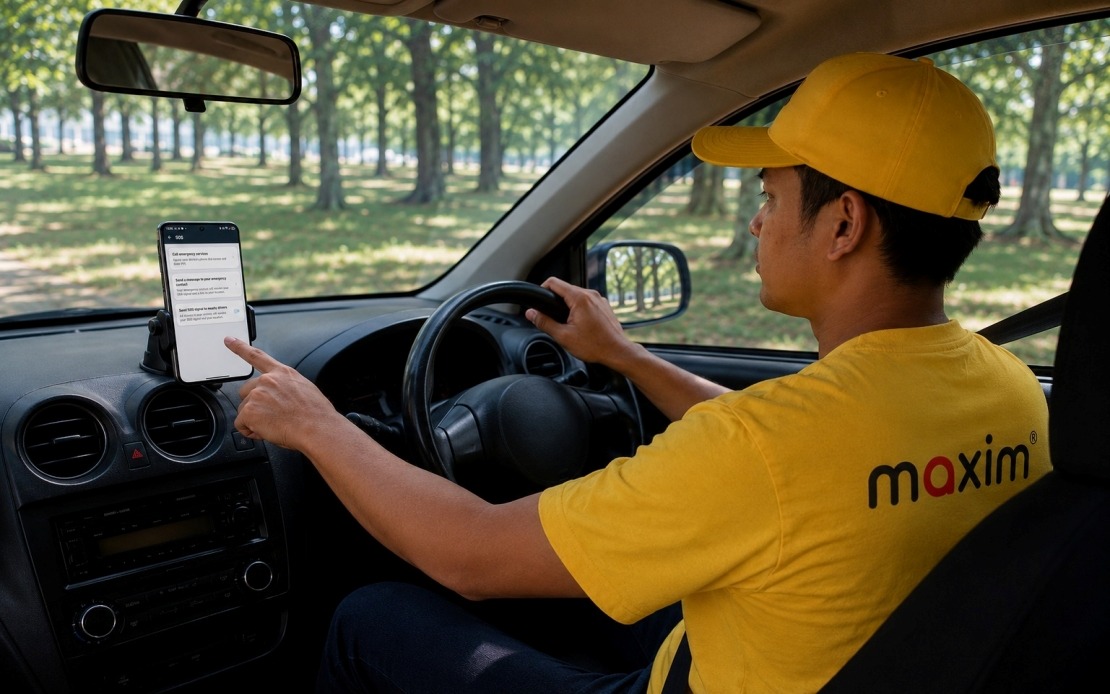
Ride-hailing operator Maxim Malaysia has moved to fortify its safety ecosystem through a comprehensive overhaul of its emergency response capabilities, deploying a revamped SOS system designed to expedite assistance for both drivers and passengers confronting unexpected dangers or crises while using the platform. The enhancement underscores growing industry recognition that swift access to help during critical moments can fundamentally determine safety outcomes in the gig economy transport sector.
The upgrade fundamentally restructures how users in distress interface with emergency support. Rather than defaulting to a single rigid alert pathway, the system now grants individuals the flexibility to rapidly contact the police emergency line at 999, notify pre-designated loved ones, or alert nearby Maxim partner drivers—all achievable within moments of activating the SOS button. This modular approach acknowledges that different emergency scenarios demand different response strategies; a mechanical breakdown benefits from peer-driver assistance, while a security threat requires immediate law enforcement intervention.
A defining technical advancement centres on the notification mechanism itself. When users transmit an alert to registered emergency contacts, recipients receive an SMS containing the precise GPS coordinates of the vehicle and a hyperlink enabling real-time trip monitoring. Critically, this system maintains functionality even when the mobile internet connection degrades or fails entirely, ensuring that individuals in remote areas or locations with poor connectivity can still reach out for support. For a geographically dispersed nation like Malaysia, this resilience addresses a genuine vulnerability in existing safety infrastructure.
The Driver Alert System represents an innovative peer-support mechanism specifically tailored to Maxim's driver community. When a partner driver encounters an emergency, the platform automatically broadcasts alerts to fellow Maxim drivers operating within a three-kilometre radius, detailing the emergency classification and precise location. This crowdsourced assistance model harnesses the platform's existing network of thousands of drivers who can provide immediate support—whether mechanical aid, witness presence, or crisis communication—while professional emergency services mobilise toward the scene. The approach recognises that bystander intervention often precedes official response.
According to Mohd Hazwan Musli, Maxim Malaysia's director, the philosophical foundation of these upgrades rests on empowering users to make instantaneous decisions about who should respond to their crisis. He emphasises that milliseconds matter in emergency contexts; the seconds saved by eliminating convoluted menu navigation or contact list searching can prove decisive in dangerous circumstances. This design principle reflects sophisticated understanding of human behaviour under acute stress, when cognitive function narrows and users require intuitive, frictionless pathways to assistance.
Beyond the headline SOS enhancements, Maxim has layered additional protective mechanisms throughout its platform architecture. A secure in-app messaging system incorporates fraud-detection algorithms, creating a communications channel insulated from spoofing and deceptive tactics that sometimes plague ride-hailing services. Continuous journey monitoring collects granular GPS data throughout each trip, establishing an immutable record of vehicle movement that proves invaluable for dispute resolution, insurance claims, or law enforcement investigations following incidents.
For passengers specifically, the Trip Sharing functionality permits instantaneous transmission of live journey links to designated contacts upon vehicle boarding. This simple feature acknowledges that informed loved ones constitute an effective safety layer; when trusted people know where a passenger should be arriving and when, anomalies trigger follow-up concerns that may prompt intervention. The psychological reassurance this provides complements the technical safeguards, as users boarding with friends and family informed of their movements experience measurably reduced vulnerability.
Data protection receives particular emphasis throughout the system architecture. All information flowing through the SOS function, Driver Alert System, and Trip Sharing channels undergoes encryption conforming to contemporary security standards. Access restrictions mean that only authorised security personnel and legitimate authorities can retrieve sensitive data, and then only through formalised legal procedures. This framework attempts to balance emergency responsiveness against privacy preservation—a tension that ride-hailing platforms must continually negotiate as they scale.
The timing of Maxim's rollout reflects broader industry pressures. Following high-profile safety incidents across Southeast Asian ride-hailing markets, both regulators and consumers have intensified scrutiny of platform safety protocols. Malaysian transportation authorities have signalled expectations that operators maintain robust emergency infrastructure, and users increasingly factor safety ratings into platform selection decisions. Maxim's enhancements position the company competitively within this evolving landscape.
For Malaysia's estimated two million regular ride-hailing users, these upgrades materialise as tangible improvements to daily transport experiences. Urban commuters benefit from faster emergency response pathways; drivers gain peer-support networks that acknowledge their vulnerability while working long hours; passengers acquire additional reassurance mechanisms when travelling solo or in unfamiliar areas. The standardisation of SOS functionality across both user categories eliminates confusing disparities that previously existed.
The broader ecosystem implications warrant consideration. As ride-hailing platforms invest substantially in safety infrastructure, they establish de facto standards that eventually influence regulatory expectations. Other operators may face competitive pressure to match or exceed Maxim's offerings, potentially triggering a safety-feature arms race that ultimately benefits consumers. Simultaneously, these technological solutions remain imperfect complements to robust driver vetting, passenger education, and law enforcement cooperation—comprehensive safety demands orchestration across multiple institutional layers.
Looking forward, the sophistication of these safety systems will likely become a central competitive differentiation point in Southeast Asia's ride-hailing market. As the sector matures beyond growth-at-all-costs dynamics, safety credentials increasingly influence regulatory licensing decisions and user loyalty patterns. Maxim's proactive stance suggests the company recognises that sustainable market leadership demands genuine, measurable commitment to user protection rather than superficial safety rhetoric.

