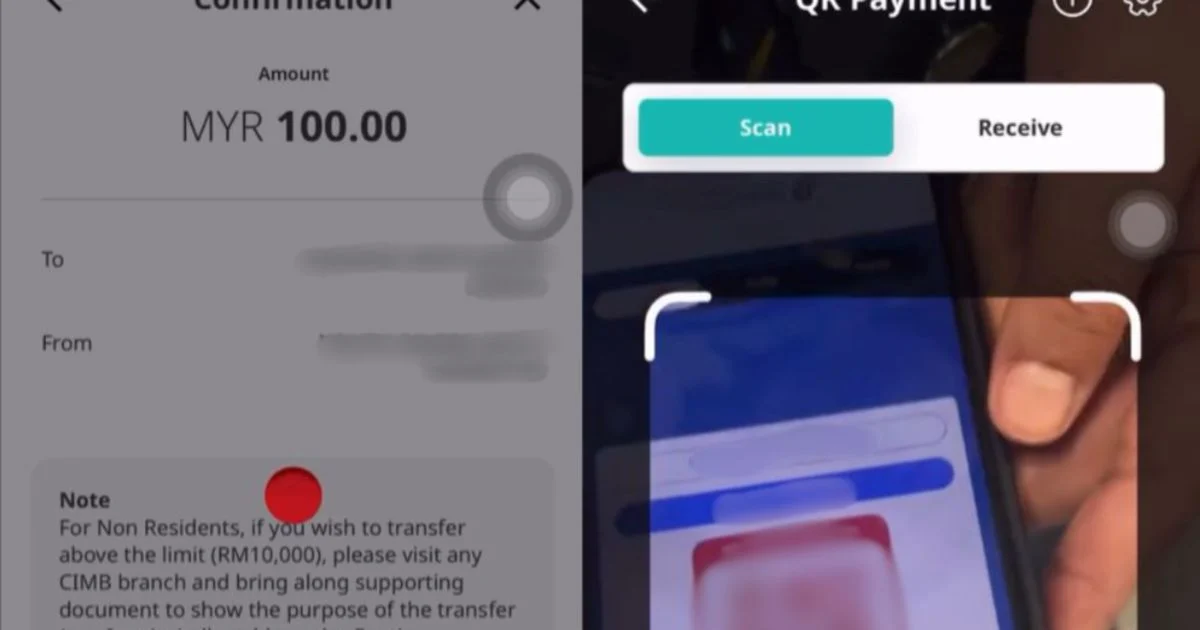
The Malaysian Border Control and Protection Agency has initiated a formal internal inquiry following allegations that one of its officers stationed at Kuala Lumpur International Airport's Terminal 2 facility accepted a RM100 payment through a personal Quick Response code transaction, marking the latest in a series of integrity concerns at the nation's primary international aviation hub.
The investigation represents a significant development in ongoing efforts to maintain discipline and transparency within Malaysia's border management apparatus. Terminal 2 at KLIA handles the vast majority of the airport's passenger traffic and serves as the critical interface between arriving and departing international travellers and Malaysian immigration and border control officials. The alleged incident underscores vulnerabilities in current payment acceptance protocols and supervision mechanisms at one of Southeast Asia's most strategically important transportation nodes.
QR code payment systems have proliferated across Malaysia's service sectors in recent years, offering convenience and traceability to legitimate transactions. However, their widespread adoption has also created new vectors for informal money collection if not properly regulated within institutional settings. The allegation that an MCBA officer utilised a personal QR code rather than official channels represents a potential breach of established financial procedures and raises questions about oversight of day-to-day operations at the airport's border facilities.
The MCBA's decision to launch a dedicated investigation signals institutional awareness of the gravity of such allegations and commitment to maintaining public confidence in Malaysia's border operations. Personal payments extracted through unofficial channels, regardless of amount, can damage the credibility of government agencies and create perceptions of systemic corruption among international travellers. KLIA's reputation as a professional, efficiently operated facility remains essential to Malaysia's positioning as a regional aviation hub competing with other major Southeast Asian airports.
The timing of this investigation occurs within a broader context of heightened scrutiny on financial irregularities across Malaysian government bodies. Public expectations for institutional accountability have intensified following several high-profile cases involving public officials, making swift and transparent investigations increasingly important for maintaining institutional legitimacy. The MCBA's handling of this matter will likely set precedents for how similar allegations are addressed across Malaysia's border and security agencies.
Border control operations present inherent challenges for maintaining strict financial discipline, given the high-volume transaction environment and the relative autonomy officers exercise in their daily duties. However, these operational realities cannot excuse departure from established protocols. The existence of personal QR code payments suggests gaps in monitoring mechanisms or insufficient clarity regarding acceptable payment practices that must be addressed comprehensively rather than in response to individual incidents.
The incident also highlights the importance of technological infrastructure safeguards within government agencies. Modern payment systems can provide detailed audit trails when properly implemented, yet their effectiveness depends entirely on institutional commitment to using official channels and maintaining transparent records. Malaysia's public sector has increasingly adopted digital payment solutions, but this case demonstrates that technology alone cannot substitute for robust procedural frameworks and regular compliance audits.
For Malaysian travellers and international visitors, incidents like this carry particular significance given KLIA's centrality to their travel experience. Confidence in the integrity of border officials directly influences perceptions of Malaysia's governance quality and affects the nation's attractiveness as a travel and business destination. Any suggestion of improper financial conduct by border officers, even in isolation, can amplify negative narratives about official corruption that extend far beyond the specific incident.
The MCBA operates within a complex institutional ecosystem that includes cooperation with other government agencies, private terminal operators, and international aviation authorities. This investigation will likely involve coordination across multiple stakeholders to establish precisely what transpired and whether any broader systemic issues require attention. The outcome may inform policy adjustments affecting how all border officers at KLIA and other major gateways handle passenger interactions involving financial elements.
As Malaysia seeks to strengthen its regional position and attract increased international travel and investment, maintaining confidence in government institutions becomes strategically vital. Border control agencies occupy a particularly sensitive position because they represent the nation's first and last formal interaction with international visitors. Officers' conduct directly shapes first impressions and overall assessments of Malaysia's governance standards. This investigation therefore carries implications extending well beyond the individual allegation to encompass broader questions about institutional standards and accountability mechanisms.
The MCBA's investigation will likely determine whether disciplinary measures are warranted and whether procedural reforms are necessary to prevent similar incidents. Regardless of findings, the case reinforces that maintaining integrity across all levels of border operations requires sustained commitment, clear protocols, regular training, and credible oversight mechanisms. As Malaysia's gateway to the world, KLIA demands nothing less than the highest professional standards from all officials stationed there.

