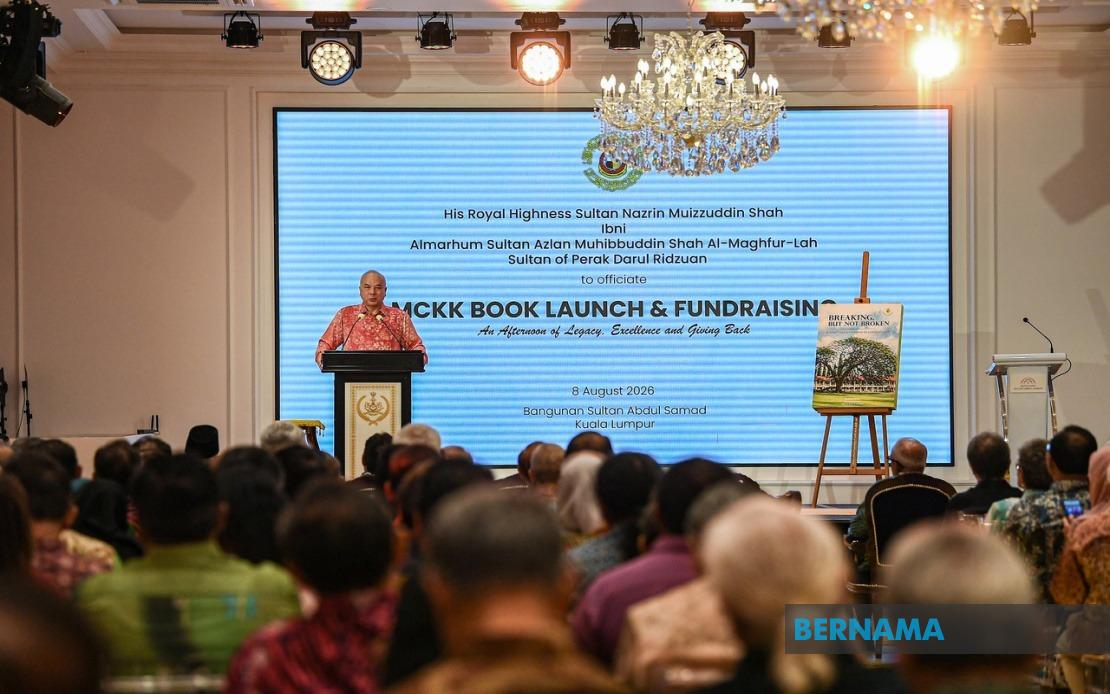
The Sultan of Perak Sultan Nazrin Shah has delivered a clarion call for Malaysia's venerable heritage schools to undertake fundamental transformation if they are to reclaim their once-dominant place in the nation's educational landscape. Speaking at the launch of a book examining institutional challenges facing institutions such as the Malay College Kuala Kangsar, Sultan Nazrin emphasised that schools of this calibre possess the foundational strength to emerge reinvigorated, provided they adapt boldly to contemporary circumstances shaped by technological disruption and the rise of artificial intelligence.
At the heart of Sultan Nazrin's message lies an acute recognition that the world in which such institutions now operate differs profoundly from the environment that forged their historical reputation. The Ruler, who serves as Royal Patron of the MCKK Board of Governors, argued that heritage schools cannot simply rest on accumulated prestige or past academic triumphs. Instead, they must consciously rebuild themselves through approaches that honour their ethical moorings while confronting the realities of rapid economic transformation driven by digital innovation and machine learning capabilities.
The remarks underscore growing concern among Malaysia's educational leadership that celebrated boarding institutions, once regarded as producing the nation's finest graduates and most capable leaders, have experienced a marked decline in influence and outcomes. Sultan Nazrin acknowledged that these establishments, colloquially termed "power" schools by virtue of their historical dominance, have witnessed their lustre fade considerably. The evidence is visible in the calibre of recent alumni, with observers noting deficiencies in language proficiency, analytical reasoning, and an inclination towards public service—hallmarks that once distinguished graduates of these institutions from their peers.
Central to Sultan Nazrin's vision is the notion that educational excellence must operate on two registers simultaneously. The practical dimension encompasses technical competencies and adaptability to shifting economic landscapes, preparing students for careers in sectors increasingly shaped by technological change. Yet equally vital is the cultivation of character, values, and what the Sultan termed intangible qualities—the moral compass, intellectual curiosity, and commitment to societal contribution that transform capable individuals into responsible leaders. This dual imperative becomes especially pressing during periods of rapid, unpredictable transformation where technological capabilities outpace societal consensus about their appropriate application.
The modernisation imperative extends beyond curriculum reform or facility upgrades. Sultan Nazrin stressed that the educational system itself must be reimagined from foundational principles to equip the next generation not merely to survive in an AI-enabled economy but to harness its possibilities meaningfully. This reframing acknowledges that artificial intelligence and automation will fundamentally alter labour markets and skill requirements, necessitating a pedagogical approach that prioritises critical thinking, creativity, and ethical reasoning alongside technical literacy. For heritage schools seeking renewed relevance, this transformation represents both existential challenge and strategic opportunity.
The Sultan commended the authors of the book—Ghazally Ismail, Ahmad Ibrahim, and Hisham Badrul Hashim—for undertaking what he characterised as a courageous examination of institutional difficulties. Notably, Sultan Nazrin praised the unflinching, occasionally harsh nature of their analysis, suggesting that candour about institutional shortcomings represents a necessary precondition for meaningful reform. The assessment extends to the broader cohort of select residential schools that share similar trajectories of historical prominence followed by contemporary diminishment, indicating that the challenges facing MCKK reflect systemic rather than idiosyncratic factors affecting Malaysia's elite educational institutions.
The financial dimension of institutional renewal received particular emphasis through remarks by Tan Sri Dr Ahmad Tajuddin Ali, chairman of the MCKK Board of Governors. Since establishment in 2008, the MCKK Foundation has accumulated donations and contributions exceeding RM36 million, reflecting sustained confidence from philanthropic sources in the institution's capacity for transformation. Infrastructure investment totalling more than RM19 million has modernised physical facilities including the International Baccalaureate Complex and Auditorium Tun Abdul Razak, while an additional RM3.5 million has funded restoration and maintenance projects across residential and recreational facilities. These investments signal commitment to providing contemporary learning and residential environments befitting an institution seeking to attract and retain high-calibre students and faculty.
Beyond bricks-and-mortar considerations, the Foundation has constructed what Ahmad Tajuddin described as a strong and sustainable endowment, now exceeding RM16 million. This diversified funding base, incorporating contributions from major corporate entities including PETRONAS and international partners such as the Sultan of Brunei, insulates the institution from volatile annual fundraising cycles and enables long-term planning. Critically, endowment investment income—totalling more than RM7 million to date—has been redirected toward scholarships, student financial assistance, and professional development programmes, ensuring that institutional renewal benefits the student body directly through expanded access and enhanced learning opportunities.
The deployment of foundation resources reflects evolved priorities in heritage school management. Beyond maintaining heritage buildings and grounds—an obligation to stewardship of architecturally and historically significant structures—the Foundation has channelled capital toward scholarships for deserving students, leadership development curricula, participation in international academic competitions and conferences, and systematic professional development for teaching staff. This allocation pattern acknowledges that institutional excellence ultimately derives from human capital quality rather than facility magnificence, and that equitable access to educational opportunity represents both moral imperative and practical necessity in sustaining institutional prestige.
For Malaysian educational policymakers and the broader regional context, Sultan Nazrin's pronouncements carry particular significance. Southeast Asia faces collective pressure to remain competitive in global knowledge economies while navigating the disruptive potential of artificial intelligence and digital transformation. Heritage institutions that historically shaped elite formation in Malaysia and influenced regional educational standards retain symbolic importance beyond their current student populations. Their revival—or continued decline—carries implications for questions about meritocratic advancement, the preservation of institutional cultures emphasising ethical formation alongside intellectual achievement, and the availability of alternative pathways to leadership development outside purely commercial educational providers.
The transformation narrative articulated by Sultan Nazrin suggests that heritage schools need not accept gradual obsolescence as inevitable. Rather, deliberate institutional reimagining that respects foundational strengths while embracing contemporary imperatives offers a plausible pathway forward. This requires sustained investment in faculty quality, curricular innovation that integrates emerging technologies with humanistic education, and leadership willing to acknowledge past limitations while charting ambitious futures. For MCKK and comparable institutions, the challenge and opportunity converge: to demonstrate that schools rooted in twentieth-century traditions can emerge as exemplars of twenty-first-century educational excellence.

