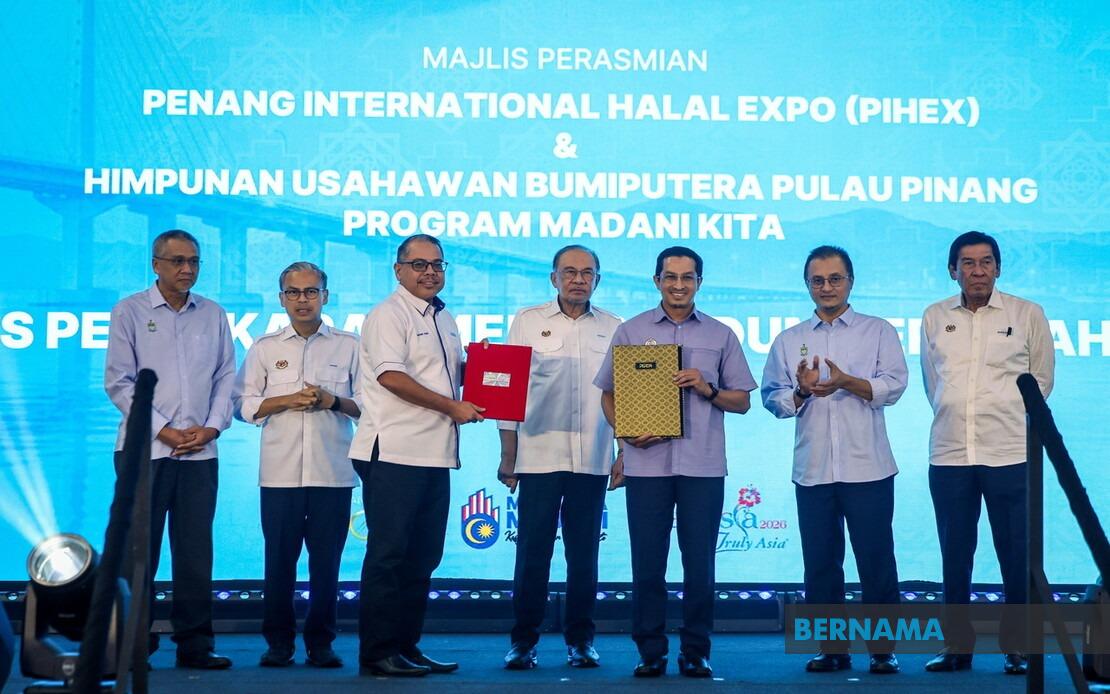
The Malaysian Communications and Multimedia Commission has entered into a landmark partnership with Penang Halal International to deliver an expanded MADANI Kita Programme alongside the Penang International Halal Expo (PIHEX) 2026, marking the first such collaborative effort between these organisations. Launched at Seberang Perai Polytechnic from July 24 to 25, the joint initiative reflects a deliberate effort to streamline how Malaysians access public services and support available from their government. Prime Minister Datuk Seri Anwar Ibrahim presided over the official launch, signalling the programme's importance within the broader Malaysia MADANI development agenda.
The MADANI Kita Programme, coordinated by the Performance Acceleration Coordination Unit under the Prime Minister's Department, represents a whole-of-government approach designed to consolidate multiple services and agencies under a single platform. Rather than requiring citizens to visit disparate offices and departments scattered across different locations, the initiative brings together federal ministries, government agencies, and strategic partners to create a unified touchpoint for public engagement. This restructuring aims to eliminate the traditional frustrations of bureaucratic fragmentation that have long characterised Malaysian public administration, where individuals seeking multiple services must navigate a labyrinth of offices, queues, and varying procedural requirements.
The pairing of MADANI Kita with PIHEX 2026 demonstrates strategic thinking about public outreach and service accessibility. By anchoring the government programme within a major commercial and cultural event—the halal expo—organisers expand the potential audience significantly beyond those who might actively seek out government facilities. Visitors attending the halal exposition encounter government services incidentally, lowering the psychological and logistical barriers to engagement. This approach proves particularly valuable for reaching entrepreneurial communities and industry players who might benefit from government support schemes but lack awareness of available programmes.
Services accessible through the combined programme span health, commerce, and digital connectivity. Health screenings provide preventative and diagnostic services, while Rahmah Sales and Agro MADANI Sales initiatives offer subsidised consumer goods and agricultural products designed to ease cost-of-living pressures on ordinary Malaysians. Government agency booths establish direct contact between officials and the public, facilitating real-time advice and support navigation. The inclusion of the NADI E-Sports MADANI Legend competition and free wireless internet through NADI On Wheels indicates recognition that contemporary service delivery must accommodate digital-native audiences and entertainment-oriented engagement models.
Penang's prominence as a halal manufacturing and export hub makes the collaboration particularly significant for regional commerce. The state has invested substantially in developing halal certification capabilities and attracting international halal trade partners. By situating MADANI Kita within PIHEX, the government acknowledges the entrepreneurial ecosystem driving Penang's economic growth and positions itself as an enabling partner within that ecosystem. This framing shifts the perception of government from a regulatory constraint to an active facilitator of business development and market expansion.
The broader strategic objective encompasses digital inclusion and equitable access to government services across demographic and geographic lines. MCMC's involvement signals that digital infrastructure and information dissemination remain foundational to the Malaysia MADANI vision. By deploying NADI On Wheels—mobile wireless connectivity units—throughout the event, the commission extends digital access to populations that may lack reliable home internet. This approach addresses a persistent Malaysian development challenge: ensuring that digital divides do not entrench existing inequalities between urban and rural, wealthy and disadvantaged communities.
Communications Minister Datuk Seri Fahmi Fadzil and MCMC chairman Tan Sri Mohamad Salim Fateh Din's participation emphasises institutional commitment at senior levels. Their attendance signals that this collaboration receives genuine priority rather than representing peripheral activity delegated to junior officials. This calibre of leadership presence typically correlates with resource allocation, follow-up momentum, and accountability mechanisms that determine whether initiatives achieve their stated objectives or fade into administrative obscurity.
The MADANI Kita Programme itself reflects a governance philosophy increasingly prominent in Southeast Asian administration: consolidated service delivery aimed at reducing citizen friction with bureaucracy. Malaysia joins regional peers in recognising that government legitimacy depends partly on tangible improvements in how efficiently citizens access public services. Countries like Singapore and Thailand have pioneered integrated service platforms with measurable improvements in citizen satisfaction and service uptake. Malaysia's expansion of this model through high-profile collaborations suggests policy-makers have absorbed these lessons and determined that enhanced service delivery offers political and developmental dividends worth pursuing.
The timing of this initiative during the second year of the Malaysia MADANI framework indicates an evolution from announcement toward implementation. The original MADANI vision encompassed aspirational goals around inclusivity, prosperity, and sustainability. Translating those abstract objectives into concrete citizen experiences—healthcare access, affordable goods, digital connectivity—requires precisely the kind of inter-agency coordination and public-facing infrastructure that MADANI Kita represents. Events like PIHEX 2026 provide testing grounds for integrated approaches that may eventually reshape how federal and state governments deliver services more broadly across Malaysia.

