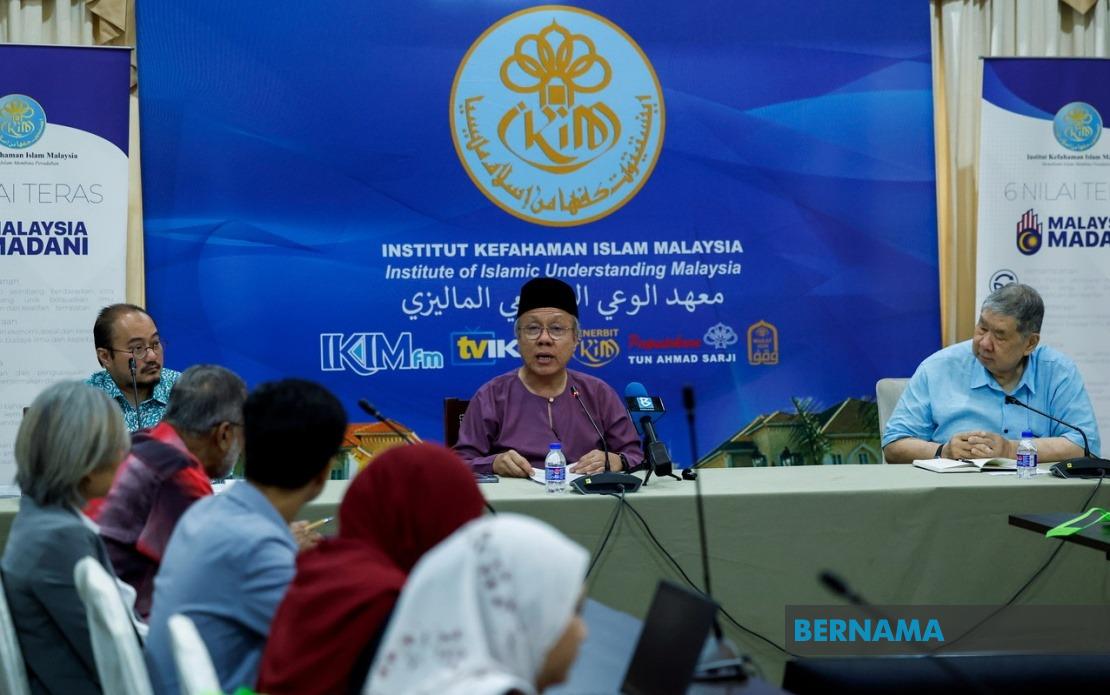
The Malaysian Press Institute, working alongside the Institute of Islamic Understanding Malaysia and Lembaga Tabung Haji, brought together more than 20 media professionals for an intensive briefing session on the TH Royal Commission of Inquiry. The closed-door programme, conducted at IKIM's facilities in Kuala Lumpur, represented a coordinated effort to ensure journalists obtain authoritative insights into the findings and implications of the inquiry that has drawn significant public attention.
TH Group Managing Director and Chief Executive Officer Mustakim Mohamad led the substantive discussion during the nearly two-hour session, providing detailed information about the commission's work while fielding questions from the assembled journalists. His participation underscored the institution's commitment to transparent engagement with the media as it navigates the period following the inquiry's completion. The forum allowed reporters to move beyond preliminary public statements and engage directly with senior leadership on the specifics of the investigation and its conclusions.
MPI President Datuk Yong Soo Heong characterised the initiative as a crucial mechanism for enabling journalists to access reliable, first-hand information about the steps Tabung Haji is implementing to rebuild depositor and investor confidence. He emphasised that such direct engagement helps ensure that the public receives accurate reporting on matters of national economic significance. By bringing media gatekeepers together with institutional leadership, the programme sought to reduce misinformation and create space for informed discourse around the inquiry's outcomes.
The collaboration itself carries symbolic weight in Malaysia's media landscape. By involving IKIM, the organisers positioned the narrative around accountability and institutional management rather than allowing the inquiry to become ensnared in divisive conversations around religious or communal identity. This framing reflects a deliberate strategy to maintain focus on governance and fiduciary responsibility as the central concerns, matters that transcend sectarian boundaries and affect all depositors regardless of background.
IKIM Director-General Associate Professor Datuk Dr Mohamed Azam Mohamed Adil made this positioning explicit during the session, cautioning against interpreting the RCI's work through a lens of religious controversy or racial politics. He reframed the inquiry as fundamentally a question of institutional trust and the accountability obligations that come with managing funds entrusted to Tabung Haji as Malaysia's sole Islamic pilgrimage savings institution. This emphasis on management integrity and transparent governance represents the institutional consensus on how the inquiry should be understood by the broader public.
Yong indicated that the briefing model could be expanded to other Malaysian states through similar dialogue formats and community engagement events. Such expansion would amplify the reach of authoritative information while allowing regional media and stakeholders to engage with TH leadership in their own contexts. Given that Tabung Haji depositors are distributed across the country, localized versions of these sessions could prove valuable for addressing place-specific concerns and building confidence incrementally.
The programme underscores a broader shift in how Malaysian institutions are approaching media relations during periods of institutional scrutiny. Rather than adopting defensive stances or limiting communication to official statements, the Tabung Haji leadership chose proactive engagement with the journalistic community. This approach reflects recognition that the credibility of public institutions increasingly depends on their willingness to subject themselves to rigorous questioning and provide substantive responses to informed critics.
For Malaysia's pilgrimage savings ecosystem, the timing of this initiative matters considerably. Tabung Haji serves millions of Muslim Malaysians who have placed their faith and savings with the institution as they prepare for the Hajj pilgrimage, one of Islam's five pillars. Any erosion of confidence in the institution's management or financial integrity carries implications beyond economics into matters of spiritual practice and personal planning. The RCI's findings therefore touch on concerns deeply woven into Malaysian Muslim life, making clear communication essential.
The media literacy programme also reflects institutional awareness that the inquiry's conclusions require contextualisation for public understanding. Royal Commissions of Inquiry often produce complex findings involving historical management decisions, procedural matters, and technical financial issues that require expert explanation rather than simple summation. By investing time in helping journalists develop deeper comprehension of these elements, TH creates the foundation for more nuanced reporting that serves the public interest more fully than surface-level coverage could achieve.
Moving forward, the success of this initiative will be measured not merely in the quantity of coverage that emerges, but in the quality and accuracy of reporting on Tabung Haji's governance trajectory. Journalists who participate in such forums carry greater responsibility to translate their access into reporting that genuinely illuminates rather than sensationalises. The partnership between MPI, IKIM, and Tabung Haji essentially represents an investment in creating the informational conditions necessary for Malaysian society to evaluate institutional performance through an evidence-based rather than speculative lens.

