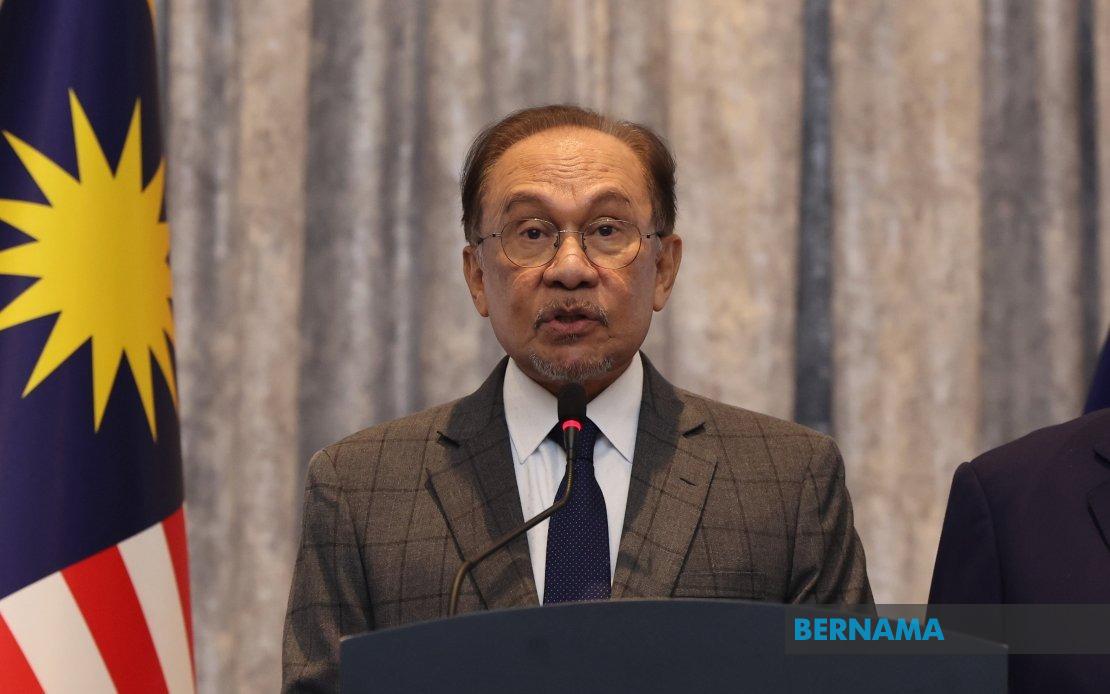
Prime Minister Datuk Seri Anwar Ibrahim has delivered a pointed message to Malaysia's media landscape: the rush to embrace technological innovation must never come at the expense of journalistic values, ethical standards, and national identity. Speaking at the Malaysian Press Night 2025 and the Malaysian Press Institute-PETRONAS Journalism Awards ceremony in Kuala Lumpur, Anwar emphasised that technological advancement alone cannot guide the nation forward if it lacks a moral compass. The challenge facing Malaysian newsrooms today extends far beyond mastering artificial intelligence, digital platforms, and data analytics; it involves ensuring these tools remain anchored to principles that serve the public interest rather than narrow commercial or ideological agendas.
Anwar's remarks arrive at a critical juncture for the global media landscape, where traditional power structures are being disrupted by technological change. The Prime Minister drew a historical parallel to Western media dominance in shaping global narratives according to external interests, arguing that the contemporary world faces an analogous threat from tech-driven powers seeking to impose their own ideological and cultural frameworks on nations ill-equipped to resist. This concern resonates particularly in Southeast Asia, where developing economies grapple with both the opportunities and pitfalls of rapid digitalisation. Rather than condemning technology outright, Anwar positioned freedom in information technology, digital advancement, and artificial intelligence as necessary and legitimate pursuits. The critical distinction he made, however, was that technological systems and platforms must be imbued with values from the outset—not treated as value-neutral tools.
The concept of the "captive mind" featured prominently in Anwar's address, serving as a metaphor for how nations can lose agency and sovereignty through mechanisms of control. Historically, he noted, external powers achieved this dominance through political and colonial intervention. Today, the mechanisms have evolved: technology itself becomes the vector through which foreign values, narratives, and cultural frameworks penetrate societies. Malaysia, as a multicultural nation with a distinctive constitutional and religious framework, faces particular vulnerabilities to this phenomenon. The Prime Minister was essentially cautioning journalists and media leaders that their professional choices—regarding which stories to cover, how to frame complex issues, and what voices receive amplification—carry profound implications for national cohesion and sovereignty in an increasingly interconnected digital world.
Anwar's call for greater attention from columnists and opinion writers suggests recognition that the challenge extends beyond news gathering and reporting into the realm of commentary and analysis. Malaysian columnists and thought leaders wield considerable influence in shaping public discourse, particularly among educated, digitally-engaged audiences. By highlighting their specific responsibility in this matter, the Prime Minister indicated that maintaining national perspective and values requires constant intellectual vigilance from those who shape public understanding. The notion that "the country cannot afford to be divided" underscored the stakes he perceives: fragmented discourse that lacks shared reference points about fundamental values risks undermining social cohesion at a time when Malaysia faces diverse sectarian, ethnic, and ideological pressures.
The government's role in supporting this endeavour was explicitly articulated through Communications Minister Datuk Seri Fahmi Fadzil and the Malaysian Communications and Multimedia Commission (MCMC). By framing this as a "shared responsibility," Anwar positioned the state as a partner rather than a regulator in the media's navigation of technological change. This collaborative approach differs markedly from adversarial relationships between governments and media that characterise some nations. It suggests an understanding that Malaysian journalism cannot successfully balance values and innovation if it operates in constant tension with regulatory authorities. The Prime Minister's commitment to listening to media concerns and accepting criticism with open-mindedness provided reassurance that government support would not translate into editorial control or censorship.
The Malaysian Press Institute (MPI), operating with support from PETRONAS, and the Malaysian Media Council (MMC) received specific commendation for their efforts to drive both media innovation and institutional reform. These organisations appear to have been tasked with facilitating Malaysia's media sector in avoiding the trap of "captive mind" narratives—a recognition that self-regulatory and professional bodies have crucial roles to play alongside government and private sector actors. The involvement of PETRONAS, a national oil company, in supporting journalism awards and innovation initiatives reflects how Malaysian institutions beyond traditional media enterprises are investing in the sector's future. This diversification of support for journalism may be necessary given the sector's financial pressures globally and the costs associated with maintaining quality reporting while upgrading technological infrastructure.
Anwar's appreciation for media practitioners and journalists centred on their commitment to press freedom and democratic values, explicitly acknowledging the constructive tension inherent in a healthy media environment. Rather than characterising criticism of government as disloyal, the Prime Minister framed it as essential to democratic function. Journalists providing scrutiny, recommendations, and alternative perspectives were portrayed as fulfilling their proper role in a functioning democracy. This framing matters significantly for Malaysia's media ecosystem, where historical political tensions have sometimes created mutual suspicion between government and press. By positioning media accountability and government openness as complementary rather than contradictory, Anwar offered a vision of democratic governance that accommodates robust journalism.
For Malaysian and Southeast Asian journalists, the implications of Anwar's message extend into newsroom decision-making at multiple levels. Editors and reporters must grapple with how to deploy artificial intelligence in news gathering and distribution without allowing algorithmic systems to determine editorial values. Digital-first strategies must be designed with awareness that platform algorithms and user engagement metrics can distort coverage priorities. International news sourcing, particularly through global wire services and international partnerships, requires scrutiny to ensure external narratives are not uncritically embedded in local reporting. The challenge is simultaneously more subtle and more demanding than traditional censorship: it involves building systemic practices and institutional cultures that consistently prioritise local values and national interests within genuinely innovative, technologically sophisticated newsrooms.
The broader regional context amplifies these concerns. Across Southeast Asia, governments, private corporations, and foreign actors increasingly compete to shape media narratives through digital means. Malaysia's multiethnic, multireligious composition makes it particularly vulnerable to narratives designed to inflame communal tensions or undermine social cohesion. Simultaneously, Malaysian journalists and editors possess substantial influence across the region; their editorial choices and professional standards have ripple effects in neighbouring countries. By articulating these concerns at a major industry gathering, Anwar signalled that Malaysia intends to position itself as a stakeholder in regional media development and standards, not merely as a consumer of global news content.
The practical challenge ahead requires Malaysian media institutions to invest simultaneously in technological capability and ethical infrastructure. This might involve establishing clear editorial guidelines for artificial intelligence use, developing training programmes on emerging technology risks, and creating institutional mechanisms for regular examination of how digital systems influence newsroom priorities. It demands that proprietors, editors, and journalists collectively ask difficult questions about whether their embrace of technology has inadvertently shifted them away from foundational purposes. The government's supportive stance, combined with professional body initiatives and industry awards recognising excellence, provides some structural support for this undertaking, though ultimately the responsibility rests with individual journalists and media organisations to internalise and operationalise these principles within their daily work.

