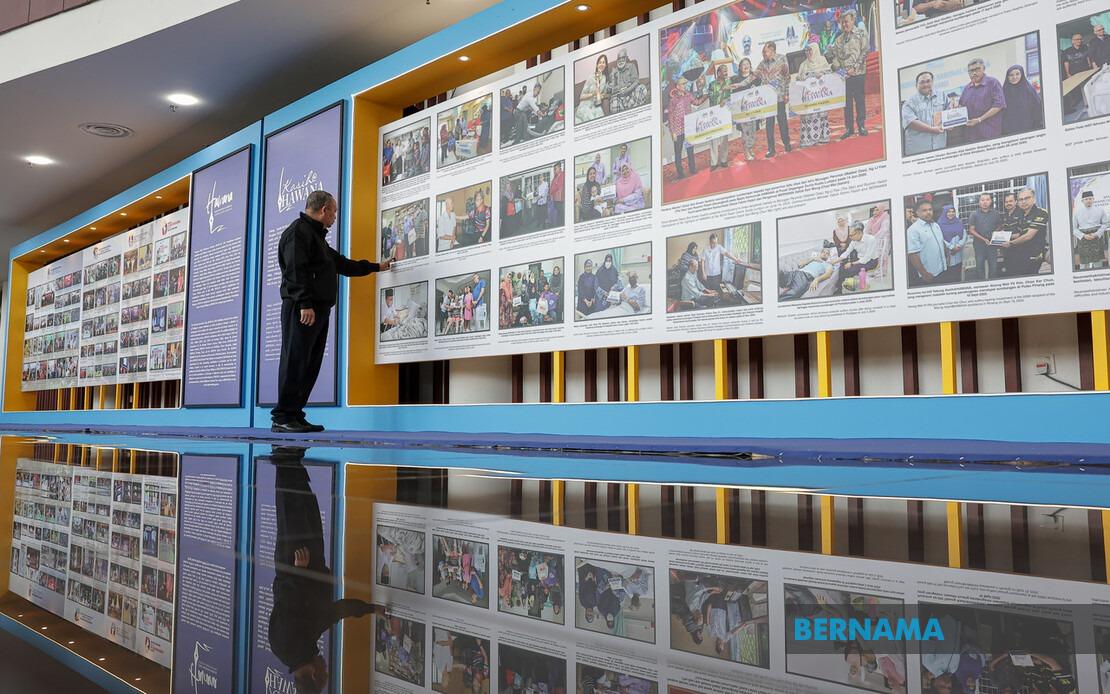
The National Journalists' Day celebration known as HAWANA 2026, taking place in Butterworth, Penang, has emerged as a focal point for the Malaysian media industry to coalesce around shared concerns and ambitions. Across a series of carefully coordinated programmes, media organisations and journalism advocacy bodies are seizing the moment to initiate deeper conversations about the future direction of the profession, even as the sector grapples with technological disruption and evolving audience expectations. The gathering underscores a critical juncture for Malaysian journalism, where practitioners and leaders recognise the urgency of collective action to preserve editorial standards and institutional credibility.
Central to the pre-event build-up has been the Malaysia Media Retreat 2.0, organised by the Malaysian Federation of Media Clubs (GKMM), which convened representatives from 15 media clubs across the nation. This assembly provided an opportunity for the federation to take stock of its institutional progress since its formal establishment on October 24, 2022. Mohamad Fauzi Ishak, GKMM's president, emphasised that the retreat functioned not merely as a social gathering but as a strategic checkpoint for evaluating how the federation has evolved and consolidated the interests of its member organisations. The programme also served as a preparatory forum ahead of the federation's third annual general meeting, which will proceed without a contested election, indicating a degree of consensus among the participating clubs regarding leadership direction.
The Communications Minister Datuk Fahmi Fadzil's participation in officiating the retreat signals government investment in sustaining dialogue with the media sector during a period of structural change. The presence of senior figures from Bernama, including Chief Executive Officer Datin Paduka Nur-ul Afida Kamaludin and Editor-in-Chief Arul Rajoo Durar Raj, further underscored the gravity with which national news agencies regard these initiatives. Such high-level engagement reflects an implicit acknowledgement from government that media vitality remains integral to democratic health and informed public discourse.
Parallel to the federation's retreat, the Malaysian Press Institute (MPI) convened a substantive town hall session titled "2035: Will Journalists Still Exist?" hosted at Han Chiang University College of Communication. The session's provocative framing signals genuine anxiety within the profession about long-term viability as artificial intelligence, automation, and digital transformation reshape news production and distribution. Rather than offering reassurance, the MPI appears to have chosen a direct confrontation with these uncertainties, inviting practitioners to engage seriously with questions about professional relevance in an altered media landscape.
The town hall brought together leading editorial voices from major news organisations. MPI president Datuk Yong Soo Heong moderated discussions with Farrah Naz Abd Karim, deputy group managing editor for News and Current Affairs at New Straits Times Press and NST group editor, alongside Azhari Muhidin, who holds responsibility for editorial content strategy across Media Prima's News and Current Affairs division and affiliated television networks. This composition ensured that perspectives from both legacy print institutions and multimedia conglomerates informed the conversation, capturing the increasingly blurred distinctions between traditional and contemporary news organisations in Malaysia's media ecosystem.
The focus on artificial intelligence and digitalisation reflects preoccupations that extend well beyond Malaysia's borders, yet carry particular significance in a regional context where digital infrastructure is developing unevenly and regulatory frameworks remain in flux. The rise of generative AI tools capable of producing news copy, along with algorithmic curation systems that determine what content reaches audiences, poses existential questions about the role of human journalists in newsrooms. Malaysian media outlets, many of which operate with constrained resources compared to international counterparts, face the prospect of being forced to adopt technological solutions that may ultimately diminish employment opportunities and editorial quality.
Changing news consumption patterns represent a parallel challenge that the town hall sought to address. Malaysian audiences, like their counterparts globally, increasingly obtain information through social media platforms, messaging applications, and short-form video content rather than traditional news websites or print editions. This migration of audience attention has fragmented the economics of news production, making it harder for organisations to sustain investigative journalism, foreign correspondence, and other resource-intensive reporting. The shift also concentrates market power in the hands of technology platforms that do not produce news but derive substantial value from distributing it.
Looking toward the main celebration, the Malaysian Media Council (MMC) has scheduled introductory and engagement sessions with media practitioners, alongside networking activities bringing together journalists from Malaysia's northern region. These components of the broader programme serve practical functions—building relationships, facilitating information exchange, and reinforcing professional identity—that remain vital even as the industry contemplates more fundamental transformations. Networking within journalism communities can foster collaborative approaches to shared challenges, from combating misinformation to developing new business models for sustainable reporting.
The centrepiece of HAWANA 2026 will unfold tomorrow when Prime Minister Datuk Seri Anwar Ibrahim officially inaugurates proceedings at the PICCA @ Butterworth Arena, with expectations that approximately 1,000 media practitioners from Malaysia and abroad will gather. The selected theme, "Media Integrity, Foundation of Credibility," encapsulates the core concern animating these deliberations. As trust in institutions erodes globally and misinformation proliferates across digital channels, media organisations must actively demonstrate that editorial integrity remains their foundational commitment. This emphasis on credibility as a competitive advantage acknowledges that in a landscape saturated with information, audiences will increasingly gravitate toward news sources perceived as trustworthy and transparent about their processes.
The Communications Ministry's decision to position Bernama as the implementing agency for HAWANA 2026 reflects the state news agency's continuing role as custodian of certain professional standards and facilitator of dialogue within the journalism community. Bernama's involvement signals that government views the strengthening of media professionalism as aligned with broader national interests, even if specific editorial decisions sometimes generate controversy. The recognition ceremonies built into HAWANA serve to honour individual journalists and media organisations for contributions to public discourse, reinforcing the notion that journalism constitutes a profession worthy of public esteem.
The three-day RIUH @ HAWANA Carnival, scheduled to run at the PICCA Convention Centre, indicates an intent to make the celebration accessible and engaging for practitioners and public alike. By incorporating entertainment and casual socialisation alongside substantive professional programming, organisers hope to demonstrate that journalism remains a vital and dynamic field worthy of attracting talented newcomers. This is particularly important given concerns about declining interest in journalism as a career path, especially among Malaysian youth who may perceive better economic prospects in technology, finance, or other sectors.
For Malaysian readers and media observers, HAWANA 2026 represents more than ceremonial recognition of journalists' contributions. The programmes surrounding the main celebration provide insight into how the sector perceives its challenges and opportunities. The explicit engagement with artificial intelligence, digitalisation, and shifting audience behaviour suggests that Malaysian media leadership takes seriously the necessity of adaptation. Yet questions remain about whether the industry possesses the financial resources, regulatory support, and strategic clarity required to navigate these transitions successfully. The gathering in Penang may thus be read as both a celebration of journalism's enduring value and an implicit acknowledgement that the profession faces an uncertain future requiring sustained collective action and institutional innovation.

