Paris VivaTech, one of Europe's premier technology festivals, is showcasing a remarkable array of innovations that could reshape healthcare, aerospace, cybersecurity, and sports performance monitoring across the continent and beyond. Among hundreds of exhibitors spread across three sprawling floors, several ventures stand out for their potential to address significant gaps in their respective fields, each having drawn substantial backing and interest from major corporations seeking to integrate these technologies into their operations.
Berlin-based Blueprint Biomed is tackling a centuries-old medical challenge: the need for bone grafts to facilitate healing in millions of patients annually. The startup has developed an artificial substitute designed to eliminate complications arising from traditional grafting methods, which rely on extracting bone from patients' own bodies. These autologous grafts frequently fail or cause adverse effects requiring additional surgery, creating a burden for both patients and healthcare systems. Blueprint's chief executive Aaron Herrera explained to AFP that his company's approach removes this dependency entirely, offering a more reliable solution for the orthopedic field. The company constructs its synthetic structures on three-dimensional scaffolds composed of polycaprolactone, a biodegradable polyester that provides structural support for a collagen matrix. Because both materials naturally dissolve within the body—collagen within three months and polycaprolactone within two years—the implants essentially serve as temporary frameworks for tissue regrowth before vanishing completely. With an eye toward human trials, Blueprint is seeking US$2.5 million in funding to move its products into patients by 2028, representing a significant milestone for regenerative medicine in Europe.
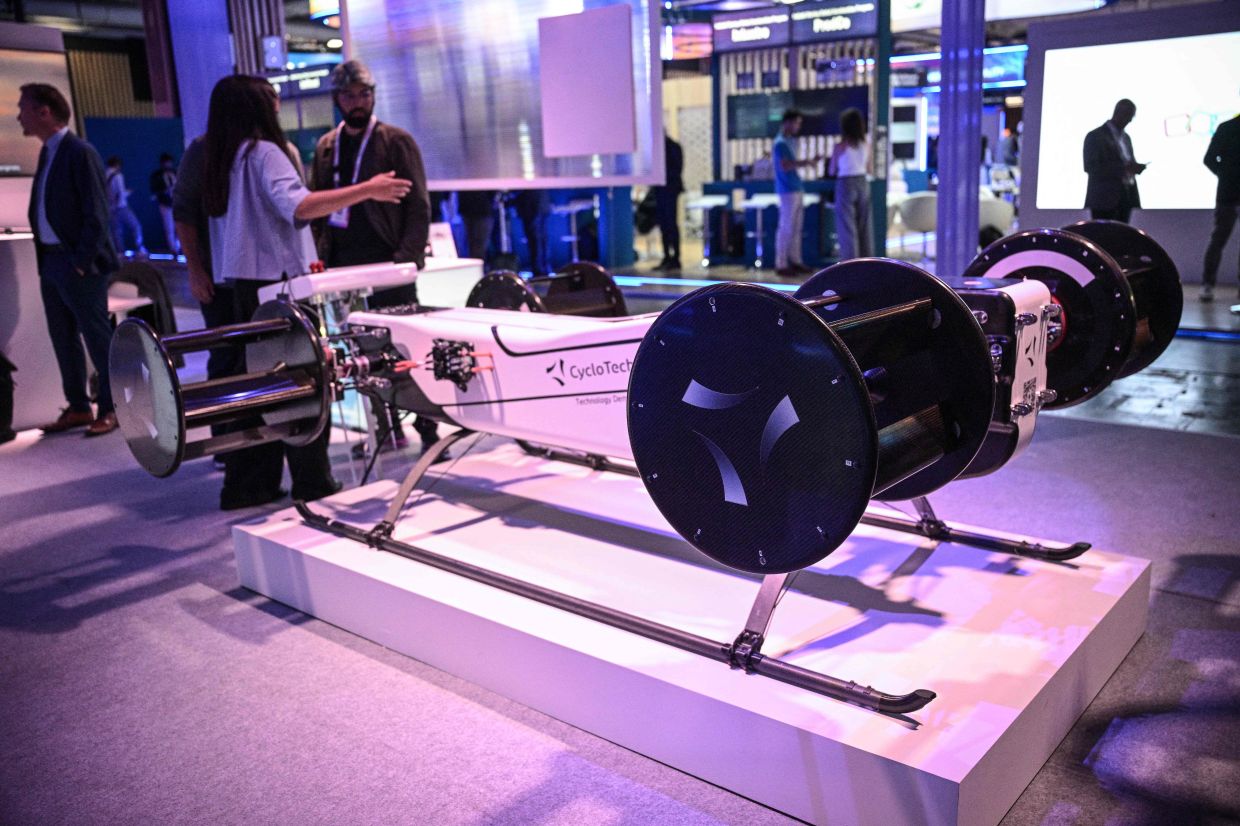
The drone sector, meanwhile, is witnessing innovations that push beyond the capabilities of today's quadcopters, which have proven valuable in applications ranging from spectacular aerial performances to military operations in contested regions like Ukraine. Austrian startup CycloTech has engineered novel motors that could fundamentally alter how unmanned aircraft operate. These motors, shaped as open cylinders with blade-like elements around the perimeter, grant aircraft unprecedented maneuverability. According to CycloTech's marketing chief Andrea Marchsteiner, vehicles equipped with these motors can hover vertically like helicopters, cruise forward like conventional aircraft, execute mid-air braking, and even reverse—all capabilities that existing designs struggle to combine efficiently. The potential applications extend from parcel delivery in congested urban environments to future air taxi services, while military applications promise enhanced tactical capabilities. CycloTech, which has already secured €40 million in venture capital, continues seeking additional funding and corporate partnerships to integrate its motor technology into existing aircraft platforms, demonstrating confidence in the market's appetite for such advances.
As generative artificial intelligence proliferates, the risk of synthetic voices deceiving financial institutions and families has become a pressing concern. French startup Whispeak, which originally developed voice biometric authentication for banking and sensitive services before the deepfake crisis emerged, has pivoted to address this new threat. The company's chief executive Florent Van Calster noted that modern AI tools can now convincingly imitate anyone's voice in less than ten seconds, often freely available online. Whispeak invested three years developing specialized AI detection algorithms that the company claims now represent the world's most accurate audio deepfake detector, having won first place in multiple international competitions. Testing against real data shows error rates below one percent, though Van Calster candidly acknowledged this technological arms race will likely continue indefinitely as fraudsters refine their methods. The company has already begun deploying its detection capabilities alongside French telecom operator Bouygues, which will alert customers when suspicious deepfake calls are identified. For Southeast Asian readers particularly, where voice phishing and elder fraud represent growing concerns, this technology carries immediate relevance as financial institutions and telecommunications providers in the region grapple with similar threats.
Athletic performance monitoring is undergoing transformation through less invasive means than traditional blood sampling. Hong Kong-based PointFit has developed an adhesive patch equipped with microscopic sensors capable of detecting biomarkers like glucose and cortisol directly from skin perspiration. Chief executive Kenny Oktavius, who began developing this technology while still a university student in 2019, explained that the company employs artificial intelligence to construct individualized sweat indices that account for variables including demographic factors and environmental temperature. He illustrated the innovation's significance by noting that elite marathon runners, despite wearing expensive sophisticated monitoring equipment, sometimes collapse—indicating that heart rate measurements alone provide incomplete physiological data. Clinical diagnosis, Oktavius pointed out, fundamentally relies on biomarker analysis rather than pulse readings alone. PointFit has already partnered with Red Bull's Athlete Performance Centre and Puma's specialized Nitro Labs division, validating the technology's effectiveness in elite sports contexts. The company's trajectory toward consumer availability through retail channels like Decathlon and major optical-retail partnerships such as EssilorLuxottica suggests the technology could soon reach amateur athletes and health-conscious consumers seeking deeper insights into their physiological states.
Collectively, these innovations reflect a broader European technological renaissance aimed at solving fundamental human challenges across healthcare, infrastructure, security, and wellness. Each venture represents years of dedicated research, significant capital investment, and carefully cultivated partnerships with established industry leaders—the hallmarks of technologies genuinely positioned for market adoption rather than mere conceptual exercises. For the Asia-Pacific region, these developments signal that European innovation continues advancing rapidly, creating both opportunities for regional partnerships and competitive pressures for local tech ecosystems to accelerate their own breakthroughs.

