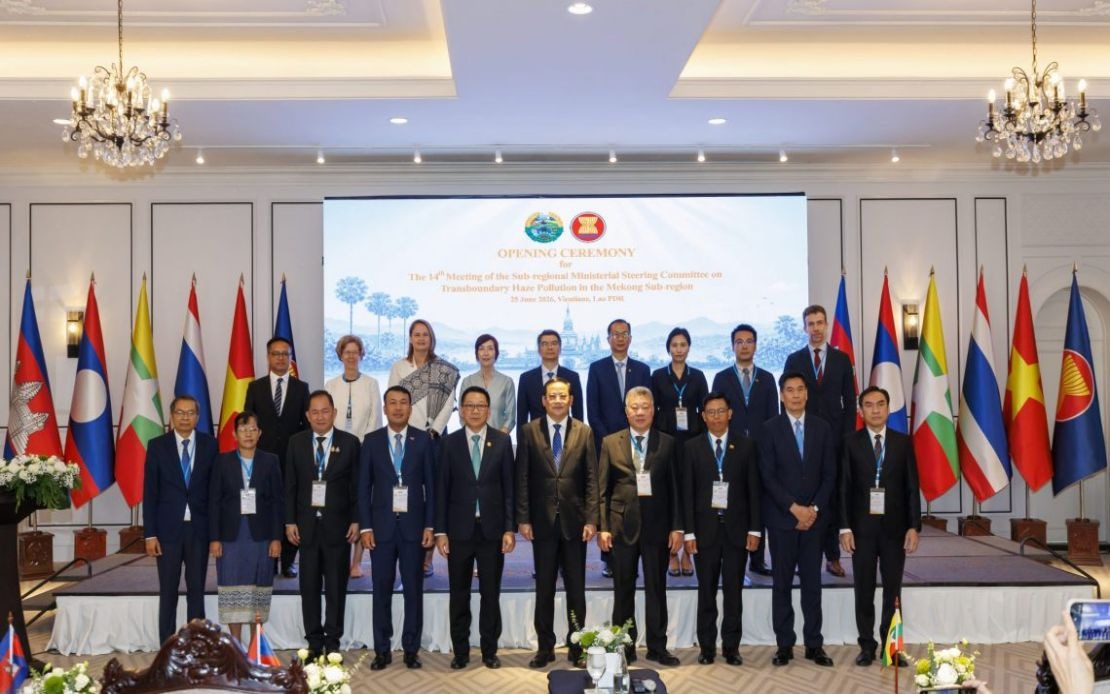
The Mekong region faces an escalating environmental crisis as rising temperatures and the looming threat of El Niño combine to heighten the risk of devastating forest and peatland fires. Across major urban centres from Bangkok to Ho Chi Minh City, policymakers are now racing to implement urgent preventative measures, recognising that another episode of transboundary haze could inflict severe damage on agriculture, public health systems and the broader regional economy. The urgency of the situation was underscored at the 14th Meeting of the Sub-Regional Ministerial Steering Committee on Transboundary Haze Pollution, held on June 25 in Vientiane, Laos, where regional leaders gathered to coordinate their response to this persistent cross-border threat.
The scale of the problem is becoming increasingly difficult to ignore. According to data presented at the Vientiane meeting, hotspot counts across the Greater Mekong Subregion rose by approximately eight percent between December 2025 and May 2026 compared to the equivalent period in the previous year. This climbing trajectory points to worsening conditions across the region's vulnerable forest zones, suggesting that without decisive intervention, the situation could deteriorate significantly as the traditional dry season approaches. Lao Prime Minister Sonexay Siphandone articulated the gravity of the challenge, warning that forest fires and transboundary air pollution have emerged as major existential threats to the subregion. Beyond the immediate environmental concerns, these phenomena have triggered cascading losses in biodiversity, undermined public health outcomes and inflicted substantial economic damage throughout the Greater Mekong Subregion.
Weather patterns this year are proving particularly troublesome, compounding the fire risk substantially. Despite the arrival of the monsoon season, which normally brings relief through increased rainfall, major cities across the Mekong have experienced severe heatwaves accompanied by unpredictable and often inadequate precipitation levels. Ho Chi Minh City is currently enduring an intense heatwave even during what should be its rainy season, while Bangkok continues to suffer from acute heat stress that extends well beyond normal seasonal variations. Climate scientists attribute these anomalies to the combined effects of longer-term climate change patterns and the influence of El Niño dynamics, which are disrupting traditional weather systems throughout Southeast Asia.
The Lao Ministry of Agriculture and Environment has issued explicit warnings about the potential consequences of El Niño activity during this rainy season. Meteorological forecasts predict that certain areas could experience temperatures peaking between 35 and 38 degrees Celsius, accompanied by erratic rainfall patterns, extended dry spells interspersed with periods of moisture, and markedly reduced water levels in specific regions. Such conditions create ideal circumstances for ignition and rapid spread of forest fires while simultaneously threatening water availability across the subregion. The compounding effects of heat, drought and water scarcity pose genuine risks not only to forestry sectors but also to agricultural production and livestock operations, which form the economic backbone of rural communities throughout the Mekong zone.
International climate monitoring agencies have further cautioned that a possible Super El Niño event may materialise during this calendar year, a prospect that would represent an even more severe disruption to regional weather patterns than typical El Niño episodes. Such an event would amplify temperature extremes and create even more pronounced drought conditions, potentially overwhelming the adaptive capacity of existing agricultural and water management systems. For Malaysia and other Southeast Asian nations that share atmospheric circulation patterns with the Mekong region, such developments carry direct implications for local weather, haze transport and environmental quality.
Recognising these interconnected threats, ASEAN member states participating in the Vientiane ministerial meeting issued formal pledges to intensify their efforts in reducing fire hotspots and controlling transboundary haze pollution throughout the Mekong Sub-Region, particularly during the critical dry season months. This commitment reflects a growing acceptance that unilateral national measures are insufficient to address a fundamentally regional problem. The transboundary nature of both fire smoke and atmospheric circulation systems means that fires ignited in one jurisdiction rapidly become an air quality problem for neighbouring countries, making genuine regional coordination essential for any meaningful progress.
The economic implications of transboundary haze extend far beyond the immediate health costs of air pollution. The phenomenon disrupts transportation networks, reduces visibility for aviation operations, forces industrial facilities to shut down, damages agricultural crops through reduced sunlight penetration, and undermines tourism industries that depend on clear atmospheric conditions. Previous haze episodes in the Mekong region have resulted in substantial economic losses running into billions of dollars when calculated across affected countries. The agricultural sector faces particular vulnerability given the region's dependence on cultivated crops and the sensitivity of many crop species to extended smoke exposure and reduced photosynthetic capacity.
Public health dimensions of transboundary haze represent perhaps the most immediate concern for ordinary residents. Prolonged exposure to air pollutants, particularly fine particulate matter and smoke constituents, triggers respiratory diseases, cardiovascular complications and exacerbates existing conditions among vulnerable populations including children, elderly citizens and those with pre-existing health conditions. Healthcare systems across the region have experienced surging demand during previous haze episodes, with hospitals overwhelmed by patients presenting with acute respiratory distress and aggravated chronic conditions. The psychological toll of recurring haze episodes also affects population wellbeing and quality of life in affected urban centres.
The coordination mechanisms established through the Sub-Regional Ministerial Steering Committee represent an important institutional framework, though their effectiveness ultimately depends on consistent funding, political will and technical capacity across all participating jurisdictions. Successful haze mitigation requires complementary policies spanning land-use planning, agricultural practices that minimise fire risk, forestry management approaches that reduce fuel loads, rapid fire detection and suppression systems, and enforcement mechanisms that discourage deliberate burning practices. Information sharing about hotspot locations, weather forecasts and fire behaviour enables faster response and prevention of fire spread across borders.
For Malaysia specifically, the Mekong haze situation warrants close attention despite Malaysia's geographic distance from the subregion. Malaysia has historically experienced transboundary haze impacts originating from Indonesia and occasionally from broader Southeast Asian sources. The scientific understanding that atmospheric circulation can transport pollutants across vast distances means that severe fire episodes and haze development in the Mekong region could theoretically contribute to air quality deterioration in Malaysia, particularly during certain wind patterns. Additionally, Malaysia's technical expertise in haze mitigation, developed through decades of managing Indonesian smoke, could potentially be shared with Mekong counterparts through ASEAN mechanisms.
Longer-term solutions to the Mekong haze problem extend beyond immediate crisis management and require systemic changes in how the region balances economic development with environmental protection. Pressures driving forest clearance—including agricultural expansion, logging operations and infrastructure development—must be addressed through improved land governance, alternative livelihood opportunities for communities currently dependent on forest conversion, and economic incentives for conservation. Climate change adaptation planning must incorporate recognition that extreme weather events like intense heat and drought will become more frequent, necessitating development of climate-resilient agricultural systems and robust water management infrastructure across the subregion.
The coming months will prove critical in testing the effectiveness of the renewed regional commitment articulated in Vientiane. As dry season approaches and temperatures continue climbing, the practical capacity of Mekong governments to implement coordinated fire prevention and control measures will become apparent. Success will require not only political commitment but sustained investment in fire monitoring technology, rapid response capabilities and cross-border communication systems. Given the escalating pressures from climate change and the rising stakes for regional stability and prosperity, the imperative for strong multilateral action has rarely been more pressing.

