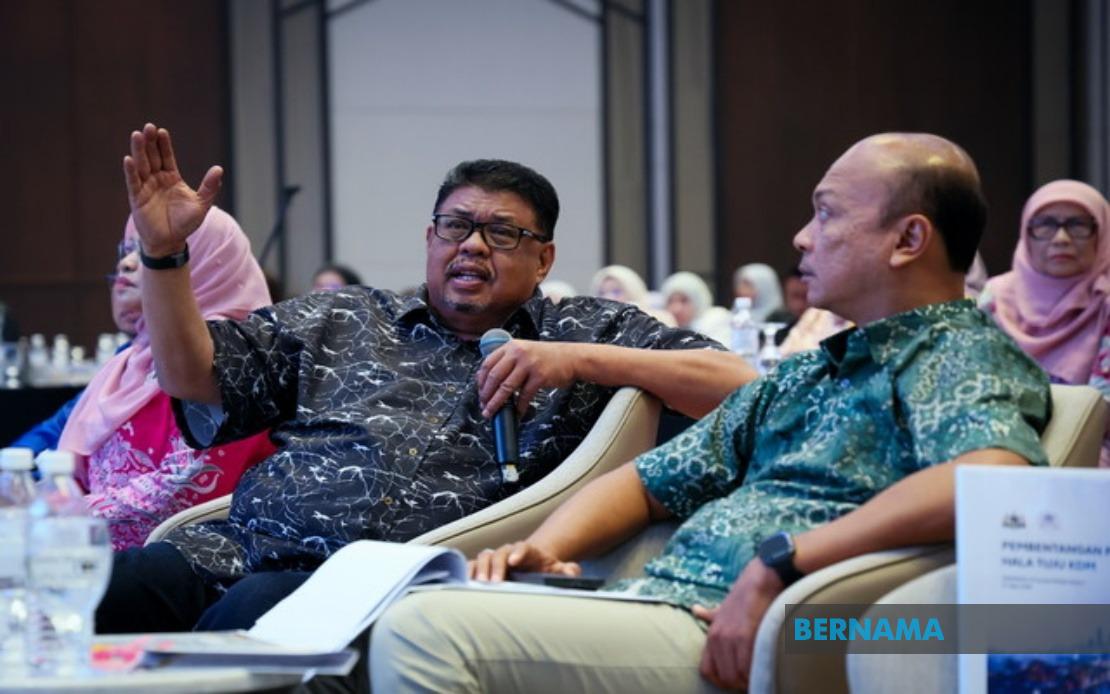
Melaka's Barisan Nasional coalition has drawn a firm line in the sand ahead of the state election, declaring that all 21 state assembly seats it currently holds are non-negotiable and will form the absolute foundation of any discussions with potential political allies. Melaka BN chairman Datuk Seri Ab Rauf Yusoh, who also serves as Melaka Chief Minister, made this position explicit during remarks at the Melaka Digital Kampung Directional Alignment Workshop, emphasizing that the coalition has no room for flexibility on this matter.
The stakes for Melaka's political future are substantial. The state assembly comprises 28 seats in total, with the incumbent BN government commanding a commanding majority after the 15th Melaka state election delivered 21 seats to the coalition. Pakatan Harapan holds five seats, while Perikatan Nasional secured two, leaving BN in a position of considerable strength. By insisting on retaining all current seats, the coalition is essentially signaling that any negotiating partner must work within existing arrangements rather than demand redistribution or compromise.
Ab Rauf framed this stance not as intransigence but as a matter of principle and organizational discipline. He explained that any party seeking to join negotiations with BN must accept this boundary condition from the outset, streamlining discussions to focus on other potential areas of cooperation rather than fundamental seat allocation. This approach reflects broader coalition management strategies in Malaysian politics, where holding the line on seat numbers preserves internal cohesion and prevents the kind of fractious bargaining that has destabilized previous state administrations.
The Melaka BN leader also indicated openness to talks with interested parties, specifically referencing reports that three senior PAS figures are expected to seek discussions with him in the coming week. However, he tempered this welcome with a crucial caveat: any such discussions must be grounded in what he termed "very reasonable rationale," and he underscored that he cannot unilaterally commit to any arrangement without securing approval from UMNO's Supreme Council, the party's highest decision-making body. This layering of authority reflects the complex internal dynamics of Malaysian coalition politics, where individual leaders lack absolute autonomy in making strategic commitments.
The timing of these declarations carries particular significance given the uncertainty surrounding when the state election will actually occur. The current term of the Melaka state government runs through December 31, providing a window during which dissolution and fresh polls could theoretically be called at virtually any moment. Ab Rauf adopted a characteristically coy approach when questioned about September dissolution speculation, suggesting that an election could be held "at any time" but refusing to confirm specific dates, claiming he had not yet received "inspiration" about the optimal timing and joking that revealing the dissolution date would diminish the electoral "thrill."
This electoral uncertainty presents both opportunities and risks for the BN coalition. On one hand, maintaining ambiguity about the election date keeps rivals off-balance and prevents opposition parties from mounting fully coordinated campaigns. On the other hand, prolonged uncertainty can also create internal strain within the coalition itself, as various component parties and individual politicians jockey for advantageous positioning and candidate selection. The BN's emphasis on holding the line on 21 seats may partly be designed to manage these internal pressures by establishing clear rules of engagement.
For Malaysian political observers, Melaka represents a critical testing ground for coalition politics in the post-2022 era. The state has seen considerable political volatility over recent years, including previous instances of defections and realignments that demonstrated how fragile some political arrangements can be. By articulating its position so clearly now, BN is attempting to preempt the kinds of seat-swapping negotiations that have occasionally destabilized other state governments. The firm stance may also reflect lessons learned from other states where seemingly minor concessions on seat allocation eventually unraveled into larger political crises.
The broader Southeast Asian context adds another layer of significance to Melaka's political positioning. As Malaysia continues to grapple with coalition formation and parliamentary stability, other ASEAN democracies are watching how Malaysian politicians navigate these challenges. The explicit articulation of non-negotiable positions, while potentially limiting flexibility in the short term, may actually contribute to more stable governance structures by reducing uncertainty and preventing the emergence of competing claims and resentments among coalition partners.
For voters and residents in Melaka, the coalition's hardline stance on seat retention carries practical implications. It suggests that the fundamental political configuration in the state is unlikely to shift dramatically regardless of which parties ultimately join the pre-election alignment discussions. This relative predictability may be valued by those seeking stable governance, though it may frustrate those hoping for more fundamental political realignment. The question of which parties ultimately choose to cooperate with BN under these conditions remains to be answered, with PAS's reported interest in preliminary talks particularly noteworthy given historical tensions between that party and elements within BN's traditional coalition structure.
Looking forward, the months remaining before the December 31 deadline for state government dissolution will likely prove eventful. Ab Rauf's clear demarcation of negotiating parameters suggests that BN has thought carefully about its coalition strategy and intends to approach upcoming discussions from a position of considerable organizational clarity. Whether this firmness ultimately translates into electoral success or instead serves to drive potential partners toward opposition coalitions remains uncertain, but the coalition's leadership has evidently decided that defending its current territorial holdings is more important than maximizing the size of its pre-election alliance.

