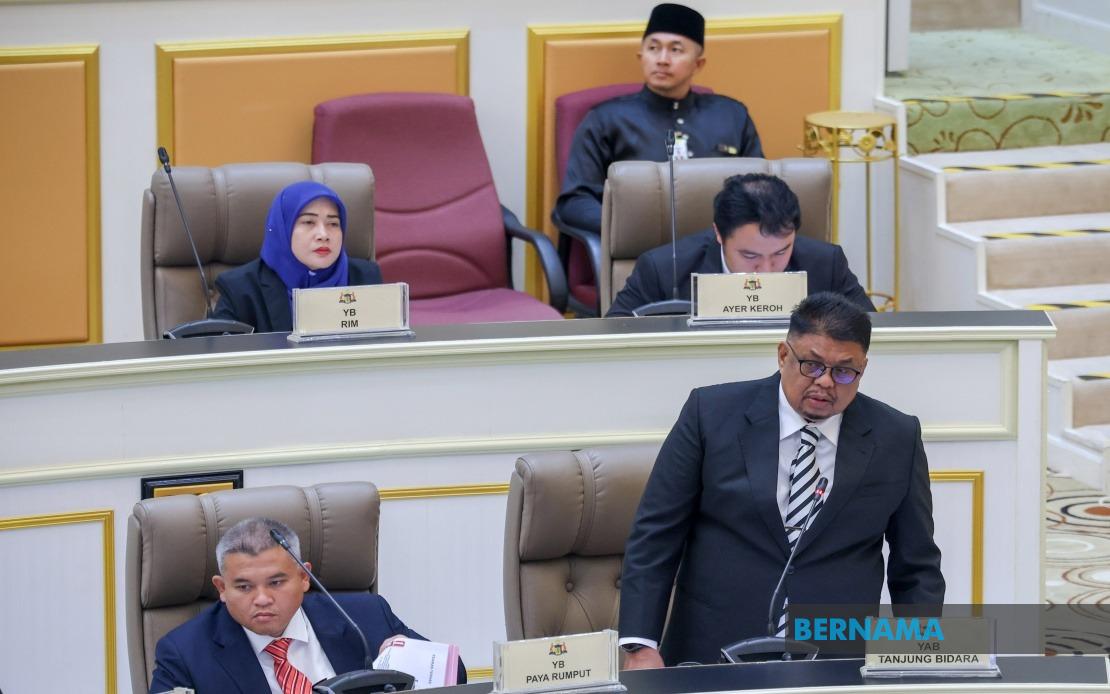
The Melaka State Legislative Assembly has taken a significant step toward broadening representation by approving a constitutional amendment that will permit the appointment of nominated state assemblymen for the first time. The legislative chamber voted 23-5 in favour of the Melaka State Constitution (Amendment) Bill 2026 on July 14, marking a substantial endorsement of a measure that Chief Minister Datuk Seri Ab Rauf Yusoh has positioned as essential to strengthening governance in the state. The amendment establishes the framework for appointing up to seven individuals to the assembly, a provision that has drawn support from both ruling and opposition benches, though with differing rationales about implementation and oversight.
Chief Minister Ab Rauf framed the constitutional modification as part of a deliberate effort to enhance the quality of legislative discourse in Melaka, arguing that appointed members with specialised knowledge could bring rigorous expertise to policy discussions that elected representatives alone might not provide. He outlined the government's vision of recruiting individuals with demonstrated proficiency across disciplines including law, economics, education, investment, technology and state development, creating a cadre of assemblymen who would complement those chosen through electoral processes. This approach reflects a broader governance philosophy that values technical competence alongside democratic legitimacy, suggesting that some legislative functions benefit from appointees insulated from electoral pressures and therefore potentially able to offer more detached analysis.
The amendment explicitly contemplates using the nomination mechanism to amplify voices from constituencies that have historically struggled to achieve representation through standard electoral channels. Women, youth, the Orang Asli, minority communities, and professional practitioners in sectors critical to state advancement could gain direct access to the legislative process through appointment rather than waiting for electoral circumstances to align in their favour. This targeted expansion of representation acknowledges a structural limitation of first-past-the-post electoral systems: talented individuals and entire demographic groups can remain absent from parliament despite possessing valuable perspectives and credentials that would benefit policymaking.
The government contends that nominated members will strengthen institutional checks and balances by introducing perspectives less aligned with partisan electoral considerations. By drawing on individuals selected for expertise rather than organisational loyalty or grassroots support networks, the assembly gains additional capacity to scrutinise bills, probe government policy, and assess administrative performance from vantage points less influenced by political affiliation or factional interest. Senior State Executive Councillor for Housing, Local Government, Drainage, Climate Change and Disaster Management Datuk Rais Yasin seconded the measure, lending weight to a proposal framed as enhancing the technical foundations of state governance.
The amendment's journey through the assembly included substantive debate among lawmakers representing both government and opposition coalitions. Three assemblymen contributed remarks to the legislative record, with government members voicing support for the expertise-driven rationale and at least one opposition legislator lending backing to the underlying concept. This bipartisan engagement distinguishes the measure from more strictly partisan constitutional amendments and suggests that across Melaka's political spectrum, there exists genuine consensus that appointed representatives could add value to legislative processes if properly implemented and appropriately constrained.
Melaka Opposition Leader Dr Mohd Yadzil Yaakub indicated that the opposition did not categorically oppose the amendment but rather demanded that implementation prioritise transparency and accountability mechanisms designed to serve the electorate's interests. He drew a parallel to the federal Dewan Negara, where appointed members contribute to parliamentary work alongside elected counterparts, and framed the measure as potentially consistent with democratic practice so long as appointment procedures remained open, selection criteria remained explicit, and appointed assemblymen remained subject to the same ethical and procedural standards as their elected colleagues. This conditional support signals that the opposition's concern centres on execution rather than principle.
The amendment carries particular significance because it fulfils a pledge made by Barisan Nasional during the 2021 Melaka state election campaign, specifically under Thrust 1 of the coalition's manifesto focused on Political Stability and Promoting Mature Politics. The framing of appointed representation as advancing mature politics reflects the government's view that democratic systems evolve when institutional mechanisms accommodate expertise and broaden participation without necessarily requiring wholesale electoral reform. For Malaysian political observers, this development suggests that appointed representation—long a fixture of federal-level institutions—may gradually extend to state-level legislatures, particularly in states governed by coalitions enjoying substantial majorities.
The implications extend beyond Melaka's borders, as this constitutional change may influence discussions about legislative structure in other Malaysian states facing similar questions about balancing electoral representation with expertise-driven governance. The five assemblymen who opposed the measure did not, based on available reporting, articulate their reasoning in depth, though concerns about democratic legitimacy, potential patronage risks, or fears that appointed members might entrench particular elite networks certainly represent possible motivations for dissent. The substantial 23-5 majority suggests, however, that concerns about appointed representation did not resonate broadly within Melaka's assembly.
The appointment mechanism itself remains to be detailed through implementing legislation and procedural guidelines, leaving open critical questions about selection panels, nomination processes, term lengths, and removal procedures that will determine whether the amendment genuinely serves the stated goals of expertise, inclusion, and institutional strengthening or instead becomes a vehicle for covert political influence. How Melaka's government constructs these operational frameworks will signal whether other state administrations view this model as worthy of emulation. The coming months will reveal whether transparent, merit-based selection prevails or whether partisan considerations shape appointments in ways that undermine the amendment's legitimacy and the cautious support it has received from opposition quarters.
For Malaysia more broadly, the Melaka amendment reflects ongoing experimentation with democratic architecture and suggests that questions about representation, expertise, and participation remain genuinely contested rather than settled by constitutional convention. Whether appointed assemblymen will genuinely enhance legislative quality, broaden democratic participation, or instead concentrate power among networked elites will depend substantially on implementation details and political culture rather than constitutional text alone. The assembly's decisive approval and opposition acceptance, contingent on transparent implementation, indicates that Malaysian legislators recognise potential value in appointed representation while remaining alert to risks that merit-based systems can mask when procedural safeguards prove inadequate.

