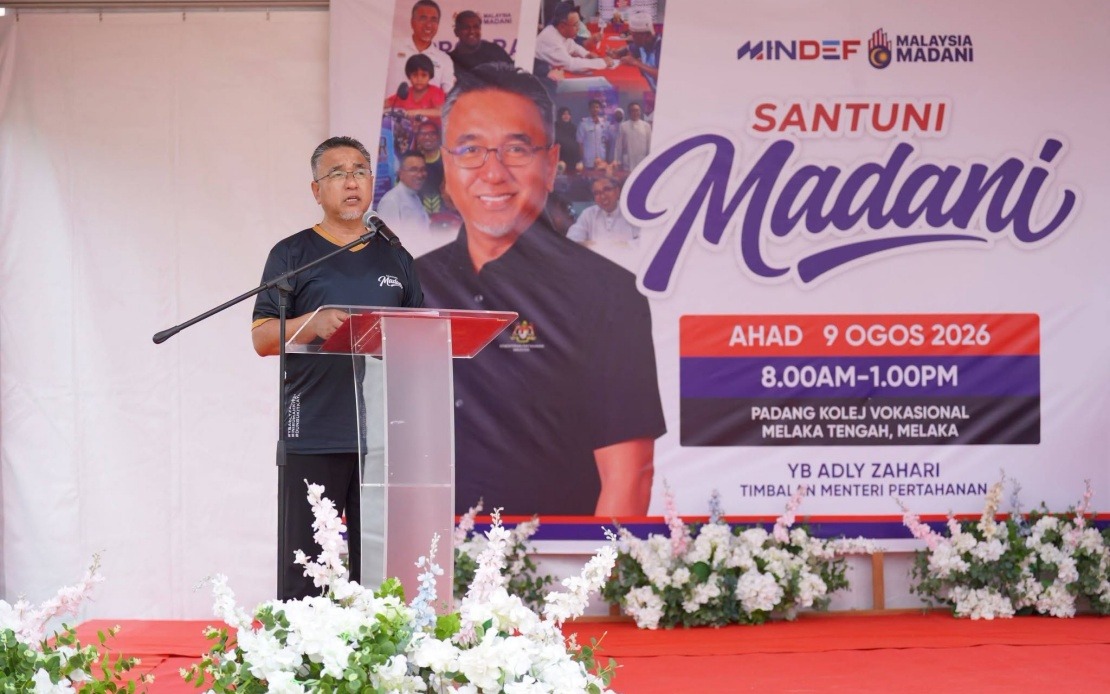
Melaka's Pakatan Harapan coalition has signalled its readiness to engage in talks with potential political partners as it prepares for the next state election, though final arrangements remain fluid. Coalition chairman Adly Zahari stated that negotiations could take various forms depending on mutual interests and alignment with broader political objectives, but emphasised that no formal commitments have been made at the coalition level. The flexibility demonstrated by PH leadership reflects the evolving nature of Malaysian coalition politics, where electoral calculations often drive decisions about cooperation with other political actors.
The coalition has conducted two rounds of internal assessments to evaluate its competitive position across the state's constituencies, with discussions centring on which parties might enhance PH's electoral prospects. Adly clarified that while the coalition welcomes approaches from any interested party, the scope and terms of such cooperation have not been determined. This measured openness contrasts with the more cautious approach some coalition members might advocate, suggesting that Melaka PH leadership recognises the competitive pressures it faces in the state political landscape.
Notably, Melaka PH has not yet engaged in formal dialogue with Barisan Nasional, though the door remains open for such discussions if common ground can be identified. The coalition's positioning suggests it is willing to consider partnership arrangements with parties that share commitment to the Malaysia MADANI framework and related governance principles. This criterion essentially filters potential partners through an ideological and programmatic lens, ensuring that any cooperation would be substantive rather than purely transactional.
PH's current foothold in Melaka is modest by comparison to other states where the coalition holds significant influence. The party controls only five of the 28 state legislative assembly seats, a weakness that shapes its strategic calculations for the next election. This minority position provides strong incentive for exploring broader alliances that could multiply its bargaining power and electoral reach. The coalition's acknowledgment of this gap demonstrates realistic appraisal of the challenges it must overcome.
Assessments currently underway focus on three parliamentary constituencies where PH secured federal representation: Alor Gajah, Kota Melaka, and Hang Tuah Jaya. In addition, the coalition identifies three constituencies where it believes it holds growth potential despite not currently holding seats: Tangga Batu, Masjid Tanah, and Jasin. These targeted areas represent the geography where PH believes its organisational strength and voter support provide the foundation for expansion. The strategic focus on specific constituencies allows the coalition to concentrate resources and messaging in areas where the return on investment is likely to be highest.
Adly expressed optimism about PH's capacity to increase its seat count substantially, framing this expansion as achievable through building on existing strongholds and extending into adjacent areas. This confidence, whether warranted or aspirational, reflects the coalition's determination to improve its standing in what has historically been a difficult state for PH. The gap between five seats and achieving genuine influence in a 28-seat legislature means that even marginal gains would represent meaningful progress.
Within the coalition structure, the Parti Keadilan Rakyat has been particularly engaged in preliminary discussions about Melaka's political configuration. PKR's state leadership acknowledged that while formal negotiations with Barisan Nasional have not commenced, informal communication channels remain active. This distinction between formal and informal dialogue is characteristic of Malaysian political culture, where preliminary soundings often precede official negotiations. The emphasis on maintaining these communication lines suggests both parties see potential value in exploring alignment, even if terms and conditions have not crystallised.
Adam Adli Abd Halim, speaking for PKR's state leadership, highlighted that Melaka's political dynamics differ from other states participating in the Unity Government framework. This observation underscores a crucial reality in Malaysian federalism: state-level politics often operate according to distinct logics that cannot simply be transplanted from national-level arrangements. Melaka's particular competitive environment, demographic profile, and local political history all shape what is feasible and desirable in terms of coalition construction.
The state's political representatives have been instructed to prioritise constituency service and public engagement rather than engage in contentious political positioning that could alienate voters or disrupt community harmony. This emphasis on maintaining social stability while conducting political negotiations reflects the coalition's recognition that electoral success ultimately depends on public confidence and perception of competence. The balancing act between ambition for greater representation and responsibility for exemplary governance is particularly acute for a coalition holding minority representation.
Melaka represents a significant testing ground for how PH can rebuild influence in states where it has been marginalised. The coalition's willingness to explore different cooperation models suggests awareness that a one-size-fits-all approach to coalition-building across Malaysia's diverse states is neither realistic nor optimal. As the state election approaches, how effectively Melaka PH executes negotiations and translates partnerships into electoral gains will have implications for the coalition's standing across the broader region.

