The Melaka state government is moving swiftly to address an escalating water crisis at Kem Terendak in Sungai Udang, proposing the construction of a temporary water storage facility as an interim solution to repeated supply disruptions affecting hundreds of military families and educational institutions. The initiative, coordinated through Syarikat Air Melaka Berhad (SAMB), represents a pragmatic approach to managing immediate shortages while longer-term infrastructure projects remain under development. However, the proposal's realisation hinges on securing approval from the Ministry of Defence, introducing a layer of bureaucratic complexity to what residents regard as an urgent operational necessity.
Datuk Rais Yasin, the state exco member responsible for housing and local government matters, outlined the government's two-pronged response during a visit to the military camp on July 20. Beyond the proposed permanent temporary tank, SAMB intends to position mobile water tankers strategically throughout Kem Terendak to maintain supply continuity. Rais, who also serves as the assemblyman for Sungai Udang, acknowledged that the water infrastructure at the military installation technically falls under the jurisdiction of the Public Works Department and the Ministry of Defence, yet stressed that the state government remains committed to supporting the affected community. This commitment extends to military personnel, their families, and the civilian staff employed within the camp's operational structure.
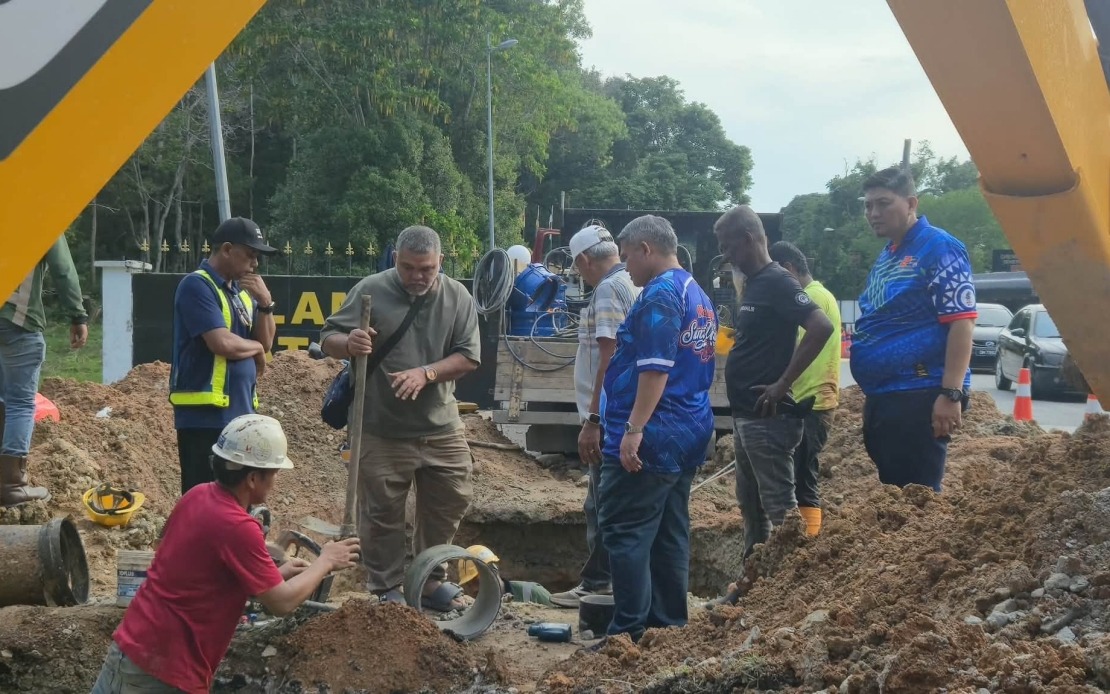
The immediate crisis stems from a significant pipe rupture along Jalan Kampung Payasum in Sungai Udang, which has disrupted water delivery across the sprawling military compound for the past five days. Authorities initially projected that emergency repairs would be completed by the evening of July 20, though full restoration of normal water pressure and supply volume would require an additional one to two days of work. This extended timeline reflects the complexity of repairing major water distribution arteries that serve such a large and densely populated installation. The ripple effects of the infrastructure failure have cascaded through the camp, affecting not only residential quarters but also critical institutional facilities.
The scale of the disruption is substantial. Approximately 2,000 military personnel and household units have been directly impacted, alongside five educational institutions operating within the camp's boundaries, including a MARA Junior Science College. The concentration of affected populations—military families, school-age children, and education staff—has amplified public concern and heightened pressure on state authorities to deliver rapid solutions. Schools, in particular, face operational challenges when water supply becomes unreliable, compromising sanitation standards and hindering normal educational delivery during critical academic periods.
SAMB's emergency response has been mobilised on a considerable scale, with the company deploying 25 tanker lorries delivering approximately 25,000 gallons of water daily since the crisis began. Despite this substantial effort, officials acknowledge that the emergency supply remains insufficient relative to the actual demand generated by the affected population. The mathematical gap between supply capacity and genuine need underscores the limitations of temporary water tanker operations as a sustainable response mechanism. Water delivered via tankers cannot match the convenience, consistency, or volume that properly functioning piped infrastructure provides, creating genuine hardship for residents accustomed to reliable supply.
To mitigate educational disruptions, SAMB has supplied water containers to schools, enabling them to maintain basic sanitation and operational functionality during the crisis period. This targeted intervention reflects recognition that certain facilities require prioritised resource allocation when supply becomes constrained. Schools serve broader community functions beyond education, and maintaining their operational capacity carries social implications extending beyond classroom instruction. The provision of dedicated water containers represents a pragmatic acknowledgement that certain institutions must continue functioning despite infrastructure failures elsewhere in the system.
The longer-term solution involves a comprehensive Development and Upgrade of the Water Reticulation System project scheduled for completion by April 2028. This multi-year infrastructure initiative will fundamentally reshape water delivery capabilities throughout Kem Terendak, addressing systemic vulnerabilities that have manifested repeatedly. The extended timeline—still several years distant—explains why interim measures like the proposed temporary tank have become politically and operationally necessary. Residents and military families cannot reasonably be expected to endure repeated crises for years while awaiting permanent infrastructure improvements.
The proposed temporary tank represents a middle ground between emergency tanker distribution and permanent infrastructure investment. Such facilities can substantially increase storage capacity within the camp, providing buffer capacity to absorb minor supply fluctuations and maintain service during brief interruptions. By positioning water reserves strategically, the camp could reduce dependence on continuous tanker deliveries and provide residents with greater supply reliability. The specific design and placement of such a facility require careful coordination with military authorities to ensure compliance with security protocols and operational requirements.
Securing Ministry of Defence approval introduces an additional variable into the timeline for implementation. Military installations operate under distinct governance frameworks, and modifications to physical infrastructure require departmental clearance even when implemented by civilian water authorities. This jurisdictional interplay, while administratively logical, occasionally creates delays when multiple bureaucratic levels must align their approval processes. The state government's explicit commitment to engaging with Mindef suggests awareness of this procedural necessity and willingness to navigate the approval pathway systematically.
Rais Yasin's formal apology to affected residents during the water tank handover ceremony acknowledged the genuine inconvenience and disruption caused by the supply failures. The symbolic presentation of two 5,000-litre water tanks from SAMB to Kem Terendak, conducted alongside remarks from Terendak Garrison Headquarters commanding officer Lt Col Annuar Kaliman and SAMB chief executive officer Datuk Mohd Saleh Jusman, demonstrated institutional commitment to addressing the problem. Such ceremonial acknowledgements carry political weight beyond their material contribution, signalling to affected populations that their concerns command attention at senior governmental levels.
For Melaka residents and Malaysian water authorities more broadly, this situation illustrates persistent challenges in maintaining infrastructure serving concentrated populations. Military installations, urban developments, and institutional campuses often experience water supply disruptions when ageing pipes fail or capacity constraints become apparent. The gap between emergency response capacity and permanent solutions frequently stretches across years, necessitating interim measures that blend temporary infrastructure with enhanced operational protocols. The Kem Terendak situation, while specific to one facility, reflects broader infrastructure vulnerabilities that demand systematic attention across Malaysia's major population centres.

