Melaka's occupational safety landscape faces ongoing challenges, with 277 workplace accidents generating permanent and temporary disabilities logged across multiple economic sectors during the opening half of 2026. The Melaka Department of Occupational Safety and Health (DOSH) also registered three deaths connected to workplace incidents, with two occurring in construction and one in manufacturing—highlighting the particular vulnerability of these labour-intensive industries to serious mishaps.
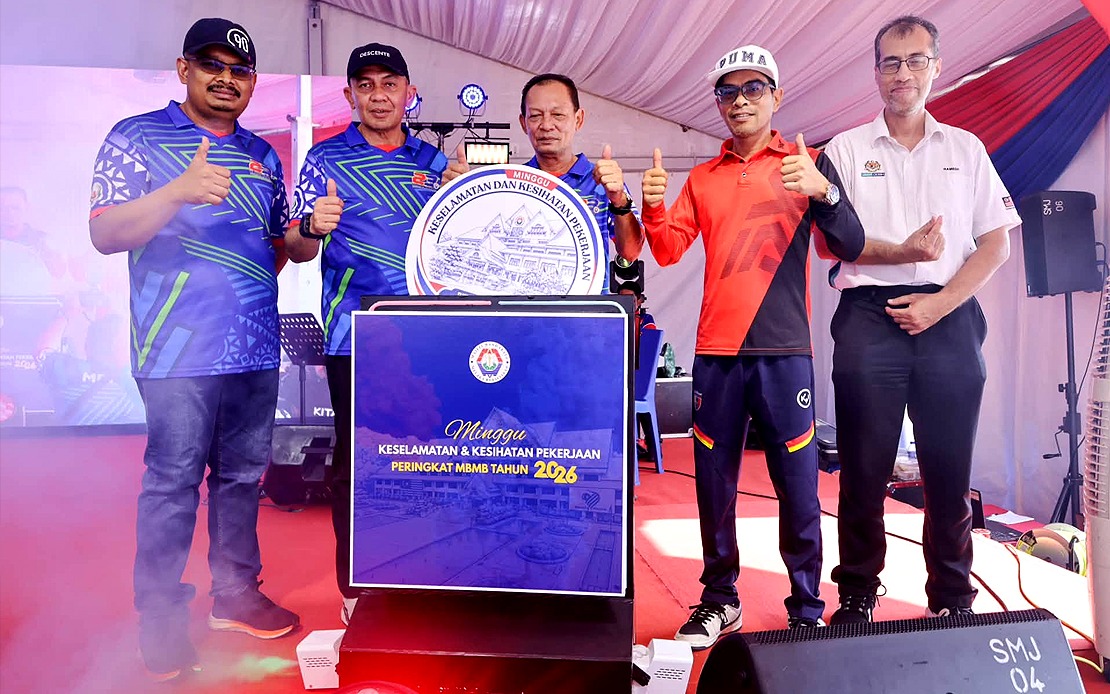
Ramesh Zakir Shamsul, the director overseeing Melaka's DOSH operations, presented these statistics while speaking at the launch of the Melaka Historic City Council's 2026 Occupational Safety and Health Week celebration. The event, which took place in the state capital, received official endorsement from state deputy senior executive councillor for Housing, Local Government, Drainage, Climate Change and Disaster Management Datuk Zulkiflee Mohd Zin, underscoring government commitment to strengthening workplace protection frameworks. Also attending were Mayor Datuk Shadan Othman and DOSH deputy director-general (Occupational Health) Ahmad Jailani Mansor, reflecting the multi-layered institutional approach now being mobilised.
While Ramesh Zakir characterised the overall accident trajectory as "relatively under control," this assessment warrants scrutiny given Malaysia's broader industrial expansion and the state's position as a manufacturing and tourism hub. The frequency of incidents suggests sustained pressure on compliance mechanisms, particularly where rapid workforce expansion or subcontracting arrangements may outpace formal safety infrastructure. Construction and manufacturing sectors, which accounted for all three fatalities recorded, consistently rank among Malaysia's most hazardous employment environments, reflecting the nature of physical labour, machinery operation, and height-related risks inherent to these industries.
Under the Occupational Safety and Health Act 1994 (Act 514), employers face statutory obligations to report every workplace accident and submit to comprehensive investigations initiated by DOSH. This legislative framework, now three decades old, remains the cornerstone of Malaysia's workplace safety regime, though its practical effectiveness depends heavily on employer awareness, consistent enforcement, and adequate DOSH resourcing. Ramesh Zakir's emphasis on investigation protocols suggests that Melaka's department is maintaining procedural rigour, yet the persistence of fatal incidents raises questions about whether reactive investigation alone can shift behaviour in high-risk sectors.
A notable strategic pivot evident in the DOSH director's remarks concerns the distribution of safety responsibility beyond regulatory bodies. Rather than positioning DOSH as the sole guardian of workplace health, Ramesh Zakir stressed collaborative engagement with employers and local authorities, including the Melaka Historic City Council (MBMB). This reflects international best-practice thinking whereby municipal governments, business associations, and industry bodies become active partners in prevention and awareness-raising. By positioning MBMB as a "greatly assisting" partner in promotion efforts, the statement acknowledges that frontline local administrators often possess closer ties to small and medium enterprises than federal agencies can maintain.
The emphasis on workshops and ceramah (talks) as primary intervention tools reveals a heavy reliance on educational outreach. While consciousness-raising activities carry genuine value, particularly in sectors where safety cultures remain underdeveloped, they must be coupled with tangible incentives for compliance and meaningful penalties for breaches. Malaysian firms, especially smaller operations in construction and manufacturing, sometimes perceive safety investments as cost burdens rather than value-generating investments that reduce absenteeism, boost productivity, and enhance workforce morale. Translating awareness into systemic change requires addressing these economic perceptions.
The construction sector's contribution of two fatalities aligns with international patterns showing this industry as persistently dangerous across developed and developing economies alike. In Malaysia's context, rapid urbanisation, infrastructure projects, and real estate development create continuous demand for construction labour, often drawing workers with limited formal training into hazardous conditions. Migrant workers, who constitute a substantial proportion of Malaysia's construction workforce, may face additional vulnerabilities arising from language barriers, weaker employment protections, and less familiarity with local safety standards. Melaka's position as a state with significant tourism development and heritage conservation projects likely intensifies construction activity and associated risks.
Manufacturing's single fatal incident, while numerically lower, carries significance in a state economy increasingly diversified beyond traditional sectors. Melaka hosts electronics, chemical processing, and other capital-intensive operations where machinery-related hazards can prove catastrophic. The transition toward more advanced manufacturing technologies, including automation and artificial intelligence integration, introduces novel safety considerations that existing regulatory frameworks and training programmes may not yet fully address. Frontline supervisors and safety officers require continuous upskilling to identify emerging hazards.
The broader Southeast Asian context matters here, as Malaysia's workplace safety standards now serve as regional reference points. Countries like Vietnam, Cambodia, and Indonesia increasingly adopt Malaysian legislative models and benchmarking practices. Any weaknesses in Melaka's or Malaysia's implementation therefore ripple across the region. Conversely, successful interventions—whether technological solutions, training methodologies, or incentive structures—can be adapted and scaled regionally, potentially raising standards across neighbouring economies with similar industrial profiles.
Looking forward, the Melaka DOSH's collaborative framework offers promise but requires strengthening. Engagement must extend beyond periodic celebratory events to sustained, data-driven partnerships where near-miss incidents, hazard assessments, and safety culture metrics become routine discussion points among employers, workers, unions, and authorities. Digitisation of reporting systems and real-time dashboard monitoring could enhance DOSH's ability to identify sector-specific trends and deploy resources predictively rather than reactively. Investment in ergonomic assessments, hazard mapping, and sector-specific safety protocols tailored to Melaka's unique industrial mix would complement awareness-raising efforts.
The three fatalities recorded in just six months underscore that workplace safety, while showing statistical stability, remains a matter demanding urgent intensity. Each death represents not merely a statistical entry but a family tragedy with cascading social and economic consequences. For Malaysian policymakers and employers, the challenge lies in transforming the relative stability that Ramesh Zakir cited into genuine decline, moving from acceptable baseline performance toward excellence. This requires sustained investment, enforcement consistency, worker empowerment through safety training and reporting channels, and a cultural shift wherein occupational safety becomes embedded in competitive advantage rather than viewed as regulatory burden.

