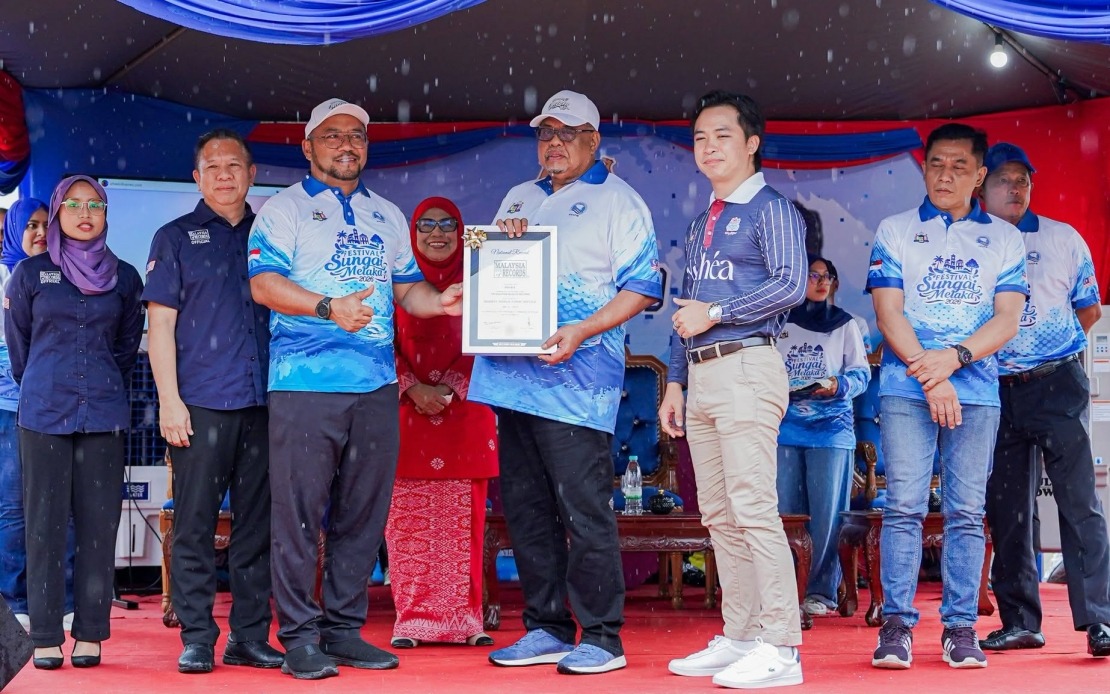
The Perbadanan Pembangunan Sungai dan Pantai Melaka (PPSPM) has expressed strong confidence in reaching its milestone target of one million passengers aboard the Melaka River Cruise (MRC) before the year concludes. Having successfully transported approximately 350,000 visitors through June, the organisation is now focusing its resources on capturing the remaining 60 per cent of its ambitious annual quota. Chief executive officer Shaharul Azuar Idris outlined the strategy at a Malaysia Book of Records presentation ceremony held at Dataran Pengkalan Rama, where the Melaka River Festival 2026 winners were also recognised. Melaka Chief Minister Datuk Seri Ab Rauf Yusoh officiated the event, underscoring the state government's commitment to positioning river tourism as a cornerstone of its economic development agenda.
To bridge the gap between current performance and year-end targets, PPSPM is deploying a multi-pronged approach centred on competitive pricing and enhanced customer value propositions. The organisation is rolling out specially curated packages at reduced rates designed to appeal to both domestic and international travellers seeking authentic cultural experiences. Simultaneously, promotional campaigns targeting regional and overseas markets are being intensified to elevate the Melaka River Cruise's profile as an unmissable attraction within Malaysia's tourism landscape. This dual-track strategy reflects recognition that achieving exponential growth requires aggressive market positioning alongside product innovation.
The operational backbone of this expansion rests on PPSPM's current fleet of 60 vessels, with 30 deployed along the iconic Melaka River and another 30 providing ecological touring experiences at Tasik Chinchin. While these existing assets provide substantial capacity, the organisation is contemplating further fleet augmentation through the introduction of technologically advanced boats designed to align with contemporary travel expectations. Notably, premium offerings have undergone significant renovation, with flagship vessels such as the Everlasting Love Boat and Tun Khalil Cruise receiving comprehensive upgrades. These enhanced vessels now feature dining-on-board experiences, enabling PPSPM to compete effectively within the experiential tourism segment where margins are higher and customer satisfaction translates into repeat visitation and word-of-mouth promotion.
Safety and passenger comfort have emerged as non-negotiable operational priorities within PPSPM's service enhancement framework. Rather than pursuing growth through volume alone, the organisation is methodically upgrading its boat services to ensure that expanded passenger throughput does not compromise either safety standards or the quality of the customer journey. This measured approach reflects broader industry trends in Southeast Asia, where reputational damage from service failures can rapidly erode market position. By maintaining rigorous safety protocols while simultaneously improving amenities, PPSPM is positioning itself as a premium regional player rather than simply a high-volume attraction.
The state government's Melaka Sayang Rakyat (MeSRa) initiative represents a strategic intervention designed to stimulate demand while simultaneously reinforcing public goodwill towards tourism sector expansion. Under this programme, more than 5,000 residents and visitors are anticipated to receive complimentary rides on both the Melaka River Cruise and the Tasik Chinchin Eco Cruise during National Day celebrations on August 31st. Beyond the immediate economic stimulus of converting free-ride participants into paying customers for future visits, this promotional mechanism serves broader political objectives by framing tourism development as a benefit distributed directly to ordinary Melakans rather than solely enriching private operators.
The logistics of managing such a substantial free-ride programme reveal important insights into PPSPM's operational maturity. The organisation is implementing comprehensive workforce and asset deployment strategies to prevent bottlenecks that would undermine the customer experience and negate the goodwill generated by the free-ride offer. Extended queuing times or boat capacity constraints during peak demand periods could easily transform a well-intentioned public relations initiative into a demonstration of mismanagement. By pre-emptively addressing these challenges through staffing augmentation and fleet utilisation optimisation, PPSPM is demonstrating institutional capacity that extends beyond simple passenger volume metrics.
From a broader Southeast Asian perspective, Melaka's tourism intensification reflects the region's post-pandemic pivot towards experiential and cultural attractions that complement traditional beach and resort offerings. River-based tourism products occupy a distinctive niche within this landscape, offering accessibility to urban and peri-urban populations whilst delivering authentic encounters with local heritage. The Melaka River Cruise succeeds partly because it integrates historical narratives with contemporary leisure infrastructure, appealing simultaneously to domestic families seeking affordable day trips and international visitors seeking culturally immersive experiences. This market positioning insulates the attraction from some of the cyclical pressures affecting sun-and-sand tourism.
The achievement of one million annual passengers would constitute a significant milestone within Malaysia's domestic tourism sector, with implications extending beyond Melaka itself. Success at this scale typically attracts regional and global tourism operators interested in replicating successful models, potentially catalysing broader ecosystem development around river-based experiences across Southeast Asia. Furthermore, elevated passenger volumes justify infrastructure investments in surrounding hospitality, retail, and transportation services, generating employment multiplicative effects that extend throughout the local economy. Melaka's historical significance as a former sultanate and trading port adds cultural authenticity that purely artificial attractions cannot replicate, creating sustainable demand foundations.
However, sustaining this growth trajectory will require careful management of potential pitfalls that have historically constrained tourism product longevity in the region. Over-commercialisation risks eroding the cultural authenticity that differentiate the Melaka River Cruise from standardised tourist experiences. Likewise, environmental pressures from intensified boat operations, including noise pollution and riverine ecosystem disruption, could eventually trigger regulatory interventions that constrain operations. PPSPM's forward-looking emphasis on technological advancement and safety suggests institutional awareness of these tensions, though translating this awareness into long-term strategic planning remains an ongoing challenge. The organisation's ability to balance growth imperatives with sustainability considerations will ultimately determine whether the one million passenger milestone represents a temporary peak or the foundation for durable competitive advantage.

